Asser International Sports Law Blog

Our International Sports Law Diary
The Asser International Sports Law Centre is part of the T.M.C. Asser Instituut

International and European Sports Law – Monthly Report – January 2016

Editor’s note: Our first innovation for the year 2016 will be a monthly report compiling relevant news, events and materials on International and European Sports Law based on the daily coverage provided on our twitter feed @Sportslaw_asser. You are invited to complete this survey via the comments section below, feel free to add links to important cases, documents and articles we might have overlooked. 


The Headlines

The world of professional sport has been making headlines for the wrong reasons in January. Football’s governing body FIFA is in such a complete governance and corruption mess that one wonders whether a new President (chosen on 26 February[1]) will solve anything. More recently, however, it is the turn of the athletics governing body, IAAF, to undergo “the walk of shame”. On 14 January the WADA Independent Commission released its second report into doping in international athletics. More...


International Sports Law in 2015: Our Reader

This post offers a basic literature review on publications on international and European sports law in 2015. It does not have the pretence of being complete (our readers are encouraged to add references and links in the comments under this blog), but aims at covering a relatively vast sample of the 2015 academic publications in the field (we have used the comprehensive catalogue of the Peace Palace Library as a baseline for this compilation). When possible we have added hyperlinks to the source.[1]

Have a good read. More...

Goodbye 2015! The Highlights of our International Sports Law Year

2015 was a good year for international sports law. It started early in January with the Pechstein ruling, THE defining sports law case of the year (and probably in years to come) and ended in an apotheosis with the decisions rendered by the FIFA Ethics Committee against Blatter and Platini. This blog will walk you through the important sports law developments of the year and make sure that you did not miss any. More...

Unpacking Doyen’s TPO Deals: In defence of the compatibility of FIFA’s TPO ban with EU law

FIFA’s Third-Party Ownership (TPO) ban entered into force on the 1 May 2015[1]. Since then, an academic and practitioner’s debate is raging over its compatibility with EU law, and in particular the EU Free Movement rights and competition rules. 

The European Commission, national courts (and probably in the end the Court of Justice of the EU) and the Court of Arbitration for Sport (CAS) will soon have to propose their interpretations of the impact of EU law on FIFA’s TPO ban. Advised by the world-famous Bosman lawyer, Jean-Louis Dupont, Doyen has decided to wage through a proxy (the Belgian club FC Seraing) a legal war against the ban. The first skirmishes have already taken place in front of the Brussels Court of first instance, which denied in July Seraing’s request for provisional measures. For its part, FIFA has already sanctioned the club for closing a TPO deal with Doyen, thus opening the way to an ultimate appeal to the CAS. In parallel, the Spanish and Portuguese leagues have lodged a complaint with the European Commission arguing that the FIFA ban is contrary to EU competition law. One academic has already published an assessment of the compatibility of the ban with EU law, and many practitioners have offered their take (see here and here for example). It is undeniable that the FIFA ban is per se restrictive of the economic freedoms of investors and can easily be constructed as a restriction on free competition. Yet, the key and core question under an EU law analysis, is not whether the ban is restrictive (any regulation inherently is), but whether it is proportionate, in other words justified. More...

Unpacking Doyen’s TPO Deals – Sporting Lisbon’s rebellion in the Rojo case. By Antoine Duval and Oskar van Maren

In this blog we continue unpacking Doyen’s TPO deals based on the documents obtained via footballleaks. This time we focus on the battle between Doyen and Sporting over the Rojo case, which raises different legal issues as the FC Twente deals dealt with in our first blog.


I.              The context: The free-fall of Sporting

Sporting Lisbon, or Sporting Club de Portugal as the club is officially known, is a Portuguese club active in 44 different sports. Although the club has the legal status of Sociedade Anónima Desportiva, a specific form of public limited company, it also has over 130.000 club members, making it one of the biggest sports clubs in the world.

The professional football branch of Sporting is by far the most important and famous part of the club, and with its 19 league titles in total, it is a proud member of the big three cartel, with FC Porto and Benfica, dominating Portuguese football. Yet, it has not won a league title since 2002. More...

Unpacking Doyen’s TPO Deals: FC Twente's Game of Maltese Roulette. By Antoine Duval and Oskar van Maren

The first part of our “Unpacking Doyen’s TPO deals” blog series concerns the agreements signed between Doyen Sports and the Dutch football club FC Twente. In particular we focus on the so-called Economic Rights Participation Agreement (ERPA) of 25 February 2014. Based on the ERPA we will be able to better assess how TPO works in practice. To do so, however, it is necessary to explore FC Twente’s rationale behind recourse to third-party funding. Thus, we will first provide a short introduction to the recent history of the club and its precarious financial situation. More...

Unpacking Doyen’s TPO deals - Introduction

The football world has been buzzing with Doyen’s name for a few years now. Yet, in practice very little is known about the way Doyen Sports (the Doyen entity involved in the football business) operates. The content of the contracts it signs with clubs was speculative, as they are subjected to strict confidentiality policies. Nonetheless, Doyen became a political (and public) scapegoat and is widely perceived as exemplifying the ‘TPOisation’ of football. This mythical status of Doyen is also entertained by the firm itself, which has multiplied the (until now failed) legal actions against FIFA’s TPO ban (on the ban see our blog symposium here) in a bid to attract attention and to publicly defend its business model. In short, it has become the mysterious flag bearer of TPO around the world. Thanks to a new anonymous group, inspired by the WikiLeaks model, we can now better assess how Doyen Sports truly functions. Since 5 November someone has been publishing different types of documents involving more or less directly the work of Doyen in football. These documents are all freely available at http://footballleaks.livejournal.com/. By doing so, the group has given us (legal scholars not involved directly in the trade) the opportunity to finally peruse the contractual structure of a TPO deal offered by Doyen and, as we purport to show in the coming weeks, to embark upon a journey into Doyen’s TPO-world. More...

Book Review: Questioning the (in)dependence of the Court of Arbitration for Sport

Book Review: Vaitiekunas A (2014) The Court of Arbitration for Sport : Law-Making and the Question of Independence, Stämpfli Verlag, Berne, CHF 89,00

The book under review is the published version of a PhD thesis defended in 2013 by Andrew Vaitiekunas at Melbourne Law School. A PhD is often taking stock of legal developments rather than anticipating or triggering them. This was definitely not the case of this book. Its core subject of interest is the study of the independence of the Court of Arbitration for Sport (CAS) – an issue that has risen to prominence with the recent Pechstein ruling of January 2015 of the Oberlandesgericht München. It is difficult to be timelier indeed. More...


The Court of Arbitration for Sport after Pechstein: Reform or Revolution?

The Pechstein ruling of the Oberlandesgericht (OLG) München rocked the sports arbitration world earlier this year (see our initial commentary of the decision here and a longer version here). The decision has been appealed to the German Bundesgerichtshof (BGH), the highest German civil court, and the final word on the matter is not expected before 2016. In any event, the case has the merit of putting a long-overdue reform of the Court of Arbitration for Sport (CAS) back on the agenda. The last notable reform of the structure and functioning of the CAS dates back to 1994, and was already triggered by a court ruling, namely the famous Gundel case of the Swiss Federal Tribunal (SFT). Since then, the role of the CAS has shifted and its practical significance has radically changed (the growth of CAS’s caseload has been exponential). It has become the most visible arbitration court in Switzerland in terms of the number of awards appealed to the SFT, but more importantly it deals with all the high-profile disputes that arise in global sport: think, for instance, of Pistorius, the recent Dutee Chand decision or the upcoming FIFA elections.More...

Sports governance 20 years after Bosman: Back to the future… or not? By Borja García

Editor's note:

Dr Borja García joined the School of Sport, Health and Exercise Sciences at Loughbourough University in January 2009 as a Lecturer in Sport Management and Policy. He holds a PhD in Politics, International Relations and European Studies from Loughborough University (United Kingdom), where he completed his thesis titled ‘The European Union and the Governance of Football: A game of levels and agendas’.


In this leafy and relatively mild autumn, we are celebrating two important anniversaries. Recently, we just passed ‘Back to the Future day’, marking the arrival of Marty McFly to 2015. In a few weeks, we will be commemorating the 20th anniversary of the Bosman ruling. Difficult to decide which one of the two is more important. As we move well into the 21st century’s second decade, these two dates should mark a moment to consider innovation. They are perhaps occasions to take stock and reflect how much sport has evolved to reach this new future… or not. More...


Asser International Sports Law Blog | Our International Sports Law Diary <br/>The <a href="http://www.sportslaw.nl" target="_blank">Asser International Sports Law Centre</a> is part of the <a href="https://www.asser.nl/" target="_blank"><img src="/sportslaw/blog/media/logo_asser_horizontal.jpg" style="vertical-align: bottom; margin-left: 7px;width: 140px" alt="T.M.C. Asser Instituut" /></a>

Asser International Sports Law Blog

Our International Sports Law Diary
The Asser International Sports Law Centre is part of the T.M.C. Asser Instituut

A Question of (dis)Proportion: The CAS Award in the Luis Suarez Biting Saga

The summer saga surrounding Luis Suarez’s vampire instincts is long forgotten, even though it might still play a role in his surprisingly muted football debut in FC Barcelona’s magic triangle. However, the full text of the CAS award in the Suarez case has recently be made available on CAS’s website and we want to grasp this opportunity to offer a close reading of its holdings. In this regard, one has to keep in mind that “the object of the appeal is not to request the complete annulment of the sanction imposed on the Player” (par.33). Instead, Suarez and Barcelona were seeking to reduce the sanction imposed by FIFA. In their eyes, the four-month ban handed out by FIFA extending to all football-related activities and to the access to football stadiums was excessive and disproportionate. Accordingly, the case offered a great opportunity for CAS to discuss and analyse the proportionality of disciplinary sanctions based on the FIFA Disciplinary Code (FIFA DC).  More...

The International Sports Law Digest – Issue II – July-December 2014

I. Literature


1. Antitrust/Competition Law and Sport

G Basnier, ‘Sports and competition law: the case of the salary cap in New Zealand rugby union’, (2014) 14 The International Sports Law Journal 3-4, p.155

R Craven, ‘Football and State aid: too important to fail?’ (2014) 14 The International Sports Law Journal 3-4, p.205

R Craven, ‘State Aid and Sports Stadiums: EU Sports Policy or Deference to Professional Football (2014) 35 European Competition Law Review Issue 9, 453


2. Intellectual Property Rights in Sports law / Betting rights/ Spectators’ rights/ Sponsorship Agreements

Books

W T Champion and K DWillis, Intellectual property law in the sports and entertainment industries (Santa Barbara, California; Denver, Colorado; Oxford, England: Praeger 2014)

J-M Marmayou and F Rizzo, Les contrats de sponsoring sportif (Lextenso éditions 2014) 

More...


Time to Cure FIFA’s Chronic Bad Governance Disease

 After Tuesday’s dismissal of Michael Garcia’s complaint against the now infamous Eckert statement synthetizing (misleadingly in his eyes) his Report on the bidding process for the World Cup 2018 and 2022, Garcia finally decided to resign from his position as FIFA Ethics Committee member. On his way out, he noted: “No independent governance committee, investigator, or arbitration panel can change the culture of an organization”. It took Garcia a while to understand this, although others faced similar disappointments before. One needs only to remember the forgotten reform proposals of the Independent Governance Committee led by Prof. Dr. Mark Pieth. More...

The CAS Ad Hoc Division in 2014: Business As Usual? - Part. 2: The Selection Drama

In a first blog last month we discussed the problem of the scope of jurisdiction of the Ad Hoc Division of the Court of Arbitration for Sport. The key issue was whether an athlete could get his case heard in front of the CAS Ad Hoc Division or not. In this second part, we will also focus on whether an athlete can access a forum, but a different kind of forum: the Olympic Games as such. This is a dramatic moment in an athlete’s life, one that will decide the future path of an entire career and most likely a lifetime of opportunities. Thus, it is a decision that should not be taken lightly, nor in disregard of the athletes’ due process rights. In the past, several (non-)selection cases were referred to the Ad Hoc Divisions at the Olympic Games, and this was again the case in 2014, providing us with the opportunity for the present review.

Three out of four cases dealt with by the CAS Ad Hoc Division in Sochi involved an athlete contesting her eviction from the Games. Each case is specific in its factual and legal assessment and deserves an individual review. More...

Should the CAS ‘let Dutee run’? Gender policies in Sport under legal scrutiny. By Thalia Diathesopoulou

The rise of Dutee Chand, India’s 100 and 200-meter champion in the under 18-category, was astonishing. Her achievements were more than promising: after only two years, she broke the 100m and 200m national junior records, competed in the 100m final at the World Youth Athletics Championships in Donetsk and collected two gold medals in the Asian Junior Championships in Chinese Taipei. But, in July 2014, this steady rise was abruptly halted. Following a request from the Athletics Federation of India (AFI), the Sports Authority of India (SAI) conducted blood tests on the Indian sprinters. Dutee was detected with female hyperandrogenism, i.e a condition where the female body produces high levels of testosterone. As a result, a few days before the Commonwealth Games in Glasgow, the AFI declared Dutee ineligible to compete under the IAAF Regulations and prevented her from competing in future national and international events in the female category. Pursuant to the IAAF ‘Hyperandrogenism Policy’, the AFI would allow Dutee to return to competition only if she lowers her testosterone level beneath the male range by means of medical or surgical treatment.[1] On 25 September 2014, Dutee filed an appeal before the CAS, seeking to overturn the AFI’s decision and declare IAAF and IOC’s hyperandrogenism regulations null and void. She is defending her right to compete the way she actually is: a woman with high levels of testosterone. Interestingly enough, albeit a respondent, AFI supports her case.

IAAF and IOC rules set limits to female hyperandrogenism, which is deemed an unfair advantage that erodes female sports integrity. While these rules have been contested with regard to their scientific and ethical aspects, this is the first time that they will be debated in court. This appeal could have far-reaching ramifications for the sports world. It does not only seek to pave the way for a better ‘deal’ for female athletes with hyperandrogenism, who are coerced into hormonal treatment and even surgeries to ‘normalise’ themselves as women[2], but it rather brings the CAS, for the first time, before the thorny question:

How to strike a right balance between the core principle of ‘fair play’ and norms of non-discrimination, in cases where a determination of who qualifies as a ‘woman’ for the purposes of sport has to be made? More...

The O’Bannon Case: The end of the US college sport’s amateurism model? By Zygimantas Juska

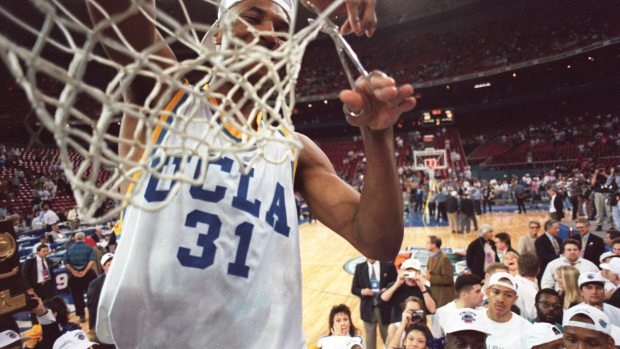
On 8 August, U.S. District Judge Claudia Wilken ruled in favour of former UCLA basketball player O'Bannon and 19 others, declaring that NCAA's longstanding refusal to compensate athletes for the use of their name, image and likenesses (NILs) violates US antitrust laws. In particular, the long-held amateurism justification promoted by the NCAA was deemed unconvincing.

On 14 November, the NCAA has appealed the judgment, claiming that federal judge erred in law by not applying a 1984 Supreme Court ruling. One week later, the NCAA received support from leading antitrust professors who are challenging the Judge Wilken’s reasoning in an amicus curiae. They are concerned that the judgment may jeopardize the proper regulation of college athletics. The professors argued that if Wilken’s judgment is upheld, it

would substantially expand the power of the federal courts to alter organizational rules that serve important social and academic interests…This approach expands the ‘less restrictive alternative prong’ of the antitrust rule of reason well beyond any appropriate boundaries and would install the judiciary as a regulatory agency for collegiate athletics”.   

More...

Image Rights in Professional Basketball (Part II): Lessons from the American College Athletes cases. By Thalia Diathesopoulou

In the wake of the French Labour Union of Basketball (Syndicat National du Basket, SNB) image rights dispute with Euroleague and EA Games, we threw the “jump ball” to start a series on players’ image rights in international professional basketball. In our first blogpost, we discussed why image rights contracts in professional basketball became a fertile ground for disputes when it comes to the enforcement of these contracts by the Basketball Arbitral Tribunal (BAT). Indeed, we pointed out that clubs might take advantage of the BAT’s inconsistent jurisprudence to escape obligations deriving from image rights contracts.

In this second limb, we will open a second field of legal battles “around the rim”: the unauthorized use of players’ image rights by third parties. We will use as a point of reference the US College Athletes image rights cases before US Courts and we will thereby examine the legal nature of image rights and the precise circumstances in which such rights may be infringed. Then, coming back to where we started, we will discuss the French case through the lens of US case law on players’ image rights. 

Source: http://philadelphia.cbslocal.com/2013/09/27/ea-sports-settles-college-likeness-case/ More...


The Olympic Agenda 2020: The devil is in the implementation!

The 40 recommendations of the Olympic Agenda 2020 are out! First thought: one should not underplay the 40 recommendations, they constitute (on paper at least) a potential leap forward for the IOC. The media will focus on the hot stuff: the Olympic channel, the pluri-localisation of the Games, or their dynamic format. More importantly, and to some extent surprisingly to us, however, the IOC has also fully embraced sustainability and good governance. Nonetheless, the long-term legacy of the Olympic Agenda 2020 will hinge on the IOC’s determination to be true to these fundamental commitments. Indeed, the devil is always in the implementation, and the laudable intents of some recommendations will depend on future political choices by Olympic bureaucrats. 

For those interested in human rights and democracy at (and around) the Olympics, two aspects are crucial: the IOC’s confession that the autonomy of sport is intimately linked to the quality of its governance standards and the central role the concept of sustainability is to play in the bidding process and the host city contract.  More...

UEFA’s tax-free Euro 2016 in France: State aid or no State aid?

Last week, the French newspaper Les Echos broke the story that UEFA (or better said its subsidiary) will be exempted from paying taxes in France on revenues derived from Euro 2016. At a time when International Sporting Federations, most notably FIFA, are facing heavy criticisms for their bidding procedures and the special treatment enjoyed by their officials, this tax exemption was not likely to go unnoticed. The French minister for sport, confronted with an angry public opinion, responded by stating that tax exemptions are common practice regarding international sporting events. The former French government agreed to this exemption. In fact, he stressed that without it “France would never have hosted the competition and the Euro 2016 would have gone elsewhere”. More...

The New Olympic Host City Contract: Human Rights à la carte? by Ryan Gauthier, PhD Researcher (Erasmus University Rotterdam)

Three weeks ago, I gave a talk for a group of visiting researchers at Harvard Law School on the accountability of the IOC for human rights abuses caused by hosting Olympic Games. On the day of that talk, Human Rights Watch announced that the International Olympic Committee (“IOC”) would insert new language into the Host City Contract presumably for the 2022 Olympic Games onwards. The new language apparently requires the parties to the contract to:

“take all necessary measures to ensure that development projects necessary for the organization of the Games comply with local, regional, and national legislation, and international agreements and protocols, applicable in the host country with regard to planning, construction, protection of the environment, health, safety, and labour laws.”More...