Asser International Sports Law Blog

Our International Sports Law Diary
The Asser International Sports Law Centre is part of the T.M.C. Asser Instituut

The UN and the IOC: Beautiful friendship or Liaison Dangereuse?

The IOC has trumpeted it worldwide as a « historical milestone »: the United Nations has recognised the sacrosanct autonomy of sport. Indeed, the Resolution A/69/L.5 (see the final draft) adopted by the General Assembly on 31 October states that it  “supports the independence and autonomy of sport as well as the mission of the International Olympic Committee in leading the Olympic movement”. This is a logical conclusion to a year that has brought the two organisations closer than ever. In April, UN Secretary General Ban Ki-moon appointed former IOC President, Jacques Rogge, Special Envoy for Youth Refugees and Sport. At this occasion, the current IOC President, Thomas Bach, made an eloquent speech celebrating a “historic step forward to better accomplish our common mission for humanity” and a memorandum understanding was signed between the UN and the IOC. This is all sweet and well, but is there something new under the sun?More...

Image Rights in Professional Basketball (Part I): The ‘in-n-out rimshot’ of the Basketball Arbitral Tribunal to enforce players’ image rights contracts. By Thalia Diathesopoulou

A warning addressed to fans of French teams featuring in the recently launched video game NBA 2K15: Hurry up! The last jump ball for Strasbourg and Nanterre in NBA 2K 15 may occur earlier than expected. The French Labour Union of Basketball (Syndicat National du Basket, SNB) is dissatisfied that Euroleague and 2K Games did not ask (nor paid) for its permission before including the two teams of Pro A in the NBA 2K15 edition. What is at issue? French basketball players’ image rights have been transferred to SNB, which intends to start proceedings before the US Courts against 2K Games requesting 120.000 euros for unauthorized use of the players’ image rights. SNB is clear: it is not about the money, but rather to defend the players’ rights.[1] Strasbourg and Nanterre risk to “warm up” the virtual bench if this litigation goes ahead. 
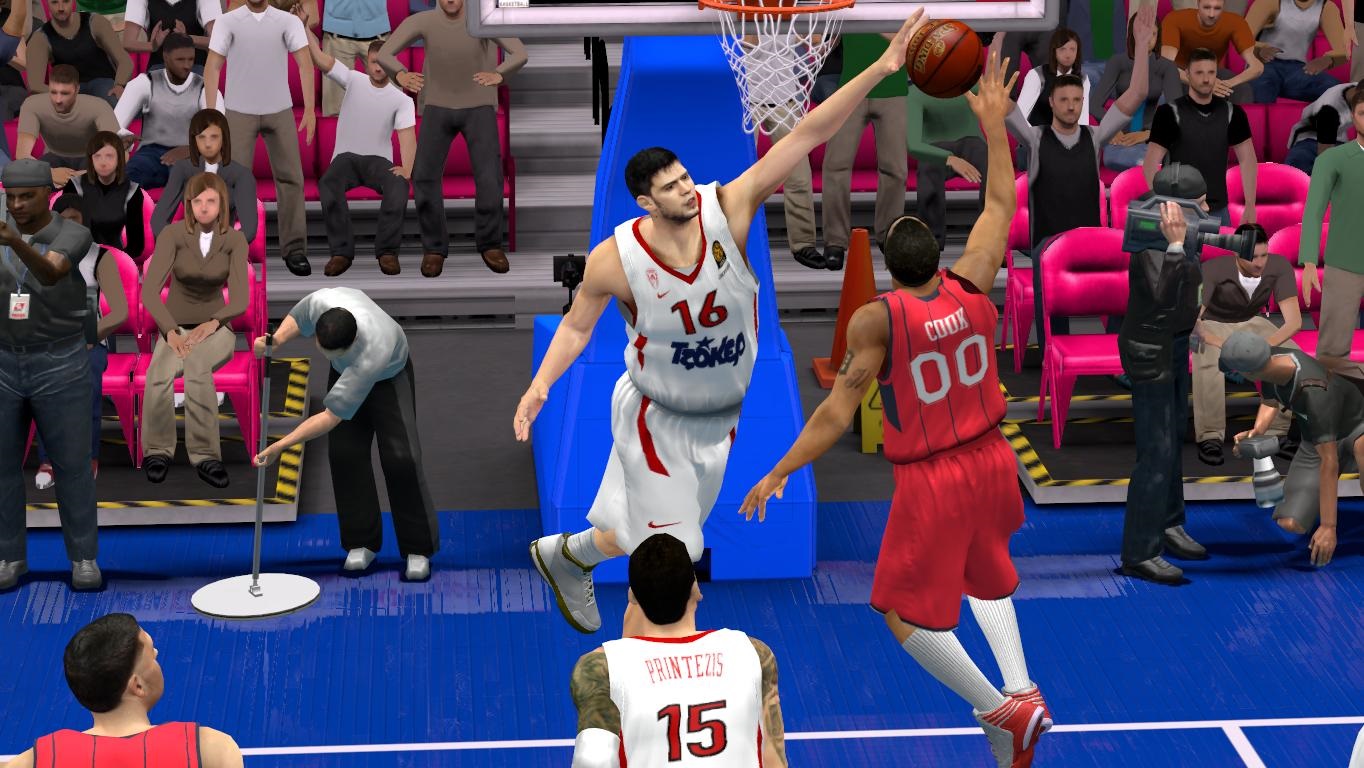
Source: http://forums.nba-live.com/viewtopic.php?f=149&t=88661&start=250 More...

Sport and EU Competition Law: uncharted territories - (II) Mandatory player release systems with no compensation for clubs. By Ben Van Rompuy

The European Commission’s competition decisions in the area of sport, which set out broad principles regarding the interface between sports-related activities and EU competition law, are widely publicized. As a result of the decentralization of EU competition law enforcement, however, enforcement activity has largely shifted to the national level. Since 2004, national competition authorities (NCAs) and national courts are empowered to fully apply the EU competition rules on anti-competitive agreements (Article 101 TFEU) and abuse of a dominant position (Article 102 TFEU).

Even though NCAs and national courts have addressed a series of interesting competition cases (notably dealing with the regulatory aspects of sport) during the last ten years, the academic literature has largely overlooked these developments. This is unfortunate since all stakeholders (sports organisations, clubs, practitioners, etc.) increasingly need to learn from pressing issues arising in national cases and enforcement decisions. In a series of blog posts we will explore these unknown territories of the application of EU competition law to sport.

In this second installment of this blog series, we discuss a recent judgment of the regional court (Landgericht) of Dortmund finding that the International Handball Federation (IHF)’s mandatory release system of players for matches of national teams without compensation infringes EU and German competition law.[1] More...

The CAS Ad Hoc Division in 2014: Business as usual? – Part.1: The Jurisdiction quandary

The year is coming to an end and it has been a relatively busy one for the CAS Ad Hoc divisions. Indeed, the Ad Hoc division was, as usual now since the Olympic Games in Atlanta in 1996[1], settling  “Olympic” disputes during the Winter Olympics in Sochi. However, it was also, and this is a novelty, present at the Asian Games 2014 in Incheon.  Both divisions have had to deal with seven (published) cases in total (four in Sochi and three in Incheon). The early commentaries available on the web (here, here and there), have been relatively unmoved by this year’s case law. Was it then simply ‘business as usual’, or is there more to learn from the 2014 Ad Hoc awards? Two different dimensions of the 2014 decisions by the Ad Hoc Division seem relevant to elaborate on : the jurisdiction quandary (part. 1) and the selection drama (part. 2). More...

Sports Politics before the CAS II: Where does the freedom of speech of a Karate Official ends? By Thalia Diathesopoulou

On 6 October 2014, the CAS upheld the appeal filed by the former General Secretary of the World Karate Federation (WKF), George Yerolimpos, against the 6 February 2014 decision of the WKF Appeal Tribunal. With the award, the CAS confirmed a six-months membership suspension imposed upon the Appellant by the WKF Disciplinary Tribunal.[1] At a first glance, the case at issue seems to be an ordinary challenge of a disciplinary sanction imposed by a sports governing body. Nevertheless, this appeal lies at the heart of a highly acrimonious political fight for the leadership of the WKF, featuring two former ‘comrades’:  Mr Yerolimpos and Mr Espinos (current president of WKF). As the CAS puts it very lucidly, "this is a story about a power struggle within an international sporting body"[2], a story reminding the Saturn devouring his son myth.

This case, therefore, brings the dirty laundry of sports politics to the fore. Interestingly enough, this time the CAS does not hesitate to grapple with the political dimension of the case. More...

The new “Arrangement” between the European Commission and UEFA: A political capitulation of the EU

Yesterday, the European Commission stunned the European Sports Law world when it announced unexpectedly that it had signed a “partnership agreement with UEFA named (creatively): ‘The Arrangement for Cooperation between the European Commission and the Union of European Football Associations (UEFA)’. The press release indicates that this agreement is to “commit the two institutions to working together regularly in a tangible and constructive way on matters of shared interest”. The agreement was negotiated (as far as we know) secretly with UEFA. Despite recent meetings between EU Commissioner for sport Vassiliou and UEFA President Platini, the eventuality of such an outcome was never evoked. It is very unlikely that third-interested-parties (FIFPro, ECA, Supporters Direct etc.) were consulted in the process of drafting this Arrangement. This surprising move by an outgoing Commission will be analysed in a three-ponged approach. First, we will discuss the substance of the Arrangement (I). Thereafter, we will consider its potential legal value under EU law (II). Finally, and maybe more importantly, we will confront the political relevance of the agreement (III).  More...

Sports Politics before the CAS: Early signs of a ‘constitutional’ role for CAS? By Thalia Diathesopoulou

It took almost six months, a record of 26 witnesses and a 68 pages final award for the CAS to put an end to a long-delayed, continuously acrimonious and highly controversial presidential election for the Football Association of Thailand (FAT). Worawi Makudi can sit easy and safe on the throne of the FAT for his fourth consecutive term, since the CAS has dismissed the appeal filed by the other contender, Virach Chanpanich.[1]

Interestingly enough, it is one of the rare times that the CAS Appeal Division has been called to adjudicate on the fairness and regularity of the electoral process of a sports governing body. Having been established as the supreme judge of sports disputes, by reviewing the electoral process of international and national sports federations the CAS adds to its functions a role akin to the one played by a constitutional court in national legal systems. It seems that members of international and national federations increasingly see the CAS as an ultimate guardian of fairness and validity of internal electoral proceedings. Are these features - without prejudice to the CAS role as an arbitral body- the early sign of the emergence of a Constitutional Court for Sport? More...

Olympic Agenda 2020: To bid, or not to bid, that is the question!

This post is an extended version of an article published in August on hostcity.net.

The recent debacle among the candidate cities for the 2022 Winter Games has unveiled the depth of the bidding crisis faced by the Olympic Games. The reform process initiated in the guise of the Olympic Agenda 2020 must take this disenchantment seriously. The Olympic Agenda 2020 took off with a wide public consultation ending in April and is now at the end of the working groups phase. One of the working groups was specifically dedicated to the bidding process and was headed by IOC vice-president John Coates.  More...

The CAS jurisprudence on match-fixing in football: What can we learn from the Turkish cases? - Part 2: The procedural aspects. By Thalia Diathesopoulou

With this blog post, we continue the blog series on Turkish match-fixing cases and our attempt to map the still unchartered waters of the CAS’s match-fixing jurisprudence.

The first blog post addressed two issues related to the substance of match-fixing disputes, namely the legal characterization of the match-fixing related measure of ineligibility under Article 2.08 of the UEL Regulations as administrative or disciplinary measure and the scope of application of Article 2.08. In addition, The Turkish cases have raised procedural and evidentiary issues that need to be dealt with in the framework of match-fixing disputes.

The CAS panels have drawn a clear line between substantial and procedural matters. In this light, the Eskişehirspor panel declared the nature of Article 2.08 UEL Regulations to be administrative and rejected the application of UEFA Disciplinary Regulations to the substance. Nonetheless, it upheld that disciplinary rules and standards still apply to the procedure. This conclusion, however, can be considered puzzling in that disciplinary rules apply to the procedural matters arising by a pure administrative measure. To this extent, and despite the bifurcation of different applicable rules into substantial and procedural matters, the credibility of the qualification of Article 2.08 as administrative seems to be undermined. And here a question arises: How can the application of rules of different nature to substantial and procedural matters in an identical match-fixing dispute be explained?More...

The EU State aid and Sport Saga – A blockade to Florentino Perez’ latest “galactic” ambitions (part 2)

This is the second part of a blog series on the Real Madrid State aid case. In the previous blog on this case, an outline of all the relevant facts was provided and I analysed the first criterion of Article 107(1) TFEU, namely the criterion that an advantage must be conferred upon the recipient for the measure to be considered State aid. Having determined that Real Madrid has indeed benefited from the land transactions, the alleged aid measure has to be scrutinized under the other criteria of Article 107(1): the measure must be granted by a Member State or through State resources; the aid granted must be selective; and it must distorts or threatens to distort competition. In continuation, this blog will also analyze whether the alleged aid measure could be justified and declared compatible with EU law under Article 107(3) TFEU.More...

Asser International Sports Law Blog | Our International Sports Law Diary <br/>The <a href="http://www.sportslaw.nl" target="_blank">Asser International Sports Law Centre</a> is part of the <a href="https://www.asser.nl/" target="_blank"><img src="/sportslaw/blog/media/logo_asser_horizontal.jpg" style="vertical-align: bottom; margin-left: 7px;width: 140px" alt="T.M.C. Asser Instituut" /></a>

Asser International Sports Law Blog

Our International Sports Law Diary
The Asser International Sports Law Centre is part of the T.M.C. Asser Instituut

The Evolution of UEFA’s Financial Fair Play Rules – Part 2: The Legal Challenges. By Christopher Flanagan

The first part of this series looked at the legal framework in which FFP sits, concluding that FFP occupied a ‘marginal’ legal position – perhaps legal, perhaps not. Given the significant financial interests in European football – UEFA’s figures suggest aggregate revenue of nearly €17 billion as at clubs’ 2015 accounts – and the close correlation between clubs’ spending on wages and their success on the field,[1] a legal challenge to the legality of FFP’s ‘break even’ requirement (the Break Even Requirement), which restricts a particular means of spending, was perhaps inevitable.

And so it followed.

Challenges to the legality of the Break Even Requirement have been brought by football agent Daniel Striani, through various organs of justice of the European Union and through the Belgian courts; and by Galatasaray in the Court of Arbitration for Sport. As an interesting footnote, both Striani and Galatasaray were advised by “avocat superstar” Jean-Louis Dupont, the lawyer who acted in several of sports law’s most famous cases, including the seminal Bosman case. Dupont has been a vocal critic of FFP’s legality since its inception. More...


The Evolution of UEFA’s Financial Fair Play Rules – Part 1: Background and EU Law. By Christopher Flanagan

Editor's Note: Christopher is an editor of the Asser International Sports Law Blog. His research interests cover a spectrum of sports law topics, with a focus on financial regulatory disputes, particularly in professional football, a topic on which he has regularly lectured at the University of the West of England.


It is five years since the Union of European Football Associations (UEFA) formally introduced ‘Financial Fair Play’ (FFP) into European football through its Club Licensing and Financial Fair Play Regulations, Edition 2012. With FFP having now been in place for a number of years, we are in a position to analyse its effect, its legality, and how the rules have altered over the last half decade in response to legal challenges and changing policy priorities. This article is split into three parts: The first will look at the background, context and law applicable to FFP; Part Two will look at the legal challenges FFP has faced; and Part Three will look at how FFP has iteratively changed, considering its normative impact, and the future of the rules. More...


International and European Sports Law – Monthly Report – July and August 2017. By Tomáš Grell

 Editor's note: This report compiles all relevant news, events and materials on International and European Sports Law based on the daily coverage provided on our twitter feed @Sportslaw_asser.


The Headlines

ISLJ Annual Conference on International Sports Law 

On 26 and 27 October 2017, the T.M.C. Asser Institute in The Hague will host the first ever ISLJ Annual International Sports Law Conference. This year's edition will feature panels on the Court of Arbitration for Sport, the world anti-doping system, the FIFA transfer regulations, human rights and sports, the labour rights of athletes, and EU law and sport. We will also welcome the following distinguished keynote speakers:

  • Miguel Maduro, former Advocate General at the European Court of Justice and former head of the FIFA's Governance Committee;
  • Michael Beloff QC, English barrister known as one of the 'Godfathers' of sports law;
  • Stephen Weatherill, Professor at Oxford University and a scholarly authority on EU law and sport;
  • Richard McLaren, CAS Arbitrator, sports law scholar and former head of the World Anti-Doping Agency's investigation into the Russian doping scandal.

You will find all the necessary information related to the conference here. Do not forget to register as soon as possible if you want to secure a place on the international sports law pitch! [Please note that we have a limited amount of seats available, which will be attributed on a 'first come, first served' basis.] More...

FIFA's Human Rights Agenda: Is the Game Beautiful Again? – By Tomáš Grell

Editor’s note: Tomáš Grell holds an LL.M. in Public International Law from Leiden University. He contributes to the work of the ASSER International Sports Law Centre as a research intern.


Concerns about adverse human rights impacts related to FIFA's activities have intensified ever since its late 2010 decision to award the 2018 and 2022 World Cup to Russia and Qatar respectively. However, until recently, the world's governing body of football had done little to eliminate these concerns, thereby encouraging human rights advocates to exercise their critical eye on FIFA. 

In response to growing criticism, the Extraordinary FIFA Congress, held in February 2016, decided to include an explicit human rights commitment in the revised FIFA Statutes which came into force in April 2016. This commitment is encapsulated in Article 3 which reads as follows: ''FIFA is committed to respecting all internationally recognized human rights and shall strive to promote the protection of these rights''. At around the same time, Professor John Ruggie, the author of the United Nations Guiding Principles on Business and Human Rights ('UN Guiding Principles') presented in his report 25 specific recommendations for FIFA on how to further embed respect for human rights across its global operations. While praising the decision to make a human rights commitment part of the organization's constituent document, Ruggie concluded that ''FIFA does not have yet adequate systems in place enabling it to know and show that it respects human rights in practice''.[1]

With the 2018 World Cup in Russia less than a year away, the time is ripe to look at whether Ruggie's statement about FIFA's inability to respect human rights still holds true today. This blog outlines the most salient human rights risks related to FIFA's activities and offers a general overview of what the world's governing body of football did over the past twelve months to mitigate these risks. Information about FIFA's human rights activities is collected primarily from its Activity Update on Human Rights published alongside FIFA's Human Rights Policy in June 2017. More...

International and European Sports Law – Monthly Report – June 2017. By Tomáš Grell

 Editor's note: This report compiles all relevant news, events and materials on International and European Sports Law based on the daily coverage provided on our twitter feed @Sportslaw_asser. You are invited to complete this survey via the comments section below, feel free to add links to important cases, documents and articles we might have overlooked.


The Headlines

 
ISLJ Annual Conference on International Sports Law

On 26 and 27 October, the T.M.C. Asser Institute in The Hague will host the first ever ISLJ Annual International Sports Law Conference. This year’s edition will feature panels on the Court of Arbitration for Sport, the world anti-doping system, the FIFA transfer regulations, human rights and sports, the labour rights of athletes, and EU law and sport. More...


Mitigating Circumstances and Strict Liability of Clubs in Match-fixing: Are We Going in the Wrong Direction? An Analysis of the Novara and Pro Patria Cases - By Mario Vigna


Editor’s note: Mario Vigna is a Senior Associate at Coccia De Angelis Vecchio & Associati in Rome, Italy. His main practice areas are sports law, commercial law, and IP law. He also has extensive experience in the Anti-doping field, serving as Deputy-Chief Prosecutor of the Italian NADO and as counsel in domestic and international sports proceedings. He is a frequent speaker at various conferences and workshops. He was not involved in either of the cases discussed below.


I.               Introduction 

Gambling in football is a popular and potentially lucrative activity. It also raises numerous issues. When faced with the issue of gambling, the European Court of Justice (now Court of Justice of the EU) determined that gambling was economic activity per se, notwithstanding gambling’s vulnerability to ethical issues, and thus could not be prohibited outright.[1] With the legality of gambling established, it was left to the proper legislative bodies (national legislatures, national and international federations, etc.) to regulate gambling in order to guard against fraud and corruption. Gambling was not going to disappear; the dangers inherent to gambling would require attention.  More...


Overdue payables in action: Reviewing two years of FIFA jurisprudence on the 12bis procedure – Part 2. By Frans M. de Weger and Frank John Vrolijk.

Editor's Note: Frans M. de Weger is legal counsel for the Federation of Dutch Professional Football Clubs (FBO) and CAS arbitrator. De Weger is author of the book “The Jurisprudence of the FIFA Dispute Resolution Chamber”, 2nd edition, published by T.M.C. Asser Press in 2016. Frank John Vrolijk specialises in Sports, Labour and Company Law and is a former legal trainee of FBO and DRC Database.

This second blog will focus specifically on the sanctions available for FIFA under Article 12bis. It will provide explanatory guidelines covering the sanctions imposed during the period surveyed.


Introduction

The possibility to impose sanctions under article 12bis constitutes one of the pillars of the 12bis procedure. Pursuant to Article 12bis of the RSTP, edition 2016, the DRC and the PSC may impose a sanction on a club if the club is found to have delayed a due payment for more than 30 days without a prima facie contractual basis[1] and the creditor have put the debtor club in default in writing, granting a deadline of at least 10 days.[2] The jurisprudence in relation to Article 12bis also shows that sanctions are imposed ex officio by the DRC or the PSC and not per request of the claimant.More...


Overdue payables in action: Reviewing two years of FIFA jurisprudence on the 12bis procedure – Part 1. By Frans M. de Weger and Frank John Vrolijk.

Editor's Note: Frans M. de Weger is legal counsel for the Federation of Dutch Professional Football Clubs (FBO) and CAS arbitrator. De Weger is author of the book “The Jurisprudence of the FIFA Dispute Resolution Chamber”, 2nd edition, published by T.M.C. Asser Press in 2016. Frank John Vrolijk specialises in Sports, Labour and Company Law and is a former legal trainee of FBO and DRC Database.

In this first blog, we will try to answer some questions raised in relation to the Article 12bis procedure on overdue payables based on the jurisprudence of the DRC and the PSC during the last two years: from 1 April 2015 until 1 April 2017. [1] The awards of the Court of Arbitration for Sport (hereinafter: “the CAS”) in relation to Article 12bis that are published on CAS’s website will also be brought to the reader’s attention. In the second blog, we will focus specifically on the sanctions applied by FIFA under Article 12bis. In addition, explanatory guidelines will be offered covering the sanctions imposed during the period surveyed. A more extensive version of both blogs is pending for publication with the International Sports Law Journal (ISLJ). If necessary, and for a more detailed and extensive analysis at certain points, we will make reference to this more extensive article in the ISLJ. More...

International and European Sports Law – Monthly Report – May 2017. By Tomáš Grell

Editor's note: This report compiles all relevant news, events and materials on International and European Sports Law based on the daily coverage provided on our twitter feed @Sportslaw_asser. You are invited to complete this survey via the comments section below, feel free to add links to important cases, documents and articles we might have overlooked.

The Headlines

The end of governance reforms at FIFA?

The main sports governance story that surfaced in the press (see here and here) during the last month is related to significant personal changes made by the FIFA Council within the organization’s institutional structure. In particular, the FIFA Council dismissed the heads of the investigatory (Mr Cornel Borbély) and adjudicatory (Mr Hans-Joachim Eckert) chambers of the Independent Ethics Committee, as well as the Head (Mr Miguel Maduro) of the Governance and Review Committee. The decision to remove Mr Maduro was taken arguably in response to his active role in barring Mr Vitaly Mutko, a Deputy Prime Minister of Russia, from sitting on the FIFA Council due to an imminent conflict of interests. These events constitute a major setback to governance reforms initiated by the football’s world governing body in 2015. For a more detailed insight into the governance reforms at FIFA, we invite you to read the recent blog written by our senior researcher Mr Antoine Duval. More...