Asser International Sports Law Blog

Our International Sports Law Diary
The Asser International Sports Law Centre is part of the T.M.C. Asser Instituut

The UN and the IOC: Beautiful friendship or Liaison Dangereuse?

The IOC has trumpeted it worldwide as a « historical milestone »: the United Nations has recognised the sacrosanct autonomy of sport. Indeed, the Resolution A/69/L.5 (see the final draft) adopted by the General Assembly on 31 October states that it  “supports the independence and autonomy of sport as well as the mission of the International Olympic Committee in leading the Olympic movement”. This is a logical conclusion to a year that has brought the two organisations closer than ever. In April, UN Secretary General Ban Ki-moon appointed former IOC President, Jacques Rogge, Special Envoy for Youth Refugees and Sport. At this occasion, the current IOC President, Thomas Bach, made an eloquent speech celebrating a “historic step forward to better accomplish our common mission for humanity” and a memorandum understanding was signed between the UN and the IOC. This is all sweet and well, but is there something new under the sun?More...

Image Rights in Professional Basketball (Part I): The ‘in-n-out rimshot’ of the Basketball Arbitral Tribunal to enforce players’ image rights contracts. By Thalia Diathesopoulou

A warning addressed to fans of French teams featuring in the recently launched video game NBA 2K15: Hurry up! The last jump ball for Strasbourg and Nanterre in NBA 2K 15 may occur earlier than expected. The French Labour Union of Basketball (Syndicat National du Basket, SNB) is dissatisfied that Euroleague and 2K Games did not ask (nor paid) for its permission before including the two teams of Pro A in the NBA 2K15 edition. What is at issue? French basketball players’ image rights have been transferred to SNB, which intends to start proceedings before the US Courts against 2K Games requesting 120.000 euros for unauthorized use of the players’ image rights. SNB is clear: it is not about the money, but rather to defend the players’ rights.[1] Strasbourg and Nanterre risk to “warm up” the virtual bench if this litigation goes ahead. 

Source: http://forums.nba-live.com/viewtopic.php?f=149&t=88661&start=250 More...

Sport and EU Competition Law: uncharted territories - (II) Mandatory player release systems with no compensation for clubs. By Ben Van Rompuy

The European Commission’s competition decisions in the area of sport, which set out broad principles regarding the interface between sports-related activities and EU competition law, are widely publicized. As a result of the decentralization of EU competition law enforcement, however, enforcement activity has largely shifted to the national level. Since 2004, national competition authorities (NCAs) and national courts are empowered to fully apply the EU competition rules on anti-competitive agreements (Article 101 TFEU) and abuse of a dominant position (Article 102 TFEU).

Even though NCAs and national courts have addressed a series of interesting competition cases (notably dealing with the regulatory aspects of sport) during the last ten years, the academic literature has largely overlooked these developments. This is unfortunate since all stakeholders (sports organisations, clubs, practitioners, etc.) increasingly need to learn from pressing issues arising in national cases and enforcement decisions. In a series of blog posts we will explore these unknown territories of the application of EU competition law to sport.

In this second installment of this blog series, we discuss a recent judgment of the regional court (Landgericht) of Dortmund finding that the International Handball Federation (IHF)’s mandatory release system of players for matches of national teams without compensation infringes EU and German competition law.[1] More...

The CAS Ad Hoc Division in 2014: Business as usual? – Part.1: The Jurisdiction quandary

The year is coming to an end and it has been a relatively busy one for the CAS Ad Hoc divisions. Indeed, the Ad Hoc division was, as usual now since the Olympic Games in Atlanta in 1996[1], settling  “Olympic” disputes during the Winter Olympics in Sochi. However, it was also, and this is a novelty, present at the Asian Games 2014 in Incheon.  Both divisions have had to deal with seven (published) cases in total (four in Sochi and three in Incheon). The early commentaries available on the web (here, here and there), have been relatively unmoved by this year’s case law. Was it then simply ‘business as usual’, or is there more to learn from the 2014 Ad Hoc awards? Two different dimensions of the 2014 decisions by the Ad Hoc Division seem relevant to elaborate on : the jurisdiction quandary (part. 1) and the selection drama (part. 2). More...

Sports Politics before the CAS II: Where does the freedom of speech of a Karate Official ends? By Thalia Diathesopoulou

On 6 October 2014, the CAS upheld the appeal filed by the former General Secretary of the World Karate Federation (WKF), George Yerolimpos, against the 6 February 2014 decision of the WKF Appeal Tribunal. With the award, the CAS confirmed a six-months membership suspension imposed upon the Appellant by the WKF Disciplinary Tribunal.[1] At a first glance, the case at issue seems to be an ordinary challenge of a disciplinary sanction imposed by a sports governing body. Nevertheless, this appeal lies at the heart of a highly acrimonious political fight for the leadership of the WKF, featuring two former ‘comrades’:  Mr Yerolimpos and Mr Espinos (current president of WKF). As the CAS puts it very lucidly, "this is a story about a power struggle within an international sporting body"[2], a story reminding the Saturn devouring his son myth.

This case, therefore, brings the dirty laundry of sports politics to the fore. Interestingly enough, this time the CAS does not hesitate to grapple with the political dimension of the case. More...

The new “Arrangement” between the European Commission and UEFA: A political capitulation of the EU

Yesterday, the European Commission stunned the European Sports Law world when it announced unexpectedly that it had signed a “partnership agreement with UEFA named (creatively): ‘The Arrangement for Cooperation between the European Commission and the Union of European Football Associations (UEFA)’. The press release indicates that this agreement is to “commit the two institutions to working together regularly in a tangible and constructive way on matters of shared interest”. The agreement was negotiated (as far as we know) secretly with UEFA. Despite recent meetings between EU Commissioner for sport Vassiliou and UEFA President Platini, the eventuality of such an outcome was never evoked. It is very unlikely that third-interested-parties (FIFPro, ECA, Supporters Direct etc.) were consulted in the process of drafting this Arrangement. This surprising move by an outgoing Commission will be analysed in a three-ponged approach. First, we will discuss the substance of the Arrangement (I). Thereafter, we will consider its potential legal value under EU law (II). Finally, and maybe more importantly, we will confront the political relevance of the agreement (III).  More...

Sports Politics before the CAS: Early signs of a ‘constitutional’ role for CAS? By Thalia Diathesopoulou

It took almost six months, a record of 26 witnesses and a 68 pages final award for the CAS to put an end to a long-delayed, continuously acrimonious and highly controversial presidential election for the Football Association of Thailand (FAT). Worawi Makudi can sit easy and safe on the throne of the FAT for his fourth consecutive term, since the CAS has dismissed the appeal filed by the other contender, Virach Chanpanich.[1]

Interestingly enough, it is one of the rare times that the CAS Appeal Division has been called to adjudicate on the fairness and regularity of the electoral process of a sports governing body. Having been established as the supreme judge of sports disputes, by reviewing the electoral process of international and national sports federations the CAS adds to its functions a role akin to the one played by a constitutional court in national legal systems. It seems that members of international and national federations increasingly see the CAS as an ultimate guardian of fairness and validity of internal electoral proceedings. Are these features - without prejudice to the CAS role as an arbitral body- the early sign of the emergence of a Constitutional Court for Sport? More...

Olympic Agenda 2020: To bid, or not to bid, that is the question!

This post is an extended version of an article published in August on hostcity.net.

The recent debacle among the candidate cities for the 2022 Winter Games has unveiled the depth of the bidding crisis faced by the Olympic Games. The reform process initiated in the guise of the Olympic Agenda 2020 must take this disenchantment seriously. The Olympic Agenda 2020 took off with a wide public consultation ending in April and is now at the end of the working groups phase. One of the working groups was specifically dedicated to the bidding process and was headed by IOC vice-president John Coates.  More...

The CAS jurisprudence on match-fixing in football: What can we learn from the Turkish cases? - Part 2: The procedural aspects. By Thalia Diathesopoulou

With this blog post, we continue the blog series on Turkish match-fixing cases and our attempt to map the still unchartered waters of the CAS’s match-fixing jurisprudence.

The first blog post addressed two issues related to the substance of match-fixing disputes, namely the legal characterization of the match-fixing related measure of ineligibility under Article 2.08 of the UEL Regulations as administrative or disciplinary measure and the scope of application of Article 2.08. In addition, The Turkish cases have raised procedural and evidentiary issues that need to be dealt with in the framework of match-fixing disputes.

The CAS panels have drawn a clear line between substantial and procedural matters. In this light, the Eskişehirspor panel declared the nature of Article 2.08 UEL Regulations to be administrative and rejected the application of UEFA Disciplinary Regulations to the substance. Nonetheless, it upheld that disciplinary rules and standards still apply to the procedure. This conclusion, however, can be considered puzzling in that disciplinary rules apply to the procedural matters arising by a pure administrative measure. To this extent, and despite the bifurcation of different applicable rules into substantial and procedural matters, the credibility of the qualification of Article 2.08 as administrative seems to be undermined. And here a question arises: How can the application of rules of different nature to substantial and procedural matters in an identical match-fixing dispute be explained?More...

The EU State aid and Sport Saga – A blockade to Florentino Perez’ latest “galactic” ambitions (part 2)

This is the second part of a blog series on the Real Madrid State aid case. In the previous blog on this case, an outline of all the relevant facts was provided and I analysed the first criterion of Article 107(1) TFEU, namely the criterion that an advantage must be conferred upon the recipient for the measure to be considered State aid. Having determined that Real Madrid has indeed benefited from the land transactions, the alleged aid measure has to be scrutinized under the other criteria of Article 107(1): the measure must be granted by a Member State or through State resources; the aid granted must be selective; and it must distorts or threatens to distort competition. In continuation, this blog will also analyze whether the alleged aid measure could be justified and declared compatible with EU law under Article 107(3) TFEU.More...

Asser International Sports Law Blog | Our International Sports Law Diary <br/>The <a href="http://www.sportslaw.nl" target="_blank">Asser International Sports Law Centre</a> is part of the <a href="https://www.asser.nl/" target="_blank"><img src="/sportslaw/blog/media/logo_asser_horizontal.jpg" style="vertical-align: bottom; margin-left: 7px;width: 140px" alt="T.M.C. Asser Instituut" /></a>

Asser International Sports Law Blog

Our International Sports Law Diary
The Asser International Sports Law Centre is part of the T.M.C. Asser Instituut

Why the CAS #LetDuteeRun: the Proportionality of the Regulation of Hyperandrogenism in Athletics by Piotr Drabik

Editor's note
Piotr is an intern at the ASSER International Sports Law Centre.

Introduction

On 24 July the Court of Arbitration for Sport (CAS) issued its decision in the proceedings brought by the Indian athlete Ms. Dutee Chand against the Athletics Federation of India (AFI) and the International Association of Athletics Federations (IAAF) in which she challenged the validity of the IAAF Regulations Governing Eligibility of Female with Hyperandrogenism to Compete in Women’s Competition (Regulations). The Regulations were established in 2011 as a response to the controversies surrounding South African athlete Caster Semenya (see e.g. here, here, and here), and for the purpose of safeguarding fairness in sport by prohibiting women with hyperandrogenism, i.e. those with excessive levels of endogenous (naturally occurring) testosterone, from competing in women athletics competitions. Owing to the subject-matter that the Regulations cover, the case before the CAS generated complex legal, scientific and ethical questions. The following case note thus aims at explaining how the Panel addressed the issues raised by the Indian athlete. It follows a previous blog we published in December 2014 that analysed the arguments raised in favour of Ms. Chand. More...


Not comfortably satisfied? The upcoming Court of Arbitration for Sport case of the thirty-four current and former players of the Essendon football club. By James Kitching

Editor's note: James Kitching is Legal Counsel and Secretary to the AFC judicial bodies at the Asian Football Confederation. James is an Australian and Italian citizen and one of the few Australians working in international sports law. He is admitted as barrister and solicitor in the Supreme Court of South Australia. James graduated from the International Master in the Management, Law, and Humanities of Sport offered by the Centre International d'Etude du Sport in July 2012.


Introduction

On 12 May 2015, the Court of Arbitration for Sport (CAS) announced that the World Anti-Doping Agency (WADA) had filed an appeal against the decision issued by the Australian Football League (AFL) Anti-Doping Tribunal (AADT) that thirty-four current and former players of Essendon Football Club (Essendon) had not committed any anti-doping rule violation (ADRV) identified within the AFL Anti-Doping Code (AADC). The players had each been charged with using Thymosin-Beta 4 (TB4) during the 2012 AFL season.

On 1 June 2015, WADA announced that it had filed an appeal against the decision by the AADT to clear Mr. Stephen Dank (Dank), a sports scientist employed at Essendon during the relevant period, of twenty-one charges of violating the AADC. Dank was, however, found guilty of ten charges and banned for life.

This blog will solely discuss the likelihood of the first AADT decision (the Decision) being overturned by the CAS. It will briefly summarise the facts, discuss the applicable rules and decision of the AADT, review similar cases involving ‘non-analytical positive’ ADRVs relating to the use of a prohibited substance or a prohibited method, and examine whether the Code of Sports-related Arbitration (CAS Code) is able to assist WADA in its appeal.

This blog will not examine the soap opera that was the two years leading-up to the Decision. Readers seeking a comprehensive factual background should view the excellent up-to-date timeline published by the Australian Broadcasting Corporation. More...


EU Law is not enough: Why FIFA's TPO ban survived its first challenge before the Brussels Court


Star Lawyer Jean-Louis Dupont is almost a monopolist as far as high profile EU law and football cases are concerned. This year, besides a mediatised challenge against UEFA’s FFP regulations, he is going after FIFA’s TPO ban on behalf of the Spanish and Portuguese leagues in front of the EU Commission, but also before the Brussels First Instance Court defending the infamous Malta-based football investment firm Doyen Sport. FIFA and UEFA’s archenemy, probably electrified by the 20 years of the Bosman ruling, is emphatically trying to reproduce his world-famous legal prowess. Despite a first spark at a success in the FFP case against UEFA with the Court of first instance of Brussels sending a preliminary reference to the Court of Justice of the EU (CJEU), this has proven to be a mirage as the CJEU refused, as foretold, to answer the questions of the Brussels Court, while the provisory measures ordered by the judge have been suspended due to UEFA’s appeal. But, there was still hope, the case against FIFA’s TPO ban, also involving UEFA and the Belgium federation, was pending in front of the same Brussels Court of First Instance, which had proven to be very willing to block UEFA’s FFP regulations. Yet, the final ruling is another disappointment for Dupont (and good news for FIFA). The Court refused to give way to Doyen’s demands for provisional measures and a preliminary reference. The likelihood of a timely Bosman bis repetita is fading away. Fortunately, we got hold of the judgment of the Brussels court and it is certainly of interest to all those eagerly awaiting to know whether FIFA’s TPO ban will be deemed compatible or not with EU law. More...


The New FIFA Intermediaries Regulations under EU Law Fire in Germany. By Tine Misic

I'm sure that in 1985, plutonium is available in every corner drugstore, but in 1955, it's a little hard to come by.” (Dr. Emmett L. Brown)[1]


Back to the future?

Availing oneself of EU law in the ambit of sports in 1995 must have felt a bit like digging for plutonium, but following the landmark ruling of the European Court of Justice (ECJ) in the Bosman case[2], 20 years later, with all the buzz surrounding several cases where EU law is being used as an efficient ammunition for shelling various sports governing or organising bodies, one may wonder if in 2015 EU law is to be “found in every drug store” and the recent cases (see inter alia Heinz Müller v 1. FSV Mainz 05, Daniel Striani ao v UEFA, Doyen Sports ao v URBSFA, FIFA, UEFA) [3] cannot but invitingly evoke the spirit of 1995.

One of the aforementioned cases that also stands out pertains to the injunction decision[4] issued on 29 April 2015 by the Regional Court (Landesgericht) in Frankfurt am Main (hereinafter: the Court) in the dispute between the intermediary company Firma Rogon Sportmanagement (hereinafter: the claimant) and the German Football Federation (Deutschen Fußball-Bund, DFB), where the claimant challenged the provisions of the newly adopted DFB Regulations on Intermediaries (hereinafter: DFB Regulations)[5] for being incompatible with Articles 101 and 102 TFEU.[6] The Court, by acknowledging the urgency of the matter stemming from the upcoming transfer window and the potential loss of clients, deemed a couple of shells directed at the DFB Regulations to be well-aimed, and granted an injunction due to breach of Article 101 TFEU. More...


Compatibility of fixed-term contracts in football with Directive 1999/70/EC. Part 2: The Heinz Müller case. By Piotr Drabik

Introduction
The first part of the present blog article provided a general introduction to the compatibility of fixed-term contracts in football with Directive 1999/70/EC[1] (Directive). However, as the Member States of the European Union enjoy a considerable discretion in the implementation of a directive, grasping the impact of the Directive on the world of football would not be possible without considering the national context. The recent ruling of the Arbeitsgericht Mainz (the lowest German labour court; hereinafter the Court) in proceedings brought by a German footballer Heinz Müller provides an important example in this regard. This second part of the blog on the legality of fixed-term contract in football is devoted to presenting and assessing the Court’s decision.


I. Facts and Procedure
Heinz Müller, the main protagonist of this case, was a goalkeeper playing for 1.FSV Mainz 05 a club partaking to the German Bundesliga. More...


Compatibility of Fixed-Term Contracts in Football with Directive 1999/70/EC. Part.1: The General Framework. By Piotr Drabik

Introduction
On 25 March 2015, the Labour Court of Mainz issued its decision in proceedings brought by a German footballer, Heinz Müller, against his (now former) club 1. FSV Mainz 05 (Mainz 05). The Court sided with the player and ruled that Müller should have been employed by Mainz 05 for an indefinite period following his 2009 three year contract with the club which was subsequently extended in 2011 to run until mid-2014. The judgment was based on national law implementing Directive 1999/70 on fixed-term work[1] (Directive) with the latter being introduced pursuant to art. 155(2) TFEU (ex art. 139(2) TEC). On the basis of this article, European social partners’ may request a framework agreement which they conclude to be implemented on the European Union (EU, Union) level by a Council decision on a proposal from the Commission. One of the objectives of the framework agreement,[2] and therefore of the Directive, was to establish a system to prevent abuse arising from the use of successive fixed-term employment contracts or relationships[3] which lies at the heart of the discussed problem.[4] More...

UEFA’s FFP out in the open: The Dynamo Moscow Case

Ever since UEFA started imposing disciplinary measures to football clubs for not complying with Financial Fair Play’s break-even requirement in 2014, it remained a mystery how UEFA’s disciplinary bodies were enforcing the Club Licensing and Financial Fair Play (“FFP”) regulations, what measures it was imposing, and what the justifications were for the imposition of these measures. For over a year, the general public could only take note of the 23 settlement agreements between Europe’s footballing body and the clubs. The evidential obstacle for a proper analysis was that the actual settlements remained confidential, as was stressed in several of our previous Blogs.[1] The information provided by the press releases lacked the necessary information to answer the abovementioned questions.

On 24 April 2015, the UEFA Club Financial Control Body lifted part of the veil by referring FC Dynamo Moscow to the Adjudicatory Body. Finally, the Adjudicatory Body had the opportunity to decide on a “FFP case. The anxiously-awaited Decision was reached by the Adjudicatory Chamber on 19 June and published not long after. Now that the Decision has been made public, a new stage of the debate regarding UEFA’s FFP policy can start.More...

Policing the (in)dependence of National Federations through the prism of the FIFA Statutes. By Tine Misic

…and everything under the sun is in tune,

but the sun is eclipsed by the moon…[1] 


The issue

Ruffling a few feathers, on 30 May 2015 the FIFA Executive Committee rather unsurprisingly, considering the previous warnings,[2] adopted a decision to suspend with immediate effect the Indonesian Football Federation (PSSI) until such time as PSSI is able to comply with its obligations under Articles 13 and 17 of the FIFA Statutes.[3] Stripping PSSI of its membership rights, the decision results in a prohibition of all Indonesian teams (national or club) from having any international sporting contact. In other words, the decision precludes all Indonesian teams from participating in any competition organised by either FIFA or the Asian Football Confederation (AFC). In addition, the suspension of rights also precludes all PSSI members and officials from benefits of any FIFA or AFC development programme, course or training during the term of suspension. This decision coincides with a very recent award by the Court of Arbitration for Sport (CAS) in this ambit, which shall be discussed further below.[4]More...


The Brussels Court judgment on Financial Fair Play: a futile attempt to pull off a Bosman. By Ben Van Rompuy

On 29 May 2015, the Brussels Court of First Instance delivered its highly anticipated judgment on the challenge brought by football players’ agent Daniel Striani (and others) against UEFA’s Club Licensing and Financial Fair Play Regulations (FFP). In media reports,[1] the judgment was generally portrayed as a significant initial victory for the opponents of FFP. The Brussels Court not only made a reference for a preliminary ruling to the European Court of Justice (CJEU) but also imposed an interim order blocking UEFA from implementing the second phase of the FFP that involves reducing the permitted deficit for clubs.

A careful reading of the judgment, however, challenges the widespread expectation that the CJEU will now pronounce itself on the compatibility of the FFP with EU law. More...

A Bridge Too Far? Bridge Transfers at the Court of Arbitration for Sport. By Antoine Duval and Luis Torres.

FIFA’s freshly adopted TPO ban entered into force on 1 May (see our Blog symposium). Though it is difficult to anticipate to what extent FIFA will be able to enforce the ban, it is likely that many of the third-party investors will try to have recourse to alternative solutions to pursue their commercial involvement in the football transfer market. One potential way to circumvent the FIFA ban is to use the proxy of what has been coined “bridge transfers”. A bridge transfer occurs when a club is used as an intermediary bridge in the transfer of a player from one club to another. The fictitious passage through this club is used to circumscribe, for example, the payment of training compensation or to whitewash a third-party ownership by transforming it into a classical employment relationship. This is a legal construction that has gained currency especially in South American football, but not only. On 5 May 2015, in the Racing Club v. FIFA case, the Court of Arbitration for Sport (CAS) rendered its first award involving directly a bridge transfer. As this practice could become prevalent in the coming years we think that this case deserves a close look. More...

Asser International Sports Law Blog | Our International Sports Law Diary <br/>The <a href="http://www.sportslaw.nl" target="_blank">Asser International Sports Law Centre</a> is part of the <a href="https://www.asser.nl/" target="_blank"><img src="/sportslaw/blog/media/logo_asser_horizontal.jpg" style="vertical-align: bottom; margin-left: 7px;width: 140px" alt="T.M.C. Asser Instituut" /></a>

Asser International Sports Law Blog

Our International Sports Law Diary
The Asser International Sports Law Centre is part of the T.M.C. Asser Instituut

Blog Symposium: The Impact of the TPO Ban on South American Football. By Ariel N. Reck

Introduction: FIFA’s TPO ban and its compatibility with EU competition law.
Day 1: FIFA must regulate TPO, not ban it.
Day 2: Third-party entitlement to shares of transfer fees: problems and solutions
Day 4: Third Party Investment from a UK Perspective.
Day 5: Why FIFA's TPO ban is justified.

Editor’s note: Ariel N. Reck is an Argentine lawyer specialized in the football industry. He is a guest professor at ISDE’s Global Executive Master in International Sports Law, at the FIFA CIES Sports law & Management course (Universidad Católica Argentina) and the Universidad Austral Sports Law diploma (Argentina) among other prestigious courses. He is a regular conference speaker and author in the field of sports law.

Being an Argentine lawyer, Ariel will focus on the impact FIFA’s TPO ban will have (and is already having) on South American football.More...


Blog Symposium: Third-party entitlement to shares of transfer fees: problems and solutions - By Dr. Raffaele Poli (Head of CIES Football Observatory)

Introduction: FIFA’s TPO ban and its compatibility with EU competition law.
Day 1: FIFA must regulate TPO, not ban it.
Day 3: The Impact of the TPO Ban on South American Football.
Day 4: Third Party Investment from a UK Perspective.
Day 5: Why FIFA's TPO ban is justified.

Editor’s note: Raffaele Poli is a human geographer. Since 2002, he has studied the labour and transfer markets of football players. Within the context of his PhD thesis on the transfer networks of African footballers, he set up the CIES Football Observatory based at the International Centre for Sports Studies (CIES) located in Neuchâtel, Switzerland. Since 2005, this research group develops original research in the area of football from a multidisciplinary perspective combining quantitative and qualitative methods. Raffaele was also involved in a recent study on TPO providing FIFA with more background information on its functioning and regulation (the executive summary is available here).

This is the third blog of our Symposium on FIFA’s TPO ban, it is meant to provide an interdisciplinary view on the question. Therefore, it will venture beyond the purely legal aspects of the ban to introduce its social, political and economical context and the related challenges it faces. More...


Blog Symposium: FIFA must regulate TPO, not ban it. The point of view of La Liga.

Introduction: FIFA’s TPO ban and its compatibility with EU competition law.
Day 2: Third-party entitlement to shares of transfer fees: problems and solutions
Day 3: The Impact of the TPO Ban on South American Football.
Day 4: Third Party Investment from a UK Perspective.
Day 5: Why FIFA's TPO ban is justified.

Editor's note: This is the first blog of our symposium on FIFA's TPO ban, it features the position of La Liga regarding the ban and especially highlights some alternative regulatory measures it would favour. La Liga has launched a complaint in front of the European Commission challenging the compatibility of the ban with EU law, its ability to show that realistic less restrictive alternatives were available is key to winning this challenge. We wish to thank La Liga for sharing its legal (and political) analysis of FIFA's TPO ban with us.

INTRODUCTION

The Spanish Football League (La Liga) has argued for months that the funding of clubs through the conveyance of part of players' economic rights (TPO) is a useful practice for clubs. However, it also recognized that the practice must be strictly regulated. In July 2014, it approved a provisional regulation that was sent to many of the relevant stakeholders, including FIFA’s Legal Affairs Department. More...


Blog Symposium: FIFA’s TPO ban and its compatibility with EU competition law - Introduction - Antoine Duval & Oskar van Maren

Day 1: FIFA must regulate TPO, not ban it.
Day 2: Third-party entitlement to shares of transfer fees: problems and solutions
Day 3: The Impact of the TPO Ban on South American Football.
Day 4: Third Party Investment from a UK Perspective.
Day 5: Why FIFA's TPO ban is justified.

On 22 December 2014, FIFA officially introduced an amendment to its Regulations on the Status and Transfers of Players banning third-party ownership of players’ economic rights (TPO) in football. This decision to put a definitive end to the use of TPO in football is controversial, especially in countries where TPO is a mainstream financing mechanism for clubs, and has led the Portuguese and Spanish football leagues to launch a complaint in front of the European Commission, asking it to find the FIFA ban contrary to EU competition law.

Next week, we will feature a Blog Symposium discussing the FIFA TPO ban and its compatibility with EU competition law. We are proud and honoured to welcome contributions from both the complainant (the Spanish football league, La Liga) and the defendant (FIFA) and three renowned experts on TPO matters: Daniel Geey ( Competition lawyer at Fieldfisher, aka @FootballLaw), Ariel Reck (lawyer at Reck Sports law in Argentina, aka @arielreck) and Raffaele Poli (Social scientist and head of the CIES Football Observatory). The contributions will focus on different aspects of the functioning of TPO and on the impact and consequences of the ban. More...


The CAS and Mutu - Episode 4 - Interpreting the FIFA Transfer Regulations with a little help from EU Law

On 21 January 2015, the Court of arbitration for sport (CAS) rendered its award in the latest avatar of the Mutu case, aka THE sports law case that keeps on giving (this decision might still be appealed to the Swiss Federal tribunal and a complaint by Mutu is still pending in front of the European Court of Human Right). The decision was finally published on the CAS website on Tuesday. Basically, the core question focuses on the interpretation of Article 14. 3 of the FIFA Regulations on the Status and Transfer of Players in its 2001 version. More precisely, whether, in case of a dismissal of a player (Mutu) due to a breach of the contract without just cause by the player, the new club (Juventus and/or Livorno) bears the duty to pay the compensation due by the player to his former club (Chelsea). Despite winning maybe the most high profile case in the history of the CAS, Chelsea has been desperately hunting for its money since the rendering of the award (as far as the US), but it is a daunting task. Thus, the English football club had the idea to turn against Mutu’s first employers after his dismissal in 2005, Juventus and Livorno, with success in front of the FIFA Dispute Resolution Chamber (DRC), but as we will see the CAS decided otherwise[1]. More...

The UCI Report: The new dawn of professional cycling?

The world of professional cycling and doping have been closely intertwined for many years. Cycling’s International governing Body, Union Cycliste Internationale (UCI), is currently trying to clean up the image of the sport and strengthen its credibility. In order to achieve this goal, in January 2014 the UCI established the Cycling Independent Reform Commission (CIRC) “to conduct a wide ranging independent investigation into the causes of the pattern of doping that developed within cycling and allegations which implicate the UCI and other governing bodies and officials over ineffective investigation of such doping practices.”[1] The final report was submitted to the UCI President on 26 February 2015 and published on the UCI website on 9 March 2015. The report outlines the history of the relationship between cycling and doping throughout the years. Furthermore, it scrutinizes the role of the UCI during the years in which doping usage was at its maximum and addresses the allegations made against the UCI, including allegations of corruption, bad governance, as well as failure to apply or enforce its own anti-doping rules. Finally, the report turns to the state of doping in cycling today, before listing some of the key practical recommendations.[2]

Since the day of publication, articles and commentaries (here and here) on the report have been burgeoning and many of the stakeholders have expressed their views (here and here). However, given the fact that the report is over 200 pages long, commentators could only focus on a limited number of aspects of the report, or only take into account the position of a few stakeholders. In the following two blogs we will try to give a comprehensive overview of the report in a synthetic fashion.

This first blogpost will focus on the relevant findings and recommendations of the report. In continuation, a second blogpost will address the reforms engaged by the UCI and other long and short term consequences the report could have on professional cycling. Will the recommendations lead to a different governing structure within the UCI, or will the report fundamentally change the way the UCI and other sport governing bodies deal with the doping problem? More...

Book Review - Camille Boillat & Raffaele Poli: Governance models across football associations and leagues (2014)

Camille Boillat & Raffaele Poli: Governance models across football associations and leagues (2014)

Vol. 4, Centre International d'Etude du Sport, Neuchâtel, Switzerland, softback, 114 pages, ISBN 2-940241-24-4, Price: €24


Source: http://www.cies.ch/en/cies/news/news/article/new-publication-in-the-collection-editions-cies-governance-models-across-football-associations-an/

More...


The aftermath of the Pechstein ruling: Can the Swiss Federal Tribunal save CAS arbitration? By Thalia Diathesopoulou

It took only days for the de facto immunity of the Court of Arbitration for Sport (CAS) awards from State court interference to collapse like a house of cards on the grounds of the public policy exception mandated under Article V(2)(b) of the New York Convention on the Recognition and Enforcement of Foreign Arbitral Awards . On 15 January 2015, the Munich Court of Appeals signalled an unprecedented turn in the longstanding legal dispute between the German speed skater, Claudia Pechstein, and the International Skating Union (ISU). It refused to recognise a CAS arbitral award, confirming the validity of a doping ban, on the grounds that it violated a core principle of German cartel law which forms part of the German public policy. A few weeks before, namely on 30 December 2014, the Court of Appeal of Bremen held a CAS award, which ordered the German Club, SV Wilhelmshaven, to pay ‘training compensation’, unenforceable for non-compliance with mandatory European Union law and, thereby, for violation of German ordre public. More...

‘The reform of football': Yes, but how? By Marco van der Harst

'Can't fight corruption with con tricks
They use the law to commit crime
And I dread, dread to think what the future will bring
When we're living in gangster time'
The Specials - Gangsters


The pressing need for change 

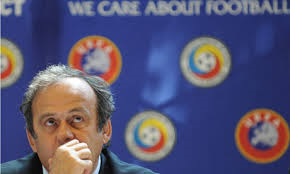
The Parliamentary Assembly (PACE) of the Council of Europe (CoE), which is composed of 318 MPs chosen from the national parliaments of the 47 CoE member states, unanimously adopted a report entitled ‘the reform of football’ on January 27, 2015. A draft resolution on the report will be debated during the PACE April 2015 session and, interestingly, (only?) FIFA’s president Sepp Blatter has been sent an invitation

The PACE report highlights the pressing need of reforming the governance of football by FIFA and UEFA respectively. Accordingly, the report contains some interesting recommendations to improve FIFA’s (e.g., Qatargate[1]) and UEFA’s governance (e.g., gender representation). Unfortunately, it remains unclear how the report’s recommendations will actually be implemented and enforced. 

The report is a welcomed secondary effect of the recent Qatargate directly involving former FIFA officials such as Jack Warner, Chuck Blazer, and Mohamed Bin Hammam[2] and highlighting the dramatic failures of FIFA’s governance in putting its house in order. Thus, it is undeniably time to correct the governance of football by FIFA and its confederate member UEFA – nolens volens. The real question is how to do it.
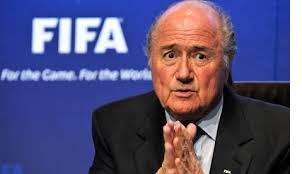


            Photograph: Fabrice Coffrini/AFP/Getty Images                   Photograph: Octav Ganea/AP

More...


SV Wilhelmshaven: a Rebel with a cause! Challenging the compatibility of FIFA’s training compensation system with EU law

Due to the legitimate excitement over the recent Pechstein ruling, many have overlooked a previous German decision rendered in the Wilhelmshaven SV case (the German press did report on the decision here and here). The few academic commentaries (see here and here) focused on the fact that the German Court had not recognized the res judicata effect of a CAS award. Thus, it placed Germany at the spearhead of a mounting rebellion against the legitimacy of the CAS and the validity of its awards. None of the commentators weighed in on the substance of the decision, however. Contrary to the Court in Pechstein, the judges decided to evaluate the compatibility of the FIFA rules on training compensations with the EU free movement rights. To properly report on the decision and assess the threat it may constitute for the FIFA training compensation system, we will first summarize the facts of the case (I), briefly explicate the mode of functioning of the FIFA training compensation system (II), and finally reconstruct the reasoning of the Court on the compatibility of the FIFA rules with EU law (III).More...