Asser International Sports Law Blog

Our International Sports Law Diary
The Asser International Sports Law Centre is part of the T.M.C. Asser Instituut

The UN and the IOC: Beautiful friendship or Liaison Dangereuse?

The IOC has trumpeted it worldwide as a « historical milestone »: the United Nations has recognised the sacrosanct autonomy of sport. Indeed, the Resolution A/69/L.5 (see the final draft) adopted by the General Assembly on 31 October states that it  “supports the independence and autonomy of sport as well as the mission of the International Olympic Committee in leading the Olympic movement”. This is a logical conclusion to a year that has brought the two organisations closer than ever. In April, UN Secretary General Ban Ki-moon appointed former IOC President, Jacques Rogge, Special Envoy for Youth Refugees and Sport. At this occasion, the current IOC President, Thomas Bach, made an eloquent speech celebrating a “historic step forward to better accomplish our common mission for humanity” and a memorandum understanding was signed between the UN and the IOC. This is all sweet and well, but is there something new under the sun?More...

Image Rights in Professional Basketball (Part I): The ‘in-n-out rimshot’ of the Basketball Arbitral Tribunal to enforce players’ image rights contracts. By Thalia Diathesopoulou

A warning addressed to fans of French teams featuring in the recently launched video game NBA 2K15: Hurry up! The last jump ball for Strasbourg and Nanterre in NBA 2K 15 may occur earlier than expected. The French Labour Union of Basketball (Syndicat National du Basket, SNB) is dissatisfied that Euroleague and 2K Games did not ask (nor paid) for its permission before including the two teams of Pro A in the NBA 2K15 edition. What is at issue? French basketball players’ image rights have been transferred to SNB, which intends to start proceedings before the US Courts against 2K Games requesting 120.000 euros for unauthorized use of the players’ image rights. SNB is clear: it is not about the money, but rather to defend the players’ rights.[1] Strasbourg and Nanterre risk to “warm up” the virtual bench if this litigation goes ahead. 
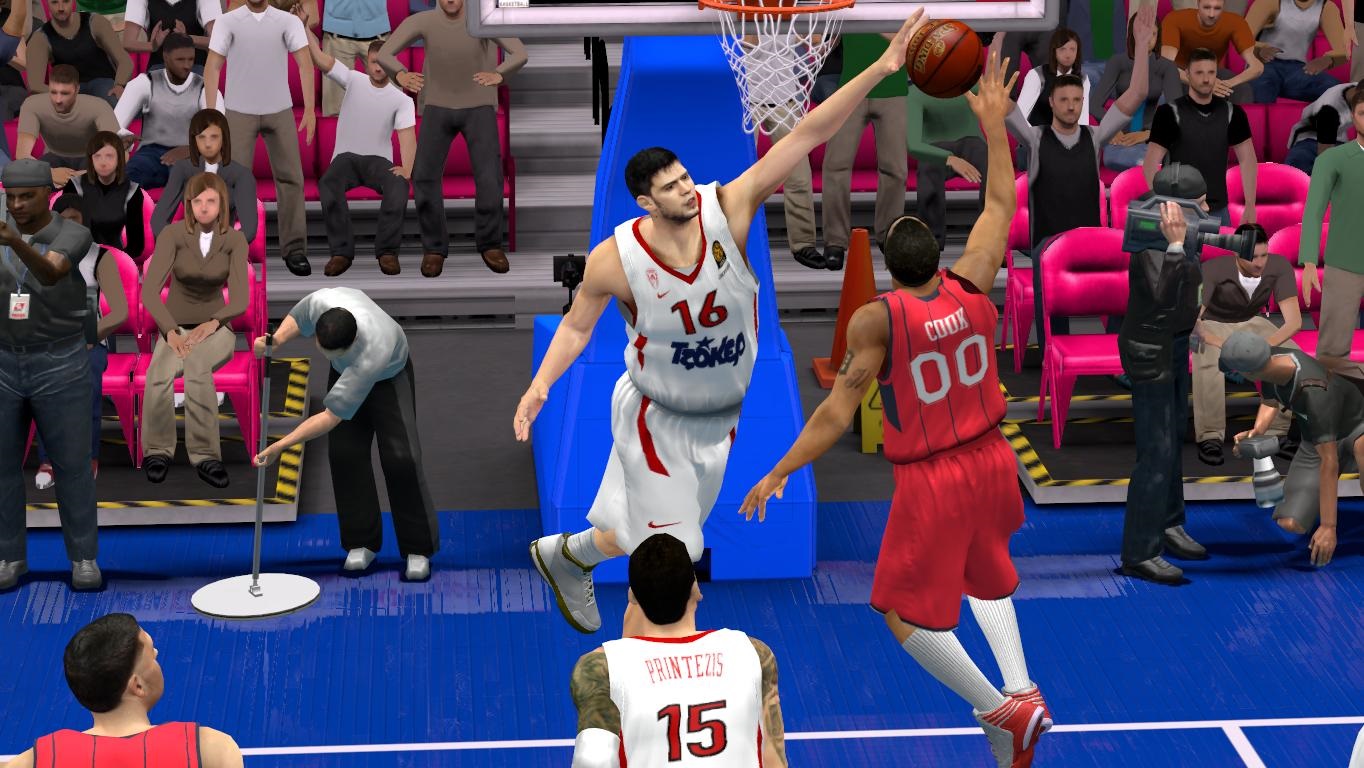
Source: http://forums.nba-live.com/viewtopic.php?f=149&t=88661&start=250 More...

Sport and EU Competition Law: uncharted territories - (II) Mandatory player release systems with no compensation for clubs. By Ben Van Rompuy

The European Commission’s competition decisions in the area of sport, which set out broad principles regarding the interface between sports-related activities and EU competition law, are widely publicized. As a result of the decentralization of EU competition law enforcement, however, enforcement activity has largely shifted to the national level. Since 2004, national competition authorities (NCAs) and national courts are empowered to fully apply the EU competition rules on anti-competitive agreements (Article 101 TFEU) and abuse of a dominant position (Article 102 TFEU).

Even though NCAs and national courts have addressed a series of interesting competition cases (notably dealing with the regulatory aspects of sport) during the last ten years, the academic literature has largely overlooked these developments. This is unfortunate since all stakeholders (sports organisations, clubs, practitioners, etc.) increasingly need to learn from pressing issues arising in national cases and enforcement decisions. In a series of blog posts we will explore these unknown territories of the application of EU competition law to sport.

In this second installment of this blog series, we discuss a recent judgment of the regional court (Landgericht) of Dortmund finding that the International Handball Federation (IHF)’s mandatory release system of players for matches of national teams without compensation infringes EU and German competition law.[1] More...

The CAS Ad Hoc Division in 2014: Business as usual? – Part.1: The Jurisdiction quandary

The year is coming to an end and it has been a relatively busy one for the CAS Ad Hoc divisions. Indeed, the Ad Hoc division was, as usual now since the Olympic Games in Atlanta in 1996[1], settling  “Olympic” disputes during the Winter Olympics in Sochi. However, it was also, and this is a novelty, present at the Asian Games 2014 in Incheon.  Both divisions have had to deal with seven (published) cases in total (four in Sochi and three in Incheon). The early commentaries available on the web (here, here and there), have been relatively unmoved by this year’s case law. Was it then simply ‘business as usual’, or is there more to learn from the 2014 Ad Hoc awards? Two different dimensions of the 2014 decisions by the Ad Hoc Division seem relevant to elaborate on : the jurisdiction quandary (part. 1) and the selection drama (part. 2). More...

Sports Politics before the CAS II: Where does the freedom of speech of a Karate Official ends? By Thalia Diathesopoulou

On 6 October 2014, the CAS upheld the appeal filed by the former General Secretary of the World Karate Federation (WKF), George Yerolimpos, against the 6 February 2014 decision of the WKF Appeal Tribunal. With the award, the CAS confirmed a six-months membership suspension imposed upon the Appellant by the WKF Disciplinary Tribunal.[1] At a first glance, the case at issue seems to be an ordinary challenge of a disciplinary sanction imposed by a sports governing body. Nevertheless, this appeal lies at the heart of a highly acrimonious political fight for the leadership of the WKF, featuring two former ‘comrades’:  Mr Yerolimpos and Mr Espinos (current president of WKF). As the CAS puts it very lucidly, "this is a story about a power struggle within an international sporting body"[2], a story reminding the Saturn devouring his son myth.

This case, therefore, brings the dirty laundry of sports politics to the fore. Interestingly enough, this time the CAS does not hesitate to grapple with the political dimension of the case. More...

The new “Arrangement” between the European Commission and UEFA: A political capitulation of the EU

Yesterday, the European Commission stunned the European Sports Law world when it announced unexpectedly that it had signed a “partnership agreement with UEFA named (creatively): ‘The Arrangement for Cooperation between the European Commission and the Union of European Football Associations (UEFA)’. The press release indicates that this agreement is to “commit the two institutions to working together regularly in a tangible and constructive way on matters of shared interest”. The agreement was negotiated (as far as we know) secretly with UEFA. Despite recent meetings between EU Commissioner for sport Vassiliou and UEFA President Platini, the eventuality of such an outcome was never evoked. It is very unlikely that third-interested-parties (FIFPro, ECA, Supporters Direct etc.) were consulted in the process of drafting this Arrangement. This surprising move by an outgoing Commission will be analysed in a three-ponged approach. First, we will discuss the substance of the Arrangement (I). Thereafter, we will consider its potential legal value under EU law (II). Finally, and maybe more importantly, we will confront the political relevance of the agreement (III).  More...

Sports Politics before the CAS: Early signs of a ‘constitutional’ role for CAS? By Thalia Diathesopoulou

It took almost six months, a record of 26 witnesses and a 68 pages final award for the CAS to put an end to a long-delayed, continuously acrimonious and highly controversial presidential election for the Football Association of Thailand (FAT). Worawi Makudi can sit easy and safe on the throne of the FAT for his fourth consecutive term, since the CAS has dismissed the appeal filed by the other contender, Virach Chanpanich.[1]

Interestingly enough, it is one of the rare times that the CAS Appeal Division has been called to adjudicate on the fairness and regularity of the electoral process of a sports governing body. Having been established as the supreme judge of sports disputes, by reviewing the electoral process of international and national sports federations the CAS adds to its functions a role akin to the one played by a constitutional court in national legal systems. It seems that members of international and national federations increasingly see the CAS as an ultimate guardian of fairness and validity of internal electoral proceedings. Are these features - without prejudice to the CAS role as an arbitral body- the early sign of the emergence of a Constitutional Court for Sport? More...

Olympic Agenda 2020: To bid, or not to bid, that is the question!

This post is an extended version of an article published in August on hostcity.net.

The recent debacle among the candidate cities for the 2022 Winter Games has unveiled the depth of the bidding crisis faced by the Olympic Games. The reform process initiated in the guise of the Olympic Agenda 2020 must take this disenchantment seriously. The Olympic Agenda 2020 took off with a wide public consultation ending in April and is now at the end of the working groups phase. One of the working groups was specifically dedicated to the bidding process and was headed by IOC vice-president John Coates.  More...

The CAS jurisprudence on match-fixing in football: What can we learn from the Turkish cases? - Part 2: The procedural aspects. By Thalia Diathesopoulou

With this blog post, we continue the blog series on Turkish match-fixing cases and our attempt to map the still unchartered waters of the CAS’s match-fixing jurisprudence.

The first blog post addressed two issues related to the substance of match-fixing disputes, namely the legal characterization of the match-fixing related measure of ineligibility under Article 2.08 of the UEL Regulations as administrative or disciplinary measure and the scope of application of Article 2.08. In addition, The Turkish cases have raised procedural and evidentiary issues that need to be dealt with in the framework of match-fixing disputes.

The CAS panels have drawn a clear line between substantial and procedural matters. In this light, the Eskişehirspor panel declared the nature of Article 2.08 UEL Regulations to be administrative and rejected the application of UEFA Disciplinary Regulations to the substance. Nonetheless, it upheld that disciplinary rules and standards still apply to the procedure. This conclusion, however, can be considered puzzling in that disciplinary rules apply to the procedural matters arising by a pure administrative measure. To this extent, and despite the bifurcation of different applicable rules into substantial and procedural matters, the credibility of the qualification of Article 2.08 as administrative seems to be undermined. And here a question arises: How can the application of rules of different nature to substantial and procedural matters in an identical match-fixing dispute be explained?More...

The EU State aid and Sport Saga – A blockade to Florentino Perez’ latest “galactic” ambitions (part 2)

This is the second part of a blog series on the Real Madrid State aid case. In the previous blog on this case, an outline of all the relevant facts was provided and I analysed the first criterion of Article 107(1) TFEU, namely the criterion that an advantage must be conferred upon the recipient for the measure to be considered State aid. Having determined that Real Madrid has indeed benefited from the land transactions, the alleged aid measure has to be scrutinized under the other criteria of Article 107(1): the measure must be granted by a Member State or through State resources; the aid granted must be selective; and it must distorts or threatens to distort competition. In continuation, this blog will also analyze whether the alleged aid measure could be justified and declared compatible with EU law under Article 107(3) TFEU.More...

Asser International Sports Law Blog | Our International Sports Law Diary <br/>The <a href="http://www.sportslaw.nl" target="_blank">Asser International Sports Law Centre</a> is part of the <a href="https://www.asser.nl/" target="_blank"><img src="/sportslaw/blog/media/logo_asser_horizontal.jpg" style="vertical-align: bottom; margin-left: 7px;width: 140px" alt="T.M.C. Asser Instituut" /></a>

Asser International Sports Law Blog

Our International Sports Law Diary
The Asser International Sports Law Centre is part of the T.M.C. Asser Instituut

In Egypt, Broadcasting Football is a Question of Sovereignty … for Now! By Tarek Badawy, Inji Fathalla, and Nadim Magdy

On 15 April 2014, the Cairo Economic Court (the “Court") issued a seminal judgment declaring the broadcasting of a football match a sovereign act of State.[1]


Background

In Al-Jazeera v. the Minister of Culture, Minister of Information, and the Chairman of the Board of Directors of the Radio and Television Union, a case registered under 819/5JY, the Al-Jazeera TV Network (the “Plaintiff” or “Al-Jazeera”) sued the Egyptian Radio and Television Union (“ERTU” or the “Union”) et al. (collectively, the “Respondents”) seeking compensation for material and moral damages amounting to three (3) million USD, in addition to interest, for their alleged breach of the Plaintiff’s exclusive right to broadcast a World Cup-qualification match in Egypt.  Al-Jazeera obtained such exclusive right through an agreement it signed with Sportfive, a sports marketing company that had acquired the right to broadcast Confederation of African Football (“CAF”) World Cup-qualification matches.

ERTU reportedly broadcasted the much-anticipated match between Egypt and Ghana live on 15 October 2013 without obtaining Al-Jazeera’s written approval, in violation of the Plaintiff’s intellectual property rights.

More...


Why the European Commission will not star in the Spanish TV rights Telenovela. By Ben Van Rompuy and Oskar van Maren

The selling of media rights is currently a hot topic in European football. Last week, the English Premier League cashed in around 7 billion Euros for the sale of its live domestic media rights (2016 to 2019) – once again a 70 percent increase in comparison to the previous tender. This means that even the bottom club in the Premier League will receive approximately €130 million while the champions can expect well over €200 million per season.

The Premier League’s new deal has already led the President of the Spanish National Professional Football League (LNFP), Javier Tebas, to express his concerns that this could see La Liga lose its position as one of Europe’s leading leagues. He reiterated that establishing a centralised sales model in Spain is of utmost importance, if not long overdue.

Concrete plans to reintroduce a system of joint selling for the media rights of the Primera División, Segunda División A, and la Copa del Rey by means of a Royal Decree were already announced two years ago. The road has surely been long and bumpy. The draft Decree is finally on the table, but now it misses political approval. All the parties involved are blaming each other for the current failure: the LNFP blames the Sport Governmental Council for Sport (CSD) for not taking the lead; the Spanish Football Federation (RFEF) is arguing that the Federation and non-professional football entities should receive more money and that it should have a stronger say in the matter in accordance with the FIFA Statutes;  and there are widespread rumours that the two big earners, Real Madrid and FC Barcelona, are actively lobbying to prevent the Royal Decree of actually being adopted.

To keep the soap opera drama flowing,  on 30 December 2014, FASFE (an organisation consisting of groups of fans, club members, and minority shareholders of several Spanish professional football clubs) and the International Soccer Centre (a movement that aims to obtain more balanced and transparent football and basketball competitions in Spain) filed an antitrust complaint with the European Commission against the LNFP. They argue that the current system of individual selling of LNFP media rights, with unequal shares of revenue widening the gap between clubs, violates EU competition law.


Source:http://www.gopixpic.com/600/buscar%C3%A1n-el-amor-verdadero-nueva-novela-de-televisa/http:%7C%7Cassets*zocalo*com*mx%7Cuploads%7Carticles%7C5%7C134666912427*jpg/

More...


The 2014 Dortmund judgment: what potential for a follow-on class action? By Zygimantas Juska

Class actions are among the most powerful legal tools available in the US to enforce competition rules. With more than 75 years of experience, the American system offers valuable lessons about the benefits and drawbacks of class actions for private enforcement in competition law. Once believed of as only a US phenomenon, class actions are slowly becoming reality in the EU. After the adoption of the Directive on damages actions in November 2014, the legislative initiative in collective redress (which could prescribe a form of class actions) is expected in 2017.[1] Some pro-active Member States have already taken steps to introduce class actions in some fashion, like, for example, Germany.

What is a class action? It is a lawsuit that allows many similar legal claims with a common interest to be bundled into a single court action. Class actions facilitate access to justice for potential claimants, strengthen the negotiating power and contribute to the efficient administration of justice. This legal mechanism ensures a possibility to claim cessation of illegal behavior (injunctive relief) or to claim compensation for damage suffered (compensatory relief).  More...

The Pechstein ruling of the OLG München - A Rough Translation

The Pechstein decision of the Oberlandesgericht of Munich is “ground-breaking”, “earth-shaking”, “revolutionary”, name it. It was the outmost duty of a “German-reading” sports lawyer to translate it as fast as possible in order to make it available for the sports law community at large (Disclaimer: This is not an official translation and I am no certified legal translator). Below you will find the rough translation of the ruling (the full German text is available here), it is omitting solely the parts, which are of no direct interest to international sports law.

The future of CAS is in the balance and this ruling should trigger some serious rethinking of the institutional set-up that underpins it. As you will see, the ruling is not destructive, the Court is rather favourable to the function of CAS in the sporting context, but it requires a fundamental institutional reshuffling. It also offers a fruitful legal strategy to challenge CAS awards that could be used in front of any national court of the EU as it is based on reasoning analogically applicable to article 102 TFEU (on abuse of a dominant position), which is valid across the EU’s territory.

Enjoy the read! 

Antoine

PS: The translation can also be downloaded at http://papers.ssrn.com/sol3/papers.cfm?abstract_id=2561297

 More...


From Veerpalu to Lalluka: ‘one step forward, two steps back’ for CAS in dealing with Human Growth Hormone tests (by Thalia Diathesopoulou)

In autumn 2011, the Finnish cross-country skier Juha Lalluka, known as a “lone-wolf” because of his training habit, showed an adverse analytical finding with regard to human growth hormone (hGH). The timing was ideal. As the FINADA Supervisory Body in view of the A and B positive samples initiated disciplinary proceedings against Lalluka for violation of anti-doping rules, the Veerpalu case was pending before the CAS. At the athlete’s request, the Supervisory Board postponed the proceedings until the CAS rendered the award in the Veerpalu case. Indeed, on 25 March 2013, the CAS shook the anti-doping order: it cleared Andrus Veerpalu of an anti-doping rule violation for recombinant hGH (rhGH) on the grounds that the decision limits set by WADA to define the ratio beyond which the laboratories should report the presence of rhGH had not proven scientifically reliable.

The Veerpalu precedent has become a rallying flag for athletes suspected of use of hGH and confirmed some concerns raised about the application of the hGH test. Not surprisingly, Sinkewitz and Lallukka followed the road that Veerpalu paved and sought to overturn their doping ban by alleging the scientific unreliability of the hGH decisions limits. Without success, however. With the full text of the CAS award on the Lallukka case released a few weeks ago[1] and the new rules of the 2015 WADA Code coming into force, we grasp the opportunity to outline the ambiguous approach of CAS on the validity of the hGH test. In short: Should the Veerpalu case and its claim that doping sanctions should rely on scientifically well founded assessments be considered as a fundamental precedent or as a mere exception? More...

State Aid and Sport: does anyone really care about rugby? By Beverley Williamson

There has been a lot of Commission interest in potential state aid to professional football clubs in various Member States.  The huge sums of money involved are arguably an important factor in this interest and conversely, is perhaps the reason why state aid in rugby union is not such a concern. But whilst the sums of money may pale into comparison to those of professional football, the implications for the sport are potentially no less serious.

At the end of the 2012/2013 season, Biarritz Olympique (Biarritz) were relegated from the elite of French Rugby Union, the Top 14 to the Pro D2.  By the skin of their teeth, and as a result of an injection of cash from the local council (which amounted to 400,000€), they were spared administrative relegation to the amateur league below, the Fédérale 1, which would have occurred as a result of the financial state of the club.More...

State aid in Croatia and the Dinamo Zagreb case

Introduction

The year 2015 promises to be crucial, and possibly revolutionary, for State aid in football. The European Commission is taking its time in concluding its formal investigations into alleged State aid granted to five Dutch clubs and several Spanish clubs, including Valencia CF and Real Madrid, but the final decisions are due for 2015.

A few months ago, the Commission also received a set of fresh State aid complaints originating from the EU’s newest Member State Croatia. The complaints were launched by a group of minority shareholders of the Croatian football club Hajduk Split, who call themselves Naš Hajduk. According to Naš Hajduk, Hajduk Split’s eternal rival, GNK Dinamo Zagreb, has received more than 30 million Euros in unlawful aid by the city of Zagreb since 2006.More...

“The Odds of Match Fixing – Facts & Figures on the integrity risk of certain sports bets”. By Ben Van Rompuy

Media reports and interested stakeholders often suggest that certain types of sports bets would significantly increase the risks of match fixing occurring. These concerns also surface in policy discussions at both the national and European level. Frequently calls are made to prohibit the supply of “risky” sports bets as a means to preserve the integrity of sports competitions.

Questions about the appropriateness of imposing such limitations on the regulated sports betting, however, still linger. The lack of access to systematic empirical evidence on betting-related match fixing has so far limited the capacity of academic research to make a proper risk assessment of certain types of sports bets. 

The ASSER International Sports Law Centre has conducted the first-ever study that assesses the integrity risks of certain sports bets on the basis of quantitative empirical evidence. 

We uniquely obtained access to key statistics from Sportradar’s Fraud Detection System (FDS). A five-year dataset of football matches worldwide, which the FDS identified as likely to have been targeted by match fixers, enabled us to observe patterns and correlations with certain types of sports bets. In addition, representative samples of football bets placed with sports betting operator Betfair were collected and analysed. 

The results presented in this report, which challenge several claims about the alleged risks generated by certain types of sports bets, hope to inform policy makers about the cost-effectiveness of imposing limits on the regulated sports betting offer.More...

The Pechstein ruling of the Oberlandesgericht München - Time for a new reform of CAS?

Editor's note (13 July 2015): We (Ben Van Rompuy and I) have just published on SSRN an article on the Pechstein ruling of the OLG. It is available at http://papers.ssrn.com/sol3/papers.cfm?abstract_id=2621983. Feel free to download it and to share any feedback with us!


On 15 January 2015, the earth must have been shaking under the offices of the Court of Arbitration for Sport (CAS) in Lausanne when the Oberlandesgericht München announced its decision in the Pechstein case. If not entirely unpredictable, the decision went very far (further than the first instance) in eroding the legal foundations on which sports arbitration rests. It is improbable (though not impossible) that the highest German civil court, the Bundesgerichtshof (BGH), which will most likely be called to pronounce itself in the matter, will entirely dismiss the reasoning of the Oberlandesgericht. This blogpost is a first examination of the legal arguments used (Disclaimer: it is based only on the official press release, the full text of the ruling will be published in the coming months).More...


In blood we trust? The Kreuziger Biological Passport Case. By Thalia Diathesopoulou

Over the last twenty years, professional cycling has developed the reputation of one of the “most drug soaked sports in the world”.[1] This should not come as a surprise. The sport’s integrity has plummeted down due to an unprecedented succession of doping scandals. La crème de la crème of professional cyclists has been involved in doping incidents including Tyler Hamilton, Floyd Landis, Alejandro Valverde and Lance Armstrong. The once prestigious Tour de France has been stigmatized as a race of “pharmacological feat, not a physical one”.[2]

In view of these overwhelming shadows, in 2008, the International Cycling Union (UCI), in cooperation with the World Anti-Doping Agency (WADA) took a leap in the fight against doping. It became the first International Sports Federation to implement a radical new anti-doping program known as the Athlete Biological Passport (ABP).[3] More...

Asser International Sports Law Blog | Our International Sports Law Diary <br/>The <a href="http://www.sportslaw.nl" target="_blank">Asser International Sports Law Centre</a> is part of the <a href="https://www.asser.nl/" target="_blank"><img src="/sportslaw/blog/media/logo_asser_horizontal.jpg" style="vertical-align: bottom; margin-left: 7px;width: 140px" alt="T.M.C. Asser Instituut" /></a>

Asser International Sports Law Blog

Our International Sports Law Diary
The Asser International Sports Law Centre is part of the T.M.C. Asser Instituut

The 2006 World Cup Tax Evasion Affair in Germany: A short guide. By Gesa Kuebek

Editor's note:

Gesa Kuebek holds an LLM and graduated from the University of Bologna, Gent and Hamburg as part of the Erasmus Mundus Master Programme in Law and Economics and now work as an intern for the Asser Instituut.


On Monday, 9 November, the German Football Association (DFB) announced in a Press Release the resignation of its head, Wolfgang Niersbach, over the 2006 World Cup Affair. In his statement, Niersbach argued that he had “no knowledge whatsoever” about any “payments flows” and is now being confronted with proceedings in which he was “never involved”. However, he is now forced to draw the “political consequences” from the situation. His resignation occurred against the backdrop of last week’s raid of the DFB’s Frankfurt headquarters and the private homes Niersbach, his predecessor Theo Zwanziger and long-standing DFB general secretary Horst R. Schmidt. The public prosecutor’s office investigates a particularly severe act of tax evasion linked to awarding the 2006 World Cup. The 2006 German “summer fairy-tale” came under pressure in mid-October 2015, after the German magazine “Der Spiegel” shocked Fußballdeutschland by claiming that it had seen concrete evidence proving that a €6.7 million loan, designated by the FIFA for a “cultural programme”, ended up on the account of Adidas CEO Robert-Louis Dreyfuß. The magazine further argued that the money was in fact a secret loan that was paid back to Dreyfuß. Allegedly, the loan was kept off the books intentionally in order to be used as bribes to win the 2006 World Cup bid. The public prosecutor now suspects the DFB of failing to register the payment in tax returns. German FA officials admit that the DFB made a “mistake” but deny all allegations of vote buying. However, the current investigations show that the issues at stakes remain far from clear, leaving many questions regarding the awarding of the 2006 World Cup unanswered.

The present blog post aims to shed a light on the matter by synthetizing what we do know about the 2006 World Cup Affair and by highlighting the legal grounds on which the German authorities investigate the tax evasion. More...


Blog Symposium: Ensuring proportionate sanctions under the 2015 World Anti-Doping Code. By Mike Morgan

Introduction: The new WADA Code 2015
Day 1: The impact of the revised World Anti-Doping Code on the work of National Anti-Doping Agencies
Day 2: The “Athlete Patient” and the 2015 World Anti-Doping Code: Competing Under Medical Treatment
Day 3: Proof of intent (or lack thereof) under the 2015 World Anti-Doping Code

Editor's note
Mike Morgan is the founding partner of Morgan Sports Law LLP. His practice is focused exclusively on the sports sector. He advises on regulatory and disciplinary issues and has particular experience advising on doping and corruption disputes.

Mike acted on behalf of National Olympic Committees at three of the last four Olympic Games and has represented other sports bodies, clubs and high profile athletes in proceedings before the High Court, the FIFA Dispute Resolution Chamber, the American Arbitration Association and the Court of Arbitration for Sport. More...


Blog Symposium: Proof of intent (or lack thereof) under the 2015 World Anti-Doping Code. By Howard L. Jacobs

Introduction: The new WADA Code 2015
Day 1: The impact of the revised World Anti-Doping Code on the work of National Anti-Doping Agencies
Day 2: The “Athlete Patient” and the 2015 World Anti-Doping Code: Competing Under Medical Treatment
Day 4: Ensuring proportionate sanctions under the 2015 World Anti-Doping Code

Editor's note

Howard Jacobs is solo practitioner in the Los Angeles suburb of Westlake Village, California. Mr. Jacobs has been identified by various national newspapers and publications as one of the leading sports lawyers in the world. His law practice focuses on the representation of athletes in all types of disputes, with a particular focus on the defense of athletes charged with doping offenses.Mr. Jacobs has represented numerous professional athletes, Olympic athletes, world record holders,  and amateur athletes in disputes involving doping, endorsements, unauthorized use of name and likeness, salary issues, team selection issues, and other matters.  He is at the forefront of many cutting edge legal issues that affect athletes, winning cases that have set precedents that have benefited the athlete community. More information is available at www.athleteslawyer.com. More...


Blog Symposium: The “Athlete Patient” and the 2015 World Anti-Doping Code: Competing Under Medical Treatment. By Marjolaine Viret and Emily Wisnosky

Introduction: The new WADA Code 2015
Day 1: The impact of the revised World Anti-Doping Code on the work of National Anti-Doping Agencies
Day 3: Proof of intent (or lack thereof) under the 2015 World Anti-Doping Code
Day 4: Ensuring proportionate sanctions under the 2015 World Anti-Doping Code

Editor's Note
Marjolaine Viret: An attorney-at-law at the Geneva bar, specialising in sports and health law. Her doctoral work in anti-doping was awarded a summa cum laude by the University of Fribourg in early 2015. She gained significant experience in sports arbitration as a senior associate in one of Switzerland’s leading law firms, advising clients, including major sports federations, on all aspects of anti-doping. She also holds positions within committees in sports organisations and has been involved in a variety of roles in the implementation of the 2015 WADC. Her book “Evidence in Anti-Doping at the Intersection of Science & Law” is scheduled for publication in 2015.

Emily Wisnosky: An attorney-at-law admitted to the California bar, she currently participates in the WADC 2015 Commentary research project as a doctoral researcher. She also holds an LLM from the University of Geneva in International Dispute Settlement, with a focus on sports arbitration. Before studying law, she worked as a civil engineer. More...


Blog Symposium: The impact of the revised World Anti-Doping Code on the work of National Anti-Doping Agencies. By Herman Ram

Introduction: The new WADA Code 2015
Day 2: The “Athlete Patient” and the 2015 World Anti-Doping Code: Competing Under Medical Treatment
Day 3: Proof of intent (or lack thereof) under the 2015 World Anti-Doping Code
Day 4: Ensuring proportionate sanctions under the 2015 World Anti-Doping Code

Editor's note
Herman Ram is the Chief Executive Officer of the Anti-Doping Authority the Netherlands, which is the National Anti-Doping Organization of the country. He has held this position since 2006. After working twelve years as a librarian, Herman Ram started his career in sport management in 1992, when he became Secretary general of the Royal Netherlands Chess Federation. In 1994, he moved on to the same position at the Netherlands Badminton Federation. He was founder and first secretary of the Foundation for the Promotion of Elite Badminton that was instrumental in the advancement of Dutch badminton. In 2000 he was appointed Secretary general of the Netherlands Ski Federation, where he focused, among other things, on the organization of large snowsports events in the Netherlands. Since his appointment as CEO of the Anti-Doping Authority, he has developed a special interest in legal, ethical and managerial aspects of anti-doping policies, on which he has delivered numerous presentations and lectures. On top of that, he acts as Spokesperson for the Doping Authority. Herman Ram holds two Master’s degrees, in Law and in Sport Management. More...


Blog Symposium: The new WADA Code 2015 - Introduction

Day 1: The impact of the revised World Anti-Doping Code on the work of National Anti-Doping Agencies
Day 2: The “Athlete Patient” and the 2015 World Anti-Doping Code: Competing Under Medical Treatment
Day 3: Proof of intent (or lack thereof) under the 2015 World Anti-Doping Code
Day 4: Ensuring proportionate sanctions under the 2015 World Anti-Doping Code

On 1 January, a new version of the World Anti-Doping Code (WADC or Code) entered into force. This blog symposium aims at taking stock of this development and at offering a preliminary analysis of the key legal changes introduced. The present blog will put the WADC into a more general historical and political context. It aims to briefly retrace the emergence of the World Anti-Doping Agency (WADA) and its Code. It will also reconstruct the legislative process that led to the adoption of the WADC 2015 and introduce the various contributions to the blog symposium.More...


To pay or not to pay? That is the question. The case of O’Bannon v. NCAA and the struggle of student athletes in the US. By Zlatka Koleva

Editor's note
Zlatka Koleva is a graduate from the Erasmus University Rotterdam and is currently an Intern at the ASSER International Sports Law Centre.

The decision on appeal in the case of O’Bannon v. NCAA seems, at first sight, to deliver answers right on time regarding the unpaid use of names, images and likenesses (NILs) of amateur college athletes, which has been an ongoing debate in the US after last year’s district court decision that amateur players in the college games deserve to receive compensation for their NILs.[1] The ongoing struggle for compensation in exchange for NILs used in TV broadcasts and video games in the US has reached a turning point and many have waited impatiently for the final say of the Court of Appeal for the 9th circuit. The court’s ruling on appeal for the 9th circuit, however, raises more legitimate concerns for amateur sports in general than it offers consolation to unprofessional college sportsmen. While the appellate court agreed with the district court that NCAA should provide scholarships amounting to the full cost of college attendance to student athletes, the former rejected deferred payment to students of up to 5,000 dollars for NILs rights. The conclusions reached in the case relate to the central antitrust concerns raised by NCAA, namely the preservation of consumer demand for amateur sports and how these interests can be best protected under antitrust law. More...


The European Commission’s ISU antitrust investigation explained. By Ben Van Rompuy

In June 2014, two prominent Dutch speed skaters, Mark Tuitert (Olympic Champion 1500m) and Niels Kerstholt (World Champion short track), filed a competition law complaint against the International Skating Union (ISU) with the European Commission.


ChanceToCompeteTwitter.png (50.4KB)


Today, the European Commission announced that it has opened a formal antitrust investigation into International Skating Union (ISU) rules that permanently ban skaters from competitions such as the Winter Olympics and the ISU World and European Championships if they take part in events not organised or promoted by the ISU. The Commissioner for Competition, Margrethe Vestager, stated that the Commission "will investigate if such rules are being abused to enforce a monopoly over the organisation of sporting events or otherwise restrict competition. Athletes can only compete at the highest level for a limited number of years, so there must be good reasons for preventing them to take part in events."

Since the case originates from legal advice provided by the ASSER International Sports Law Centre, we thought it would be helpful to provide some clarifications on the background of the case and the main legal issues at stake. More...


Interview with Wil van Megen (Legal Director of FIFPro) on FIFPro’s EU Competition Law complaint against the FIFA Transfer System

Editor’s note
Wil is working as a lawyer since 1980. He started his legal career at Rechtshulp Rotterdam. Later on he worked for the Dutch national trade union FNV and law firm Varrolaan Advocaten. Currently he is participating in the Labour Law Section of lawfirm MHZ-advocaten in Schiedam in the Netherlands. He is also a member of a joint committee advising the government in labour issues.

Since 1991 he is dealing with the labour issues of the trade union for professional football players VVCS and cyclists’ union VVBW. Since 2002, he works for FIFPro, the worldwide union for professional football players based in Hoofddorp in the Netherlands. He is involved in many international football cases and provides legal support for FIFPro members all over the world. Wil was also involved in the FIFPro Black Book campaign on match fixing and corruption in Eastern Europe. More...


The Scala reform proposals for FIFA: Old wine in new bottles?

Rien ne va plus at FIFA. The news that FIFA’s Secretary General Jérôme Valcke was put on leave and released from his duties has been quickly overtaken by the opening of a criminal investigation targeting both Blatter and Platini.

With FIFA hopping from one scandal to the next, one tends to disregard the fact that it has been attempting (or rather pretending) to improve the governance of the organisation for some years now. In previous blogs (here and here), we discussed the so-called ‘FIFA Governance Reform Project’, a project carried out by the Independent Governance Committee (IGC) under the leadership of Prof. Dr. Mark Pieth of the Basel Institute on Governance. Their third and final report, published on 22 April 2014, listed a set of achievements made by FIFA in the area of good governance since 2011, such as establishing an Audit and Compliance Committee (A&C). However, the report also indicated the reform proposals that FIFA had not met. These proposals included the introduction of term limits for specific FIFA officials (e.g. the President) as well as introducing an integrity review procedure for all the members of the Executive Committee (ExCo) and the Standing Committees. More...