Asser International Sports Law Blog

Our International Sports Law Diary
The Asser International Sports Law Centre is part of the T.M.C. Asser Instituut

Call for Papers - How football changed Qatar (or not): Transnational legal struggles in the shadow of the FIFA World Cup 2022 - Deadline 6 January 2023

The FIFA World Cup 2022 in Qatar is now well under way, yet the relentless public debates around Qatar’s human rights record, be it regarding the rights of LGBTQ+ or the rights of migrant workers who built the infrastructure that underpin the competition, is not dying down. In fact, the whole build-up towards the event has been defined by an intense public scrutiny of Qatar, with civil society organizations and international labor unions engaging in continuous advocacy to report on and improve the living and working conditions of migrant workers active on Qatar’s many building sites. This issue also attracted attention and critique from both the international media and public authorities all around the globe. In fact, the question of Qatar’s (lack of) compliance with internationally recognized human rights and core labor standards caused so much negative publicity and external pressure that a number of legislative and institutional reforms were initiated, officially aimed at improving the rights and standing of migrant workers in Qatar. While it is highly disputed whether these reforms have led to actual changes on the ground or should be seen only as window-dressing, it remains clear that the global public attention brought to Qatar by its hosting of the FIFA World Cup 2022 has forced the Qatari authorities to engage legislative reforms and pay at least lip service to the concerns raised.

In spite of the fact that this issue continues to play a major role in the transnational public discourse, it received until now relatively scant attention in the academic literature, specifically in the international/transnational legal field. Yet, the debates around the Qatar 2022 World Cup are in practice mobilizing a range of legal arguments connected to the interpretation and application of international human rights law and international labor law, as well as activating international (at the ILO) or transnational (at the Swiss OECD National Contact Point) legal processes. Furthermore, they raise well-known questions regarding the compliance of states with international legal commitments and connect with debates on the universality of human rights and their translation in particular social contexts. In short, we believe there is room for a multi-disciplinary engagement with the legal processes and social mobilizations triggered by Qatar’s successful bid to host the FIFA World Cup 2022 and their impacts on local social and legal rules and institutions. Hence, Qatar’s journey towards the FIFA World Cup 2022 constitutes an interesting case study to investigate more generally the transnational social and legal mechanisms which underpin the concretization of international (human rights/labor) law in a particular context and give it a specific reality.

We invite paper submissions from different methodological backgrounds (e.g. law, anthropology, sociology, history, public policy) which engage with the many entanglements of Qatar with international (human rights and labor) law in the context of the organizing and hosting of the FIFA World Cup 2022. The papers will be first discussed in a digital workshop that will take place on 15 and 16 February 2023. Please note that we have an agreement with the German Law Journal (Open access journal on comparative, European and international law published by Cambridge University Press) to publish a selection of the papers.

If you wish to participate in the workshop and the ensuing publications, please send an abstract of max. 300 words and a CV to a.duval@asser.nl by 6 January 2023. The selected participants will be informed by 9 January 2023. Extended abstracts (2000 words) will be due on 6 February 2023.


Supported by German Law Journal


Time to focus on freedom of expression: Rainbows, armbands, and FIFA’s commitment to human rights - By Prof. Mark James (Manchester Metropolitan University)

Editor's note: Mark James is Professor of Sports Law at Manchester Metropolitan University and the author of a leading Sports Law textbook.


The opening days of the FIFA World Cup Qatar 2022 have already resulted in a number of issues of interest to sports lawyers and human rights lawyers, with FARE’s Piara Powar claiming that this is the most political major sporting event that he has attended. Both FIFA and the local organisers have been active in their suppression of expressions of support for LGBTQIA+ rights by players, fans and journalists alike, calling into question once again the legality of restricting free speech by sporting rules and regulations.

There have been two major flashpoints to date. First, seven European federations had asked FIFA for permission for their captains to wear armbands supporting the ‘OneLove’ campaign. FIFA’s response was to refuse, resulting in the German players covering their mouths for their pre-match photographs in protest at their being silenced. There are several grounds on which FIFA would seek to support its position:

  •  Law 4.5 of the Laws of the Game prohibits any playing equipment from carrying any political, religious or personal slogans, statements or images.
  • Regulation 4.3.1 of FIFA’s Equipment Regulations and Regulation 27.1 of the FIFA World Cup 2022 Regulations prohibits clothing or equipment that includes political, religious, or personal slogans, statements, or images, or otherwise does not comply in full with the Laws of the Game.
  • Regulation 33.3 of the FIFA World Cup 2022 Regulations prohibits the display of political, religious or personal messages or slogans of any nature in any language or form by players and officials.
  • Regulation 13.8.1 of FIFA’s Equipment Regulations states that for FIFA Final Competitions, the captain of each Team must wear the captain’s armband provided by FIFA (all Regulations available in the FIFA Legal Handbook 2022).

Although the DFB is considering a challenge to FIFA’s refusal to allow its captain to wear the OneLove armband, which would ultimately be heard before CAS, it is unlikely to succeed in the face of the strict requirements of the above Laws and Regulations. However, what could cause more difficulty for both FIFA and CAS is if the DFB frames its case as a challenge to the compliance of the rules that restrict players’ freedom of expression with Article 3 of FIFA’s Statutes, which states that ‘FIFA is committed to respecting all internationally recognised human rights.’ Article 3, together with the additional detail provided by FIFA’s Human Rights Policy, ensures that freedom of expression as defined in Article 19 of the Universal Declaration of Human Rights and Article 10 of the European Convention on Human Rights are limitative rules that can be applied directly to FIFA’s activities, as has been argued by Bützler and Schöddert. Further, if the affected players and associations can define themselves as human rights defenders, then Article 11 of FIFA’s Human Rights Policy states that, ‘FIFA will respect and not interfere with the work of … human rights defenders who voice concerns about adverse human rights impacts relating to FIFA.’ Any challenge using this approach would be the first real test of the enforceability of the human rights protections to which FIFA claims to be committed. It would also be a test of CAS’s ability to require adherence to the human rights commitments made by ISFs and to prove that they are more than simple window-dressing.

Secondly, members of The Rainbow Wall, a contingent of LGBTQIA+ rights-supporting Welsh fans, were prevented from entering the Ahmed bin Ali stadium whilst wearing bucket hats incorporating a rainbow into its design. No explanation for why was given, however, FIFA and the local organisers would argue that openly supporting LGBTQIA+ rights with the aim of promoting legal change in a country where homosexuality is illegal is a political statement on apparel and therefore entry into the stadium wearing the rainbow hat is in breach of the Regulation 3.1.23 of the Stadium Code of Conduct. A similar argument could be used to justify preventing US journalist Grant Wahl from entering the stadium wearing a t-shirt incorporating a rainbow into its design and Danish journalist Jon Pagh from wearing the OneLove armband. However, it must be stressed that no such explanation for the prohibitions applied to these garments was provided to any of the affected fans or journalists. It must also be recognised that the opinion that promoting LGBTQIA+ rights is a political expression is highly contested. In a statement from FIFPRO, the opposing view was stated succinctly: ‘We maintain that a rainbow flag is not a political statement but an endorsement of equality and thus a universal human right.’

It is clear that, as with Rule 50 of the Olympic Charter, the chilling effect that FIFA’s Regulations have on players’ and fans’ freedom of expression is likely to be unlawful, as has been discussed at length both on this blog and on the Verfassungsblog Debate on Freedom of Expression in the Olympic Movement. Instead of revisiting these arguments, which are taken to apply to FIFA’s actions at Qatar 2022, two additional issues related to the FIFA Statutes are explored here.

Articles 3 and 4 of FIFA’s Statutes state that:

3 Human rights

FIFA is committed to respecting all internationally recognised human rights and shall strive to promote the protection of these rights.

4 Non-discrimination, equality and neutrality

4.1 Discrimination of any kind against a country, private person or group of people on account of race, skin colour, ethnic, national or social origin, gender, disability, language, religion, political opinion or any other opinion, wealth, birth or any other status, sexual orientation or any other reason is strictly prohibited and punishable by suspension or expulsion.

FIFA is a long-time supporter of pride events and in its press release for Pride Month 2022 stated:

[The] FIFA World Cup Qatar 2022™ will be a celebration of unity and diversity – a joining of people from all walks of life – regardless of race, ethnicity, religion, age, disability, sex characteristics, sexual orientation, gender identity and expression – everybody will be welcome.

Claims that all staff involved in the Qatar 2022 including public and private security forces, would be trained on how to accomplish their tasks in a non-discriminatory manner, seem not to have been operationalised effectively.

This begs the question whether FIFA is in breach of its own Statutes by refusing to allow players to express themselves freely on armbands and failing to protect fans’ freedom of expression by wearing rainbows. At the very least, FIFA should have ensured that a protective LGBTQIA+ regime in the stadiums and the fan zones during the World Cup was implemented to enable the ‘celebration of unity and diversity’ it claims that Qatar 2022 should be. FIFA’s actions in Qatar call into question its claims to be an inclusive and supportive leader on anti-discrimination and human rights, and is likely to see a backlash from the LGBTQIA+ community that it claims to support when it engages with Pride 2023; accusations of hypocrisy and virtue signalling are guaranteed.

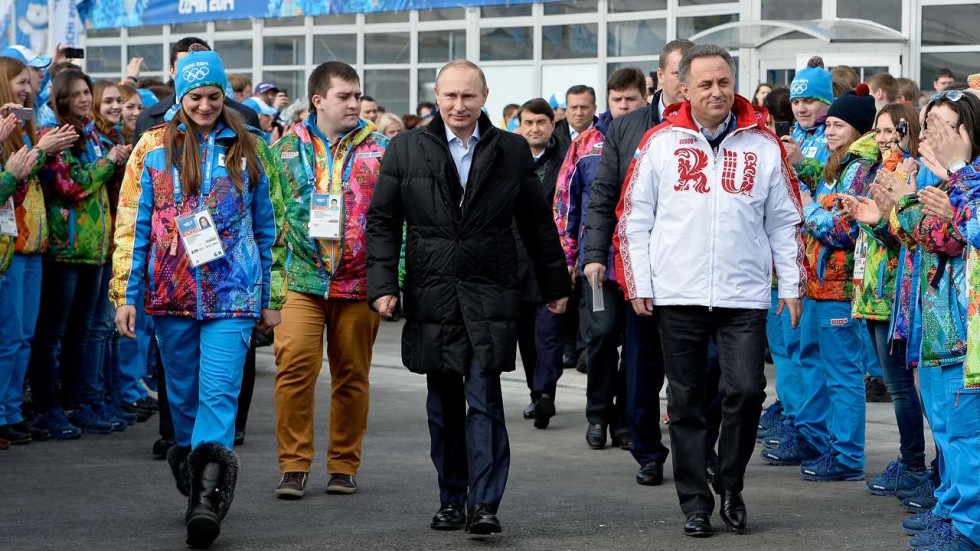
With no resolution to the debate at the time of writing, Articles 3 and 4 could provide players and fans with the opportunity to demonstrate their support for human rights and anti-discrimination causes. At the Sochi 2014 Winter Olympics, Athlete Ally developed the ‘Principle 6 Campaign.’ Instead of criticising directly Russia's so called anti-gay laws, which are currently in the process of being extended, athletes promoted Principle 6 of the Olympic Charter, which at the time stated that, ‘Any form of discrimination with regard to a country or a person on grounds of race, religion, politics, gender or otherwise is incompatible with belonging to the Olympic Movement.’ The eventual outcome of this campaign was the addition of sexual orientation to the list of characteristics protected by Principle 6. Unlike at Sochi 2014, there is no need to campaign for a change to either of Articles 3 or 4 of the FIFA Statutes; instead, activists want to ensure that they are being applied. An immediate response for both players and fans would be for them to quote specifically from Articles 3 and 4, as it would be extremely difficult for FIFA to claim that they are making political or personal statements when promoting FIFA’s own foundational values. A creative reminder of what FIFA claims to stand for could enable player and fan activism to continue throughout the tournament, and beyond, whilst affected players and associations can develop a compelling case for the restrictions on freedom of expression to be struck out by CAS, the Swiss Federal Tribunal and/or the European Court of Human Rights.

New Event - Zoom In - Sports Governing Bodies and the Russian invasion of Ukraine - The end of neutrality? - 12 October - 16.00-17.30 CET

Sport is often presented by Sports Governing Bodies (SGBs), and in particular the International Olympic Committee, as apolitical. A neutral endeavor, which ignores the whims of politics and keeps national governments at arm’s length. In short, it is thought of as an autonomous sphere of transnational society wishing to remain unaffected by the political turbulences out there. In fact, many SGBs enforce strict rules banning political speech by individuals, and in the spaces, subjected to their contractual power. Moreover, FIFA, for example, regularly issues effective sanctions against states which are perceived as threatening the autonomy of the governance of football on their territory. Hence, this apolitical ideal of international sports is not only a founding myth of the Olympic Movement, it is actively pursued by SGBs through their private regulatory powers and has hard consequences for athletes, clubs, sport officials alike.


Yet, on 24 February, Russia decided to invade Ukraine, in what has become the most important land war in Europe since the implosion of ex-Yugoslavia. This invasion was quickly followed by condemnations from the IOC and many other SGBs, leading in many cases, most prominently by UEFA and FIFA, to the exclusion of Russian teams and athletes from international sporting competitions. This reaction is difficult to square with the neutrality and autonomy of sport so vigorously defended by the international SGBs until recently. It raises also many questions of double standards: why did this illegal invasion lead to sporting consequences and not others? Furthermore, the Court of Arbitration of Sport recently released two orders (available here and here) concerning UEFA and FIFA’s decisions to exclude Russian national teams and clubs from their football competitions, which outline the legal strategies pursued by the SGBs to reconcile the public urge to exclude Russia(ns) from international sporting competitions, and their commitments to political neutrality.

We are very happy to welcome three outstanding scholars to discuss these issues with us from different methodological perspectives.

Speakers:

  • Prof. Carmen Pérez (Universidad Carlos III de Madrid), who wrote a blog on the reactions of SGBs to Russia’s invasion
  • Dr. Daniela Heerdt (Asser Institute and Centre for Sports and Human Rights), who is the co-author of a blog mapping the reactions of SGBs to Russia’s invasion
  • Carole Gomez (University of Lausanne and Institut de Relations Internationales et Strategiques), who has been interviewed numerous times by international media on the issue (see here and here)

Moderators:

Register for free HERE!


ISLJ Conference 2022 - Transnational sports law and governance in turbulent times - Early Bird Registration Ends Tomorrow!

On 25 and 26 October 2022, the Asser Institute in The Hague will host the 2022 edition of the International Sports Law Journal (ISLJ) Conference. The ISLJ is the leading academic journal in transnational sports law and governance and is proud to provide a platform for transnational debates on the state of the field. 2022 has put a number of complex issues and disputes on the top of the transnational sports law agenda, which will be at the heart of the conference.


Sports governing bodies react to Russia's invasion of Ukraine
First, Russia’s brutal invasion of Ukraine in February triggered a swift and decisive reaction by a wide range of international sports governing bodies (SGBs), leading in particular to the exclusion of Russian teams and athletes from many international sporting competitions, including most prominently the FIFA World Cup 2022 in Qatar. These reactions have shown, once again, that sport is far from immune from the turbulences of international relations and raise the question of its alleged neutrality and apolitical nature. To engage with these issues, we have invited Prof. Jonathan Grix (Metropolitan Manchester University) to deliver a keynote speech and will dedicate a specific panel to discussing the intersection between transnational sports law and international law/relations.

Monopoly of sports governing bodies
Second, the organization of international sports is also currently threatened by challenges to the traditional monopoly position of international SGBs raised under EU antitrust law. Early July 2022, the Grand Chamber of the Court of Justice of the European Union heard two crucial cases (International Skating Union and Superleague) concerning the compatibility of the rules of international SGBs aimed at sanctioning athletes and clubs who participate in unauthorized third-party competitions. Dr. Van Rompuy (Leiden University), the driving force behind the ISU case, will be discussing with us the potential impact of competition law on the governance of sport and what to expect from the pending decisions of the CJEU. Additionally, we will host two panels dedicated to the application of competition law to sports governance, both at an international and national level.

Human rights and mega-sporting events
Third, with both Beijing and Qatar hosting mega-sporting events this year, it is difficult to ignore the human rights issues raised by international sporting competitions. A fast-growing social movement aimed at urging the SGBs to abide by their human rights responsibilities has been developing around the activism of some NGOs and the creation of the Centre for Sport and Human Rights (CSHR). The CEO of the CSHR, Mary Harvey, will be joining us to share her thoughts on the role of sports lawyers and sports law academics in this discussion. Her intervention will be followed by a panel dedicated to the intersections between human rights and transnational sports law and governance.

Trans and queer participation in sporting competitions
Finally, the question of the participation of transgender athletes in sporting competitions has become an extremely contentious issue of debate in recent years, especially in the United States. Furthermore, International SGBs, such as FINA recently, have started to impose specific requirements to the participation of trans athlete in international competitions. Our closing panel will take a fresh look at this question by foregrounding the way in which trans and queer participation in sporting competitions has been accommodated in South Asia.

Online participation available
For the first time this year, we will allow online participation to the conference for an affordable price. Our aim is to internationalise and diversify further our audience and to reach people who in light of the current challenges, be it Covid-19 or climate change, are not in a position to come in person to The Hague.

Programme
Download the full programme.

Register HERE! (Early Bird Registration is available only until 1 October, 23:59CET)

A personal reflection on the Summer Programme on Sports Governance and Human Rights - By Pedro José Mercado Jaén

Editor’s note:Pedro is an intern at the Asser Institute and currently studying the Erasmus Mundus Master Degree in Sports Ethics and Integrity (KU Leuven et al.) He was one of the participants of the first edition of the Summer Programme on Sports Governance and Human Rights.


In early September, the first Summer Programme on the Governance of Sport and Human Rights took place at the Asser Institute. During one week, various experts in the field presented different lectures to a very diverse group of participants with a wide range of professional backgrounds. Being a participant myself, I would like to reflect on this one-week course and share what I learned. More...


Can Formula 1 drive to protect human rights? A case study of the Bahrain GP - By Pedro José Mercado Jaén

Editor's Note: Pedro is an intern at the Asser Institute and currently studying the Erasmus Mundus Master Degree in Sports Ethics and Integrity (KU Leuven et al.) He worked as a research fellow for the Centre for Sport and Human Rights, and his primary research interests lie in the fields of International Human Rights and sport. 


I.               Introduction

“I can’t do everything and I can’t do it alone. I need allies.” These are the words of the seven-time Formula 1 (F1) world champion, Lewis Hamilton. He was urging more support to advocate for the protection of human rights in the countries visited by Formula 1. During the last years, Hamilton together with Sebastian Vettel, have become the leaders of a movement demanding accountability and greater awareness of the impact of F1 on society.

The inclusion of the Bahrain GP on the F1 racing calendar for the first time in 2004 ignited concerns, which have grown with the inclusion of Abu Dhabi in 2007, Russia in 2014, Azerbaijan in 2017, and Saudi Arabia and Qatar in 2021. The inability and lack of commitment of state authorities to protect and respect human rights, the ineffectiveness of judicial procedures and the systematic repression of political opposition are some of the factors that make these countries prone to human rights violations. Academics and CSOs regularly argue that F1, by signing multi-million dollar contracts with these countries, is complicit in sportswashing. Those pulling the sport’s strings deny these accusations and claim that human rights are at the centre of their agenda when they visit these countries. They claim F1 can drive the improvement of human rights standards in a particular country. However, reality tells a different story. The Bahrain GP has been running for more than a decade and the situation in the country has only worsened, without any signs of F1 contributing to the improvement of the protection of human rights there.

This blog aims to provide an overview of the human rights challenges F1 is facing when hosting a Grand Prix. For this purpose, a case study of the Bahrain GP, one of the longest-running on the modern/current F1 calendar, will be carried out. This will allow us to examine in detail the historical evolution of the GP, the complaints from civil society organisations and the reaction of the Federation Internationale de l’Automobile (FIA) and other stakeholders to the ongoing allegations of human rights violations.More...


Call for papers - ISLJ Conference on International Sports Law - Asser Institute - 25 and 26 October 2022


Call for papers

ISLJ Conference on International Sports Law

Asser Institute, The Hague

25 and 26 October 2022


The Editors of the International Sports Law Journal (ISLJ) invite you to submit abstracts for the ISLJ Conference on International Sports Law, which will take place on 25 and 26 October 2022 at the Asser Institute in The Hague. The ISLJ, published by Springer and TMC Asser Press, is the leading academic publication in the field of international sports law. The conference is a unique occasion to discuss the main legal issues affecting international sports and its governance with renowned academic experts.


We are delighted to announce the following confirmed keynote speakers:

  • Jonathan Grix (Professor of Sport Policy and Politics at Manchester Metropolitan University), and
  • Mary Harvey (CEO at the Centre for Sport and Human Rights),
  • Ben Van Rompuy (Assistant Professor at Leiden University).


We welcome abstracts from academics and practitioners on all issues related to international sports law and governance. We also welcome panel proposals (including a minimum of three presenters) on a specific issue. For this year’s edition, we specifically invite submissions on the following themes and subthemes:

  • International sports law and governance in times of conflict:
    • The emergence of the idea(l) of political neutrality of SGBs and its translation in legal/governance practice
    • The intersection between public international law and international sports law and governance in the context of international conflicts
    • The role of sports diplomacy/conditionality in the context of international conflicts
    • International sports law and the Russian invasion of Ukraine

  • Human rights and mega sporting events (MSEs)
    • The adverse or positive impact of MSEs on (specific) human rights
    • The influence of human rights commitments on the organisation of MSEs
    • The effects of MSEs on human rights in organising countries
    • The responsibilities and strategies of SGBs to ensure respect of human rights at MSEs
    • The role and responsibilities of states in ensuring respect of human rights in the context of MSEs

  • Competition law and challenges to the governance monopoly of SGBs
    • The impact of competition law on SGBs and their governance
    • The limits of competition law on effecting change in the governance of sport
    • The specific modalities of application of competition law to sports governance
    • The legitimacy of competition authorities in challenging SGBs


Please send your abstract of 300 words and CV no later than 1 July 2022 to a.duval@asser.nl. Selected speakers will be informed by 15 July.

The selected participants will be expected to submit a draft paper by 10 October 2022. Papers accepted and presented at the conference are eligible for publication in a special issue of the ISLJ subject to peer-review. Submissions after this date will be considered for publication in later editions of the Journal.

The Asser Institute will cover one night accommodation for the speakers and may provide a limited amount of travel grants (max. 250€). If you wish to be considered for a grant, please indicate it in your submission.

Reactions of International Sport Organisations to the Russian Invasion of Ukraine: An Overview - By Daniela Heerdt & Guido Battaglia

Editor's note:

Daniela is a researcher at the Asser Institute in the field of sport and human rights. She has a background in public international law and human rights law and defended her PhD project entitled “Blurred Lines of Responsibility and Accountability – Human Rights Abuses at Mega-Sporting Events” in April 2021 at Tilburg University. She also works as independent consultant in the field of sport and human rights for the Centre for Sport and Human Rights, or the European Parliament among other clients from the sports ecosystem

As Head of Policy and Outreach, Guido is in charge of the Centre for Sport & Human Rights engagement with governments, international and intergovernmental organisations and sports organisations. He represents the Centre at conferences, events and bilateral dialogues to reach new audiences and partners and raise public awareness and understanding of the Centre’s work .


On February 24, 2022, the Russian military invaded Ukrainian territory. What followed was an escalation of the war, day by day, causing thousands of victims and forcing millions of people to flee. On March 2, the UN General Assembly overwhelmingly adopted a resolution deploring "in the strongest possible terms" Russia's aggression against Ukraine by a vote of 141 to 5, with 35 abstentions. On March 29, Russian and Ukrainian representatives met in Istanbul for another round of negotiations. No ceasefire has been agreed and hostilities continue.

Many states, international organizations and corporations quickly took measures in response to this invasion. Hundreds of companies decided to withdraw from Russia. Some countries decided to strengthen economic sanctions against Russia and Belarus and to provide military and economic help to Ukraine. Many civil society actors mobilised to organize and provide humanitarian support for Ukraine. Interestingly, international sports organisations like the International Olympic Committee (IOC), the Fédération Internationale de Football Association (FIFA), World Athletics and many other international federations, issued statements condemning the invasion and imposed bans and sanctions on Russian and Belarussian sports bodies and athletes.

This blog post provides an overview of the measures adopted by a number of international sports federations (IFs) that are part of the Olympic Movement since the beginning of the war and analyses how they relate to the statements issued by the IOC and other sanctions and measures taken by international sports organisations in reaction to (geo)political tensions and conflict.

More...


[Conference] Towards a European Social Charter for Sport Events - 1 December - 13:00-17:00 - Asser Institute

Sport events, especially when they are of a global scale, have been facing more and more questions about their impact on local communities, the environment, and human rights. 

It has become clear that their social legitimacy is not a given, but must be earned by showing that sport events can positively contribute to society. During this half-day conference, we will debate the proposal of a European Social Charter for Sport Events in order to achieve this goal. 

In January 2021, a consortium of eight partners launched a three-year project, supported by the European Commission under the Erasmus+ scheme, aimed at devising a European Social Charter for Sport Events (ESCSE). The project ambitions to develop a Charter which will contribute to ensuring that sport events taking place in the European Union are socially beneficial to the local communities concerned and, more generally, to those affected by them. The project is directly inspired by the decision of the Paris 2024 bid to commit to a social charter enforced throughout the preparation and the course of the 2024 Olympics.

This first public event in the framework of the ESCSE project, will be introducing the project to a wider public. During the event we will review the current state of the implementation of the Paris 2024 Social Charter, discuss the expectations of stakeholders and academics for a European Social Charter and present for feedback the first draft of the ESCSE (and its implementing guidelines) developed by the project members. It will be a participatory event; we welcome input from the participants.

The Asser International Sports Law Centre, powered by the Asser Institute, is contributing to the project through the drafting of a background study, which we will introduce during the conference.

Please note that we can provide some financial support (up to 100 euros)  towards travel and/or accommodation costs for a limited number of participants coming from other EU Member States or the UK. To apply for this financial support please reach out to ConferenceManager@asser.nl.  `

Register HERE

undefined

undefined

Asser International Sports Law Blog | Guest Blog - Mixed Martial Arts (MMA): Legal Issues by Laura Donnellan

Asser International Sports Law Blog

Our International Sports Law Diary
The Asser International Sports Law Centre is part of the T.M.C. Asser Instituut

Guest Blog - Mixed Martial Arts (MMA): Legal Issues by Laura Donnellan

Editor's note: Laura Donnellan is a lecturer at University of Limerick. You can find her latest publications here.


Introduction

On Tuesday the 12th of April, João Carvalho passed away in the Beaumont Hospital after sustaining serious injuries from a mixed martial arts (MMA) event in Dublin on the previous Saturday. The fighter was knocked out in the third round of a welterweight fight against Charlie Ward. Aside from the tragic loss of life, the death of Carvalho raises a number of interesting legal issues. This opinion piece will discuss the possible civil and criminal liability that may result from the untimely death of the Portuguese fighter.

It is important to note at the outset that MMA has few rules and permits wrestling holds, punching, marital arts throws and kicking. MMA appears to have little regulation and a lack of universally accepted, standardised rules. There is no international federation or governing body that regulates MMA. It is largely self-regulated. MMA is not recognised under the sports and governing bodies listed by Sport Ireland, the statutory body established by the Sport Ireland Act 2015 which replaced the Irish Sports Council. MMA is considered a properly constituted sport so long as the rules and regulations are adhered to, there are appropriate safety procedures, the rules are enforced by independent referees, and it appropriately administered.

The Acting Minister for Sport, Michael Ring, has called for the regulation of MMA. Currently there are no minimum requirements when it comes to medical personnel; nor are there any particular requirements as to training of medical personnel. The promoter decides how many doctors and paramedics are to be stationed at events. In February 2014 Minister Ring wrote to 17 MMA promoters in Ireland requesting that they implement safety precautions in line with those used by other sports including boxing and rugby.

Despite this lack of regulation, this does not exempt MMA from legal liability as the discussion below demonstrates.


Legal Issues-Civil Liability

The death of Carvalho may expose those involved in the event and the organisation of the sport to liability for lack of due care. Although case law is limited in Ireland, English case law has demonstrated that sports governing bodies, referees and coaches may incur civil liability. The referee in the fight involving Carvalho and Ward could be subject to civil liability if it is found that he failed to stop the fight at the appropriate time, a claim that the referee vehemently refutes. Referees have been held to owe a duty of care to participants. The role of the referee is not just to enforce the rules of the game to ensure fair play but also to ensure that the sport is played according to the rules for the safety of the participants. In the case of English case of Smolden v Whitworth and Nolan ([1997] E.L.R. 249  [1997] P.I.Q.R. P133), the plaintiff successfully sued the referee for injuries sustained as a result of a collapsed scrum in game involving underage rugby players.

With regard to governing bodies, a court may find them liable for negligence due to the fact that they have advance planning for events or the organisation of a sport. Under the “deep pocket theory”, the governing body will be viewed as the more attractive target for a claim of negligence as it will have more money to pay in damages. Total Extreme Fighting organises events in order to promote amateur and professional MMA in Ireland. The Irish Amateur Pankration Association (IAPA), a body established in 2014, is the Irish body that is affiliated to the International Mixed Martial Arts Federation. The IAPA is also affiliated to the Irish Amateur Wrestling Association (IAWA) (which according to the IAPA Facebook page, is affiliated “for its lighter Amateur training and activities (Pankration), which form part of its progressional pathway for participants”). However, the IAWA is a recognised sports governing body and receives direct from the Department of Transport, Tourism and Sport and indirect state funding through the auspices of Sport Ireland.  Sport Ireland exercises quasi-governmental regulation. It provides funding and support to recognised sports governing bodies.

A case that is instructive is the English case of Watson v British Boxing Board of Control ([2001] 2 WLR 1256), the British Boxing Board of Control (BBBC) was held liable for the injuries sustained by Michael Watson.  The referee stopped the fight in the final round when Watson appeared to be unable to defend himself. Watson had sustained a brain haemorrhage and, after returning to his corner, he lapsed into unconsciousness on his stool. Disorder among the crowd ensured and Watson’s trainer suddenly realised that he was unconscious. It took seven minutes for the doctor to arrive to the ring and a further 25-30 minutes before Watson arrived at the hospital. By the time Watson arrived at the hospital, he had sustained serious brain damage. He suffered a subdural haemorrhage which left him paralysed down the left side and with other physical and mental disability. The BBBC argued that it did not owe Watson a duty of care. The BBBC further argued that had the necessary medical equipment and personnel been there on time it would not have made any difference given the nature of the injuries sustained. The BBBC is a limited liability company and is the sole controlling body that regulates boxing in the UK.  All fighters, clubs, agents, match-makers and any person involved in the sport of boxing must obtain a licence from the BBBC. Although the BBBC was not directly involved in the fight (i.e. there was no contractual involvement), it was held to be negligent in not providing immediate resuscitation at the ring side. As the BBBC had sanctioned the fight, the court held that to be sufficient proximity between Watson and the BBBC. In drawing parallels between IAPA, Total Extreme Fighting and the BBBC, a claim for negligence could arise.

In addition to potential liability for a lack of due care, there is a possibility of criminal liability arising. When an individual plays a contact sport, it is reasonable foreseeable that he or she will sustain an injury, as contact sports by their very nature involve contact between the players. Individuals consent to inherent risks that are associated with the sport. However, there are limits to what an individual can consent to. If a sports person deliberately and recklessly disregards the rules of the sport and intentionally goes beyond the limits of that sport, the criminal law may be invoked. A sports person may be charged with manslaughter if the opponent dies as a result of their actions. It would be very unlikely that a sportsperson would be charged with murder as it would require premeditation. Even in a sport like MMA, a participant consents to injuries that are within the rules of the sport, that incidental to the playing of the game by the rules and those which are part of the playing culture, something outside the rules but it has become an accepted part of the sport. If the injuries sustained go beyond what the participant consented to, the opponent could be charged with assault. It is to the issue of criminal liability that the opinion piece now turns.


Legal Issues-Criminal Liability

In Ireland, the Non-Fatal Offences Against the Person Act 1997 governs assault. Section 2 defines assault as the actual carrying out or threat of reckless or intentional, direct or indirect application of force or causes an impact on the body of another without the consent of the person. Section 3 concerns “assault causing harm” with consent being absent. Section 4 relates to assault “causing serious harm”. Serious harm is defined as “injury which creates a substantial risk of death or which causes serious disfigurement or substantial loss or impairment of the mobility of the body as a whole or of the function of any particular bodily member or organ” (section 1). Section 4 does not include the provision consent being absent as it does under sections 2 and 3. However, it is extremely doubtful that the defence of consent could be invoked under Section 4 as the offender, if found guilty of the offence, could face life imprisonment. Section 22 (1) provides the following: “the provisions of this Act have effect subject to any enactment or rule of law providing a defence, or providing lawful authority, justification or excuse for an act or omission”. Section 22 retains the basic common law rule that consent cannot be an absolute defence to all forms of assault (F McAuley, P McCutcheon, Criminal Liability (Dublin: Round Hall Sweet & Maxwell, 2000), 533).

Mixed Martial Arts are in a precarious legal position. While there are MMA clubs in Ireland, these clubs are not illegal per se, but they derive their legal status from boxing, which is defined in negative terms. Boxing is legal because it is not prize-fighting as prize-fighting caused a breach of the peace. In order to understand the contemporary position of boxing and by extension MMA, it is necessary to examine its origins. Prize fighting and bare-knuckle fighting were not devoid of rules but lacked a uniform set of principles (A formal roped-off section was rarely used, often the ground would be marked with chalk, there was no such thing as rounds and there was no limit on the duration of the fight. See J Anderson, The Legality of Boxing: A Punch Drunk Love (OXON: Birkbridge Law Press, 2007), 15). Prize fighting, as the name suggests, concerned a pecuniary reward to the fighter who had physically overcome his opponent. In 1743 the Broughton Rules were introduced, which became the sport’s first uniform set of rules. The Broughton Rules, while welcomed at first, proved to be inadequate. In 1865 the Queensbury Rules were introduced by the eighth Marquis of Queensbury. Under these rules there would be no wresting or hugging permitted, rounds would be three minutes in length, and one minute’s time between rounds, the ring would be twenty-four feet, gloves of the best quality would be worn and if a glove burst or came off it would be replaced to the referee’s satisfaction (Anderson, 28) Gunn and Ormerod (‘The Legality of Boxing’ in Greenfield and Osborn (eds) Law and Sport in Contemporary Society (London: Frank Cass, 2000), 23) refer to the legal recognition of boxing as being by “default rather than design”. In the nineteenth century, prize fighting became increasingly associated with breaches of the peace. A number of cases came before the courts, which presented the courts with an opportunity to outlaw prize fighting. While prize fighting was banned, a tamer version of the sport, namely boxing, gained judicial acceptance. Boxers differed from their prize fighting counterparts as boxers wore padded gloves and the fight was held in private.

As prize fighters began to wear gloves, the distinction between boxing (sparring) and prize fighting became quite blurred. The courts distinguished between sparring matches and prize fighting on the basis of the likelihood of one of the fighters suffering serious injury (Gunn and Ormerod, at p.24). The courts, finding it difficult to distinguish the two, decided to leave the issue to the jury. In R v Orton (14 Cox CC 226; (1878) 39 LT 293), the court held (at 294) if a fight were a mere exhibition of skill in sparring it was not unlawful, however, if the combatants had met intending to fight until one gave into exhaustion or injury he had received it was a breach of the peace and thus unlawful irrespective of whether the fighters wore gloves.  In R v Young (8 C. & P. 644; (1866) 10 Cox CC 371), a boxer faced charges for the manslaughter of an opponent during an indoor sparring match. Bramwell J (at 373) instructed the jury as follows: “If a death ensued from a fight, independently of it taking place for money, it would be manslaughter, because a fight was a dangerous thing and likely to kill; but the medical witness here stated that this sparring was not dangerous, and not a thing likely to kill”.

In the leading case of R v Coney ((1882) 8 QBD 534), the court established that prize fighting was illegal as it caused a breach of peace. The court did not hold boxing or sparring legal, but declared prize fighting illegal.  The Court of Appeal declared prize fighting illegal as it encouraged a breach of the peace and gambling. The dangerous nature of the sport seemed to be secondary consideration. Judges Stephen and Matthew were the only judges that seemed concerned about the degree of harm inflicted on a combatant during a fight. Stephen J (at 549) held prize fighting to be not only injurious to the public but also the fighters themselves. 

Boxing is a legal and recognised sport.  As a recognised sport, the law provides it with significant protection. If a fight took place in the street, it would be considered illegal as a breach of the peace and charges under the Non-Fatal Offences Against the Person Act, 1997 may ensue.  In the fight that takes place on the street, the combatants could be consenting, they are both adults with capacity to consent, yet their actions are deemed illegal. However, an organised boxing match is legal because boxing is a recognised sport.  The fight in the street would be deemed to cause a breach of the peace. The national governing body for amateur boxing in Ireland is the Irish Amateur Boxing Association (IABA). All local boxing clubs are affiliated to the IABA. Professional boxing is regulated by the Professional Boxing Union of Ireland, which is affiliated to the European Boxing Union, the World Boxing Union and the World Boxing Association.  What distinguishes the example of the two consenting adults settling their differences by fighting out in the street is the fact that a recognised boxing match has rules which must be followed. There is a referee, there are safety measures in place, and the pugilists wear padded gloves.  Rules are devised for sports to ensure fairness and uniformity but they also are devised in a way to ensure that the likelihood of participants being injured is minimised. However, the legality of boxing has long been debated. Over the years there have been calls to declare it illegal. Boxing remains a sport due to its popularity and there is a public interest in it continuing as a lawful sport.


The Law Reform Commission Report on Non-Fatal Offences and its application to Sport

The 1997 Act was largely based on the recommendations of a Law Reform Commission (LRC) Report from 1994 (LRC-45–1994). The Report examined the position of contact sport in Chapter 9. The 1997 Act did not include any of the recommendations relation to sport. The Report acknowledged that contact sports, by their very nature, entail violent conduct. In a fast paced match tempers rise and subsequently rules are broken (para.9.148, at p.272). In professional sports violent conduct is often penalised in the form of a fine or suspension. For the most part, the civil law will provide an injured player with compensation. Quoting from the Canadian Law Reform Commission’s Working Paper, the LRC proposed that the criminal law should be used as a “policeman” of last resort or as an “enforcer” (para.9.148, at p.272) The LRC recommended that no general exemption should be given to contact sports where the victim does not expressly or impliedly consent to the infliction of injury (para.9.149, at p.271).

The LRC summarised the situations in which a person is said to have consented in a contact sport: 

1.              to any contact within the rules of the game;

2.              to any contact of an accidental nature arising from incidentally in the course of it; and

3.              to incidental pain to the risk of hurt or injury from such contact (para.9.152, at p.273). 

In giving the example of a footballer, a footballer impliedly consents to be tackled, to being kicked accidentally and to the risk of being injured, but a footballer does not consent to being punched or kicked (para. 9.153, at p.273). As most sports do not authorise intentional or reckless tackles or injury, there should be no exemption given to contact sports. If a player does not have the requisite intent or recklessness and the contact is within the rules of the sport, it is irrelevant that the force used was likely to cause injury.

The LRC acknowledged that it is very difficult if not impossible to ascertain whether a contact is intentional or reckless. The courts, when faced with a sporting case, often refer to the standards of the particular sport in deciding whether or not the conduct is acceptable (para.9.154, at p.274). Such an approach is understandable given that “sports produce valuable social benefits through the practice and example of fair play within an agreed set of rules” (para.9.154, at p.274).

In reference to the amateur nature of Irish sport, the LRC noted that rules of most sports place reasonable limits on the degree of violence which may be consented. Consequently, the LRC concluded that no specific penalties should be devised for sporting violence (para.9.157, at p.274).

It was also concluded that boxing should not be signalled out for exemption. The LRC proffered that any proposed changes to the rules of the sport is a matter for the relevant regulatory sports body in according with public debate and medical evidence (para.9.157, at p.274).

In the absence of any statutory intervention, the LRC concluded that the criminal law would continue to apply in situations where the rules of the sport are breached. It did, however, note its limitations (para.9.158, at pp.275-275). At the time of the LRC Report MMA had just been resurrected by the Ultimate Fighting Championship (UFC) which was founded in 1993. It is interesting that the LRC referred to martial arts which are lawfully recognised sports. The LRC gave the following example: In some martial arts, a serious injury may result from a kick which is within the rules of the sport. Failure to prosecute and attempts to prosecute would both attract public debate. It would seem unjust to hold the opponent criminally liable for conduct that is part of the rules of the sport. The victim had also consented to the risk. Public opinion may call for sports that can cause serious injury, including professional boxing, to be declared unlawful. The LRC recommended that a specific provision be made for consent to injuries inflicted in the course of, and in accordance with the rules of a lawful sporting activity. It summed up its position as follows:               

“Every person is protected from criminal responsibility for causing harm or serious harm to another where such harm is inflicted during the course of, and in accordance with the rules of any bona fide sporting activity” (para.9.159, at p.275)

The above summation could be applied to Charlie Ward, who won the fight against Carvalho. Another factor to consider is that Carvalho consented to the risk of being seriously injured or to a substantial risk of death as defined by section 4 of the Non-Fatal Offences Against the Person Act 1997.


The Legality of Mixed Martial Arts

Mixed martial arts (MMA) are hybrid sports in that they combine traditional martial arts sports with non-traditional ones. MMA is an ancient sport, however, its modern inception dates back to 1993 when the Ultimate Fighting Championship (UFC) was founded. As noted above, MMA is largely self-regulated and it has no international federation or governing body that regulates the sport.

In Ireland, the traditional martial arts (including Aikido, Kickboxing, Tae Kwon Do, Karate, Sumo, Kung Fu, Jiu Jitsu, Tai Chi, Muaythai, Ninjitsu and Bujitsu) are governed by the Irish Martial Arts Commission (IMAC). IMAC, as a recognised national governing body, receives funding from Sport Ireland. MMA is not recognised under the sports and governing bodies listed by Sport Ireland. MMA is considered a properly constituted sport so long as the rules and regulations are adhered to, there are appropriate safety procedures, the rules are enforced by independent referees, and it appropriately administered. If these criteria are followed, then MMA will be “at least as safe as boxing as it places so much less emphasis on blows to the head that so concern the British Medical Association” (M James, Sports Law (2nd ed.) (London: Palgrave MacMillan, 2013), 155).


Concluding Remarks

The death of João Carvalho has brought to the fore a plethora of legal issues. The Acting Minister for Sport, Michael Ring, has called for the regulation of MMA. It has taken a fatality for the state to intervene. Currently there are no minimum requirements when it comes to medical personnel present at events nor are there any particular requirements as to training of medical personnel. The promoter decides how many doctors and paramedics are to be stationed at events but that can vary from one to three. While some have called for the banning of MMA, this may only serve to send the sport underground and have even less safety precautions than present. Also, the issue of consent must be considered. If consenting adults decide to partake in such a sport and are aware of the dangers, then arguably on the grounds of civil liberties such individuals should be permitted to engage in MMA. The most prudent action at the moment would be to reform the sport and for the state to require high standards of health and safety at events.

While MMA could be referred to as a form of licenced thuggery, MMA is legal due to its association with boxing and other lawfully recognised fighting sports. It is now accepted as a mainstream sport. Its legality is somewhat dubious as it derives its legality from boxing. Boxing is legal because it is not prize fighting. Prize fighting was declared illegal as it caused a breach of peace. The death of Carvalho may well change the legal landscape of MMA. It is doubtful it will be banned but it may well be subject to the rigours of the law in criminal or civil proceedings.

Comments (1) -

  • Edward Thompson

    5/26/2016 7:15:19 PM |

    Great legal piece - thanks for posting. Some interesting points raised. Here in the US, the reliance of the litigation part of the legal system is becoming unmanageable due to volume. Websites such as www.witness.net (a nationwide database of expert witnesses) are becoming increasingly popular as people use both the criminal and civil courts to achieve justice. With regard to the MMA, it has to be more rigidly controlled.

Comments are closed