Editor's note (13 July 2015): We (Ben Van Rompuy and I) have just published on SSRN an article on the Pechstein ruling of the OLG. It is available at http://papers.ssrn.com/sol3/papers.cfm?abstract_id=2621983. Feel free to download it and to share any feedback with us!
On 15 January 2015, the earth must
have been shaking under the offices of the Court of Arbitration for Sport (CAS)
in Lausanne when the Oberlandesgericht München announced its decision in the
Pechstein case. If not entirely unpredictable, the decision went very far
(further than the first instance) in eroding the legal foundations on which
sports arbitration rests. It is improbable (though not impossible) that the
highest German civil court, the Bundesgerichtshof (BGH), which will most likely
be called to pronounce itself in the matter, will entirely dismiss the
reasoning of the Oberlandesgericht. This blogpost is a first examination of the
legal arguments used (Disclaimer: it is based only on the official press release, the full text of the ruling will be published in
the coming months).More...
Over the last twenty years,
professional cycling has developed the reputation of one of the “most drug
soaked sports in the world”.[1]
This should not come as a surprise. The sport’s integrity has plummeted down
due to an unprecedented succession of doping scandals. La crème de la crème of
professional cyclists has been involved in doping incidents including Tyler Hamilton, Floyd Landis, Alejandro
Valverde
and Lance Armstrong. The once prestigious
Tour de France has been stigmatized as a race of “pharmacological feat, not a
physical one”.[2]
In view of these overwhelming shadows, in
2008, the
International Cycling Union (UCI), in cooperation with the World Anti-Doping
Agency (WADA) took a leap in the fight against doping. It became the
first International Sports Federation to implement a radical new anti-doping
program known as the Athlete
Biological Passport (ABP).[3]
More...
The summer saga surrounding Luis
Suarez’s vampire instincts is long forgotten, even though it might still play a
role in his surprisingly muted football debut in FC Barcelona’s magic triangle.
However, the full text of the CAS award in the Suarez
case has recently be made available on CAS’s website and we want to grasp this
opportunity to offer a close reading of its holdings. In this regard, one has
to keep in mind that “the object of the appeal is not to request the complete
annulment of the sanction imposed on the Player” (par.33). Instead, Suarez and
Barcelona were seeking to reduce the sanction imposed by FIFA. In their eyes, the
four-month ban handed out by FIFA extending to all football-related activities
and to the access to football stadiums was excessive and disproportionate. Accordingly,
the case offered a great opportunity for CAS to discuss and analyse the
proportionality of disciplinary sanctions based on the FIFA Disciplinary Code (FIFA DC). More...
I. Literature
1. Antitrust/Competition Law and Sport
G Basnier, ‘Sports and competition law: the case of the salary
cap in New Zealand rugby union’, (2014) 14 The
International Sports Law Journal 3-4, p.155
R Craven, ‘Football and State aid: too important to fail?’ (2014) 14 The International Sports Law Journal 3-4, p.205
R Craven, ‘State Aid and Sports Stadiums: EU Sports Policy or
Deference to Professional Football’ (2014) 35 European Competition Law Review Issue 9,
453
2. Intellectual Property Rights in Sports law /
Betting rights/ Spectators’ rights/ Sponsorship Agreements
Books
W T Champion and K
DWillis, Intellectual property law in the
sports and entertainment industries (Santa Barbara, California; Denver, Colorado;
Oxford, England: Praeger 2014)
J-M Marmayou
and F Rizzo, Les contrats de sponsoring
sportif (Lextenso éditions 2014)
More...
After Tuesday’s dismissal of Michael Garcia’s complaint
against the now infamous Eckert statement synthetizing (misleadingly in his
eyes) his Report on the bidding process for the World Cup 2018 and 2022, Garcia
finally decided to resign from his position as FIFA Ethics Committee member. On his way out, he
noted: “No independent governance committee, investigator, or arbitration panel
can change the culture of an organization”. It took Garcia a while to
understand this, although others faced similar disappointments before. One
needs only to remember the forgotten reform proposals of the Independent Governance
Committee led by Prof. Dr. Mark Pieth. More...
In a first
blog last month we discussed the problem of the scope of jurisdiction of
the Ad Hoc Division of the Court of Arbitration for Sport. The key issue was
whether an athlete could get his case heard in front of the CAS Ad Hoc Division
or not. In this second part, we will also focus on whether an athlete can access
a forum, but a different kind of forum: the Olympic Games as such. This is a
dramatic moment in an athlete’s life, one that will decide the future path of
an entire career and most likely a lifetime of opportunities. Thus, it is a
decision that should not be taken lightly, nor in disregard of the athletes’
due process rights. In the past, several (non-)selection cases were referred to
the Ad Hoc Divisions at the Olympic Games, and this was again the case in 2014,
providing us with the opportunity for the present review.
Three out of four cases dealt with
by the CAS Ad Hoc Division in Sochi involved an athlete contesting her eviction
from the Games. Each case is specific in its factual and legal assessment and
deserves an individual review. More...
The rise of Dutee Chand, India’s 100 and 200-meter champion
in the under 18-category, was astonishing. Her achievements were more than
promising: after only two years, she broke the 100m and 200m national junior
records, competed in the 100m final at the World Youth Athletics Championships
in Donetsk and collected two gold medals in the Asian Junior Championships in
Chinese Taipei. But, in July 2014, this steady rise was abruptly halted.
Following a request from the Athletics Federation of India (AFI), the Sports
Authority of India (SAI) conducted blood tests on the Indian sprinters. Dutee
was detected with female hyperandrogenism, i.e a condition where the female
body produces high levels of testosterone. As a result, a few days before the
Commonwealth Games in Glasgow, the AFI declared Dutee
ineligible to compete under the IAAF Regulations and prevented her from competing in future national and
international events in the female category. Pursuant to the IAAF
‘Hyperandrogenism Policy’, the AFI would allow Dutee to return to competition
only if she lowers her testosterone level beneath the male range by means of
medical or surgical treatment.[1]
On 25 September 2014, Dutee filed an appeal before
the CAS, seeking to
overturn the AFI’s decision and declare IAAF and IOC’s hyperandrogenism
regulations null and void. She is defending her right to compete the way she
actually is: a woman with high levels of testosterone. Interestingly enough,
albeit a respondent, AFI supports her case.
IAAF and IOC rules set limits to female
hyperandrogenism, which is deemed an unfair advantage that erodes female sports
integrity. While these rules have been contested with regard to their scientific and ethical aspects, this is the first time
that they will be debated in court. This appeal could have far-reaching
ramifications for the sports world. It does not only seek to pave the way for a
better ‘deal’ for female athletes with hyperandrogenism, who are coerced into
hormonal treatment and even surgeries to ‘normalise’ themselves as women[2],
but it rather brings the CAS, for the first time, before the thorny question:
How to strike a
right balance between the core principle of ‘fair play’ and norms of
non-discrimination, in cases where a determination of who qualifies as a ‘woman’
for the purposes of sport has to be made? More...
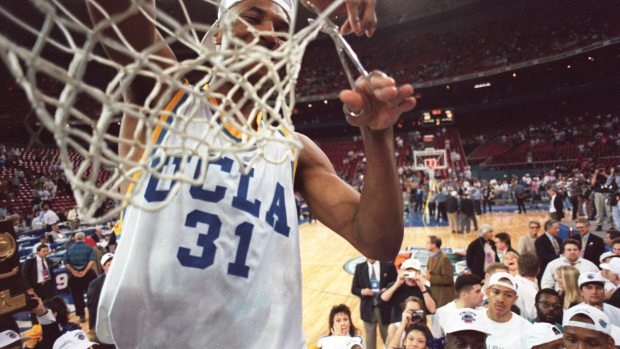
On 8 August, U.S. District
Judge Claudia Wilken ruled in favour of former UCLA
basketball player O'Bannon and 19 others, declaring that NCAA's longstanding refusal
to compensate athletes for the use of their name, image and likenesses (NILs) violates
US antitrust laws. In particular, the long-held amateurism
justification promoted by the NCAA was deemed unconvincing.
On
14 November, the NCAA has appealed the judgment, claiming that federal judge erred in law by
not applying a 1984 Supreme Court ruling. One
week later, the NCAA received support from leading antitrust professors who are challenging the
Judge Wilken’s reasoning in an amicus curiae. They are concerned that the judgment may jeopardize
the proper regulation of college athletics. The professors argued that if
Wilken’s judgment is upheld, it
“would substantially expand the power of the federal courts to alter
organizational rules that serve important social and academic interests…This
approach expands the ‘less restrictive alternative prong’ of the antitrust rule
of reason well beyond any appropriate boundaries and would install the
judiciary as a regulatory agency for collegiate athletics”.
More...
In the wake of the
French Labour Union of Basketball (Syndicat National du Basket, SNB) image
rights dispute with Euroleague and EA Games, we threw the “jump ball” to start
a series on players’ image rights in international professional basketball. In our first blogpost, we discussed why
image rights contracts in professional basketball became a fertile ground for disputes
when it comes to the enforcement of these contracts by the Basketball Arbitral
Tribunal (BAT). Indeed, we pointed out that clubs might take advantage of the
BAT’s inconsistent jurisprudence to escape obligations deriving from image
rights contracts.
In this second limb, we will open a second
field of legal battles “around the rim”: the unauthorized use of players’ image
rights by third parties. We will use as a point of reference the US College
Athletes image rights cases before US Courts and we will thereby examine the
legal nature of image rights and the precise circumstances in which such rights
may be infringed. Then, coming back to where we started, we will discuss the
French case through the lens of US case law on players’ image rights.
Source: http://philadelphia.cbslocal.com/2013/09/27/ea-sports-settles-college-likeness-case/ More...
The 40 recommendations of the Olympic Agenda 2020 are out! First
thought: one should not underplay the 40 recommendations, they constitute (on
paper at least) a potential leap forward for the IOC. The media will focus on the hot stuff: the Olympic
channel, the pluri-localisation of the Games, or their dynamic format. More
importantly, and to some extent surprisingly to us, however, the IOC has also fully embraced
sustainability and good governance. Nonetheless, the long-term legacy of the
Olympic Agenda 2020 will hinge on the IOC’s determination to be true to these
fundamental commitments. Indeed, the devil is always in the implementation, and
the laudable intents of some recommendations will depend on future political choices
by Olympic bureaucrats.
For those interested in human rights and
democracy at (and around) the Olympics, two aspects are crucial: the IOC’s
confession that the autonomy of sport is intimately linked to the quality of
its governance standards and the central role the concept of sustainability is
to play in the bidding process and the host city contract. More...