Asser International Sports Law Blog

Our International Sports Law Diary
The Asser International Sports Law Centre is part of the T.M.C. Asser Instituut

‘The reform of football': Yes, but how? By Marco van der Harst

'Can't fight corruption with con tricks
They use the law to commit crime
And I dread, dread to think what the future will bring
When we're living in gangster time'
The Specials - Gangsters


The pressing need for change 

The Parliamentary Assembly (PACE) of the Council of Europe (CoE), which is composed of 318 MPs chosen from the national parliaments of the 47 CoE member states, unanimously adopted a report entitled ‘the reform of football’ on January 27, 2015. A draft resolution on the report will be debated during the PACE April 2015 session and, interestingly, (only?) FIFA’s president Sepp Blatter has been sent an invitation

The PACE report highlights the pressing need of reforming the governance of football by FIFA and UEFA respectively. Accordingly, the report contains some interesting recommendations to improve FIFA’s (e.g., Qatargate[1]) and UEFA’s governance (e.g., gender representation). Unfortunately, it remains unclear how the report’s recommendations will actually be implemented and enforced. 

The report is a welcomed secondary effect of the recent Qatargate directly involving former FIFA officials such as Jack Warner, Chuck Blazer, and Mohamed Bin Hammam[2] and highlighting the dramatic failures of FIFA’s governance in putting its house in order. Thus, it is undeniably time to correct the governance of football by FIFA and its confederate member UEFA – nolens volens. The real question is how to do it.
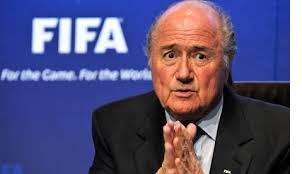


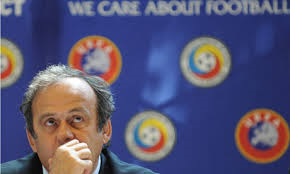
            Photograph: Fabrice Coffrini/AFP/Getty Images                   Photograph: Octav Ganea/AP

More...


SV Wilhelmshaven: a Rebel with a cause! Challenging the compatibility of FIFA’s training compensation system with EU law

Due to the legitimate excitement over the recent Pechstein ruling, many have overlooked a previous German decision rendered in the Wilhelmshaven SV case (the German press did report on the decision here and here). The few academic commentaries (see here and here) focused on the fact that the German Court had not recognized the res judicata effect of a CAS award. Thus, it placed Germany at the spearhead of a mounting rebellion against the legitimacy of the CAS and the validity of its awards. None of the commentators weighed in on the substance of the decision, however. Contrary to the Court in Pechstein, the judges decided to evaluate the compatibility of the FIFA rules on training compensations with the EU free movement rights. To properly report on the decision and assess the threat it may constitute for the FIFA training compensation system, we will first summarize the facts of the case (I), briefly explicate the mode of functioning of the FIFA training compensation system (II), and finally reconstruct the reasoning of the Court on the compatibility of the FIFA rules with EU law (III).More...

In Egypt, Broadcasting Football is a Question of Sovereignty … for Now! By Tarek Badawy, Inji Fathalla, and Nadim Magdy

On 15 April 2014, the Cairo Economic Court (the “Court") issued a seminal judgment declaring the broadcasting of a football match a sovereign act of State.[1]


Background

In Al-Jazeera v. the Minister of Culture, Minister of Information, and the Chairman of the Board of Directors of the Radio and Television Union, a case registered under 819/5JY, the Al-Jazeera TV Network (the “Plaintiff” or “Al-Jazeera”) sued the Egyptian Radio and Television Union (“ERTU” or the “Union”) et al. (collectively, the “Respondents”) seeking compensation for material and moral damages amounting to three (3) million USD, in addition to interest, for their alleged breach of the Plaintiff’s exclusive right to broadcast a World Cup-qualification match in Egypt.  Al-Jazeera obtained such exclusive right through an agreement it signed with Sportfive, a sports marketing company that had acquired the right to broadcast Confederation of African Football (“CAF”) World Cup-qualification matches.

ERTU reportedly broadcasted the much-anticipated match between Egypt and Ghana live on 15 October 2013 without obtaining Al-Jazeera’s written approval, in violation of the Plaintiff’s intellectual property rights.

More...


Why the European Commission will not star in the Spanish TV rights Telenovela. By Ben Van Rompuy and Oskar van Maren

The selling of media rights is currently a hot topic in European football. Last week, the English Premier League cashed in around 7 billion Euros for the sale of its live domestic media rights (2016 to 2019) – once again a 70 percent increase in comparison to the previous tender. This means that even the bottom club in the Premier League will receive approximately €130 million while the champions can expect well over €200 million per season.

The Premier League’s new deal has already led the President of the Spanish National Professional Football League (LNFP), Javier Tebas, to express his concerns that this could see La Liga lose its position as one of Europe’s leading leagues. He reiterated that establishing a centralised sales model in Spain is of utmost importance, if not long overdue.

Concrete plans to reintroduce a system of joint selling for the media rights of the Primera División, Segunda División A, and la Copa del Rey by means of a Royal Decree were already announced two years ago. The road has surely been long and bumpy. The draft Decree is finally on the table, but now it misses political approval. All the parties involved are blaming each other for the current failure: the LNFP blames the Sport Governmental Council for Sport (CSD) for not taking the lead; the Spanish Football Federation (RFEF) is arguing that the Federation and non-professional football entities should receive more money and that it should have a stronger say in the matter in accordance with the FIFA Statutes;  and there are widespread rumours that the two big earners, Real Madrid and FC Barcelona, are actively lobbying to prevent the Royal Decree of actually being adopted.

To keep the soap opera drama flowing,  on 30 December 2014, FASFE (an organisation consisting of groups of fans, club members, and minority shareholders of several Spanish professional football clubs) and the International Soccer Centre (a movement that aims to obtain more balanced and transparent football and basketball competitions in Spain) filed an antitrust complaint with the European Commission against the LNFP. They argue that the current system of individual selling of LNFP media rights, with unequal shares of revenue widening the gap between clubs, violates EU competition law.


Source:http://www.gopixpic.com/600/buscar%C3%A1n-el-amor-verdadero-nueva-novela-de-televisa/http:%7C%7Cassets*zocalo*com*mx%7Cuploads%7Carticles%7C5%7C134666912427*jpg/

More...


The 2014 Dortmund judgment: what potential for a follow-on class action? By Zygimantas Juska

Class actions are among the most powerful legal tools available in the US to enforce competition rules. With more than 75 years of experience, the American system offers valuable lessons about the benefits and drawbacks of class actions for private enforcement in competition law. Once believed of as only a US phenomenon, class actions are slowly becoming reality in the EU. After the adoption of the Directive on damages actions in November 2014, the legislative initiative in collective redress (which could prescribe a form of class actions) is expected in 2017.[1] Some pro-active Member States have already taken steps to introduce class actions in some fashion, like, for example, Germany.

What is a class action? It is a lawsuit that allows many similar legal claims with a common interest to be bundled into a single court action. Class actions facilitate access to justice for potential claimants, strengthen the negotiating power and contribute to the efficient administration of justice. This legal mechanism ensures a possibility to claim cessation of illegal behavior (injunctive relief) or to claim compensation for damage suffered (compensatory relief).  More...

The Pechstein ruling of the OLG München - A Rough Translation

The Pechstein decision of the Oberlandesgericht of Munich is “ground-breaking”, “earth-shaking”, “revolutionary”, name it. It was the outmost duty of a “German-reading” sports lawyer to translate it as fast as possible in order to make it available for the sports law community at large (Disclaimer: This is not an official translation and I am no certified legal translator). Below you will find the rough translation of the ruling (the full German text is available here), it is omitting solely the parts, which are of no direct interest to international sports law.

The future of CAS is in the balance and this ruling should trigger some serious rethinking of the institutional set-up that underpins it. As you will see, the ruling is not destructive, the Court is rather favourable to the function of CAS in the sporting context, but it requires a fundamental institutional reshuffling. It also offers a fruitful legal strategy to challenge CAS awards that could be used in front of any national court of the EU as it is based on reasoning analogically applicable to article 102 TFEU (on abuse of a dominant position), which is valid across the EU’s territory.

Enjoy the read! 

Antoine

PS: The translation can also be downloaded at http://papers.ssrn.com/sol3/papers.cfm?abstract_id=2561297

 More...


From Veerpalu to Lalluka: ‘one step forward, two steps back’ for CAS in dealing with Human Growth Hormone tests (by Thalia Diathesopoulou)

In autumn 2011, the Finnish cross-country skier Juha Lalluka, known as a “lone-wolf” because of his training habit, showed an adverse analytical finding with regard to human growth hormone (hGH). The timing was ideal. As the FINADA Supervisory Body in view of the A and B positive samples initiated disciplinary proceedings against Lalluka for violation of anti-doping rules, the Veerpalu case was pending before the CAS. At the athlete’s request, the Supervisory Board postponed the proceedings until the CAS rendered the award in the Veerpalu case. Indeed, on 25 March 2013, the CAS shook the anti-doping order: it cleared Andrus Veerpalu of an anti-doping rule violation for recombinant hGH (rhGH) on the grounds that the decision limits set by WADA to define the ratio beyond which the laboratories should report the presence of rhGH had not proven scientifically reliable.

The Veerpalu precedent has become a rallying flag for athletes suspected of use of hGH and confirmed some concerns raised about the application of the hGH test. Not surprisingly, Sinkewitz and Lallukka followed the road that Veerpalu paved and sought to overturn their doping ban by alleging the scientific unreliability of the hGH decisions limits. Without success, however. With the full text of the CAS award on the Lallukka case released a few weeks ago[1] and the new rules of the 2015 WADA Code coming into force, we grasp the opportunity to outline the ambiguous approach of CAS on the validity of the hGH test. In short: Should the Veerpalu case and its claim that doping sanctions should rely on scientifically well founded assessments be considered as a fundamental precedent or as a mere exception? More...

State Aid and Sport: does anyone really care about rugby? By Beverley Williamson

There has been a lot of Commission interest in potential state aid to professional football clubs in various Member States.  The huge sums of money involved are arguably an important factor in this interest and conversely, is perhaps the reason why state aid in rugby union is not such a concern. But whilst the sums of money may pale into comparison to those of professional football, the implications for the sport are potentially no less serious.

At the end of the 2012/2013 season, Biarritz Olympique (Biarritz) were relegated from the elite of French Rugby Union, the Top 14 to the Pro D2.  By the skin of their teeth, and as a result of an injection of cash from the local council (which amounted to 400,000€), they were spared administrative relegation to the amateur league below, the Fédérale 1, which would have occurred as a result of the financial state of the club.More...

State aid in Croatia and the Dinamo Zagreb case

Introduction

The year 2015 promises to be crucial, and possibly revolutionary, for State aid in football. The European Commission is taking its time in concluding its formal investigations into alleged State aid granted to five Dutch clubs and several Spanish clubs, including Valencia CF and Real Madrid, but the final decisions are due for 2015.

A few months ago, the Commission also received a set of fresh State aid complaints originating from the EU’s newest Member State Croatia. The complaints were launched by a group of minority shareholders of the Croatian football club Hajduk Split, who call themselves Naš Hajduk. According to Naš Hajduk, Hajduk Split’s eternal rival, GNK Dinamo Zagreb, has received more than 30 million Euros in unlawful aid by the city of Zagreb since 2006.More...

“The Odds of Match Fixing – Facts & Figures on the integrity risk of certain sports bets”. By Ben Van Rompuy

Media reports and interested stakeholders often suggest that certain types of sports bets would significantly increase the risks of match fixing occurring. These concerns also surface in policy discussions at both the national and European level. Frequently calls are made to prohibit the supply of “risky” sports bets as a means to preserve the integrity of sports competitions.

Questions about the appropriateness of imposing such limitations on the regulated sports betting, however, still linger. The lack of access to systematic empirical evidence on betting-related match fixing has so far limited the capacity of academic research to make a proper risk assessment of certain types of sports bets. 

The ASSER International Sports Law Centre has conducted the first-ever study that assesses the integrity risks of certain sports bets on the basis of quantitative empirical evidence. 

We uniquely obtained access to key statistics from Sportradar’s Fraud Detection System (FDS). A five-year dataset of football matches worldwide, which the FDS identified as likely to have been targeted by match fixers, enabled us to observe patterns and correlations with certain types of sports bets. In addition, representative samples of football bets placed with sports betting operator Betfair were collected and analysed. 

The results presented in this report, which challenge several claims about the alleged risks generated by certain types of sports bets, hope to inform policy makers about the cost-effectiveness of imposing limits on the regulated sports betting offer.More...

What happens in Switzerland stays in Switzerland: The Striani Judgment of the Brussels Court of Appeals

In the last five years, the Striani case has been the main sword of Damocles hanging over UEFA’s Financial Fair Play Regulations. At the very least, the only real judicial threat they have faced (apart from the relatively harmless challenge mounted in the Galatasaray case at the CAS). Indeed, a Belgian player agent, Daniele Striani, represented by Bosman’s former lawyer Jean-Louis Dupont, attempted, in various fora, to challenge the compatibility of UEFA’s CL&FFP Regulations with EU law. Striani lodged a complaint with the European Commission (which was quickly rejected in October 2014) and initiated a private action for damages before the Brussels Court of First Instance. The latter deemed itself not competent to decide on the matter, but nevertheless accepted to order a provisory stay of the enforcement of the UEFA FFP Regulations pending a preliminary reference to the Court of Justice of the EU (see Ben van Rompuy’s blog on the case here). The CJEU unsurprisingly rejected to enter into the matter, but UEFA and Striani decided to appeal the first instance ruling to the Court of Appeal, which rendered its decision on 11 April. It is unclear at this stage whether Striani will attempt to challenge it at the Belgian Cour de Cassation (Highest Civil Court), however this would entail considerable risks and costs and his lawyers to date have not indicated that they would do so (see here). 

While the ruling of the Court of Appeal does not touch upon the much-discussed question of the compatibility of UEFA’s FFP Regulations with EU law (see our many blogs on the question here, here and here), it remains an interesting decision to discuss broader questions related to the procedural ease in challenging regulatory decisions passed by sports governing bodies (SGBs) based in Switzerland. Competition law constitutes the main legal tool available to sports stakeholders looking to challenge existing regulatory arrangements from the outside (e.g. not going through the internal political systems of the SGBs or the CAS route). Recent cases, such as the ISU decision of the European Commission, the Pechstein case in front of the German courts or the Rule 40 decision of the German competition authority, have demonstrated the potency of competition law to question the legality of the rules and decisions of the SGBs.[1] In this regard, the decision of the Brussels Court of Appeal narrows the range of parties allowed to challenge in European courts the SGBs’ rules and decisions on the basis of competition law. More...

Can European Citizens Participate in National Championships? An Analysis of AG Tanchev’s Opinion in TopFit e.V. Daniele Biffi v Deutscher Leichtathletikverband e.V. - By Thomas Terraz

Editor’s note: Thomas Terraz is a third year LL.B. candidate at the International and European Law programme at The Hague University of Applied Sciences with a specialisation in European Law. Currently he is pursuing an internship at the T.M.C. Asser Institute with a focus on International and European Sports Law.


1.     Introduction

To many it may seem obvious that athletes in a national championship should only be able to participate if they have the nationality of the relevant state. The Dutch Road Cycling National Championships should have Dutch cyclists, and the German Athletics Championships should have German athletes and so forth. However, in reality, foreign competitors are allowed to participate in many national championships in the EU, and there is a wide discrepancy between the rules of national sport governing bodies on this issue. There is no unified practice when investigating this point by country or by sport, and rules on participation range from a complete ban on foreign competitors to absolutely no mention of foreign athletes.[1] Thus, the question arises: should foreign athletes be able to participate in national sport championships?

The Court of Justice of the European Union (CJEU) will soon be required to provide an, at least partial, answer to this dilemma as a result of an application for a preliminary ruling.  A German Court has referred three questions to the CJEU on the case TopFit e.V. Daniele Biffi v Deutscher Leichtathletikverband e.V. (DLV) which in essence ask whether EU citizenship rights and in particular, the requirement of non-discrimination on the basis of nationality, should be applied to non-nationals wishing to participate in an athletics national championship in Germany. In the meantime, the Advocate General (AG), who provides a non-binding opinion to the Court before a decision is delivered, Evgeni Tanchev has delivered an interesting opinion on the case. It addresses the claims from the applicants based on EU citizenship rights and urges the CJEU to instead review the case on the basis of the freedom of establishment.

This blog will dissect the AG’s opinion to assess the main arguments put forward in relation to freedom of establishment and EU citizenship. Furthermore, it will weigh the ramifications this case may have on the boundaries of EU law in relation to sport. To fully appreciate the AG’s opinion, it is necessary to first discuss the intriguing factual and legal background colouring this case. After all, this will not be the first time the CJEU faces thorny issues concerning discrimination on the basis of nationality and sport. More...


International and European Sports Law – Monthly Report – February and March 2019. By Tomáš Grell

Editor's note: This report compiles all relevant news, events and materials on International and European Sports Law based on the daily coverage provided on our twitter feed @Sportslaw_asser. You are invited to complete this survey via the comments section below, feel free to add links to important cases, documents and articles we might have overlooked.


The Headlines

The Court of Arbitration for Sport bans 12 Russian track and field athletes

On 1 February 2019, the Court of Arbitration for Sport (CAS) communicated that it had rendered another 12 decisions in the seemingly endless saga concerning the state-sponsored doping programme in Russia. These first-instance decisions of the CAS involve 12 Russian track and field athletes who were all found guilty of anti-doping rule violations based on the evidence underlying the reports published by professor Richard McLaren and suspended from participating in sports competitions for periods ranging from two to eight years. Arguably the most prominent name that appears on the list of banned athletes is Ivan Ukhov, the 32-year-old high jump champion from the 2012 Olympic Games in London.

The case was brought by the International Association of Athletics Federation (IAAF) that sought to convince the arbitrators that the athletes in question had participated in and/or benefited from anabolic steroid doping programmes and benefited from specific protective methods (washout schedules) in the period between the 2012 Olympic Games in London and the 2013 IAAF World Championships in Moscow. The CAS was acting in lieau of the Russian Athletics Federation that remains suspended and thus unable to conduct any disciplinary procedures. The athletes have had the opportunity to appeal the decisions to the CAS Appeals Arbitration Division.

Federal Cartel Office in Germany finds Rule 40 of the Olympic Charter disproportionately restrictive

At the end of February, the German competition authority Bundeskartellamt announced that it had entered into a commitment agreement with the German Olympic Sports Confederation (DOSB) and the International Olympic Committee (IOC) in which these two organisations had agreed to considerably enhance advertising opportunities for German athletes and their sponsors during the Olympic Games. The respective agreement is a direct consequence of the Bundeskartellamt’s finding that the IOC and the DOSB had abused their dominant position on the market for organising and marketing the Olympic Games by demanding that the athletes refrain from promoting their own sponsors while the Games are ongoing, as well as shortly before and after the Games. This restriction stems from Rule 40(3) of the Olympic Charter under which no competitor who participates in the Games may allow his person, name, picture or sports performances to be used for advertising purposes, unless the IOC Executive Board allows him/her to do so.

As part of fulfilling its obligations under the commitment agreement, the DOSB has relaxed its guidelines on promotional activities of German athletes during the Olympic Games. For its part, the IOC has declared that these new guidelines would take precedence over Rule 40(3) of the Olympic Charter. However, it still remains to be seen whether in response to the conclusions of the German competition authority the IOC will finally change the contentious rule.

The Grand Chamber of the European Court of Human Rights refuses to pronounce itself on Claudia Pechstein’s case

Claudia Pechstein’s challenge against the CAS brought before the European Court of Human Rights (ECtHR) has not yielded the desired result for the German athlete. On 5 February 2019, a Panel of the Grand Chamber of the ECtHR decided that the Grand Chamber would not entertain the case. This means that the judgment handed down by the 3rd Chamber of the ECtHR on 2 October 2018, in which the ECtHR confirmed that except for the lack of publicity of oral hearings the procedures of the CAS are compatible with the right to a fair trial under Article 6(1) of the European Convention on Human Rights, has now become final and binding. However, the protracted legal battle between the five-time Olympic champion in speed skating and the CAS is not over yet since there is one more challenge against the CAS and its independence pending before the German Constitutional Court.  More...

New Event! FIFA and Human Rights: Impacts, Policies, Responsibilities - 8 May 2019 - Asser Institute

In the past few years, FIFA underwent intense public scrutiny for human rights violations surrounding the organisation of the World Cup 2018 in Russia and 2022 in Qatar. This led to a reform process at FIFA, which involved a number of policy changes, such as:

  • Embracing the United Nations Guiding Principles on Business and Human Rights;
  • The inclusion of human rights in the FIFA Statutes;
  • Adopting new bidding rules including human rights requirements;
  • And introducing a Human Rights Advisory Board.

To take stock of these changes, the Asser Institute and the Netherlands Network for Human Rights Research (NNHRR), are organising a conference on the Fédération Internationale de Football Association (FIFA) and human rights, which will take place at the Asser Institute in The Hague on 8 May 2019.

This one-day conference aims to take a deeper look at FIFA’s impacts on human rights and critically investigate the measures it has adopted to deal with them. Finally, we will also address FIFA’s potential legal responsibilities under a variety of human rights laws/instruments.


Preliminary Programme

9:00 Registration & Coffee

9:45 Welcome by Antoine Duval (Asser Institute) & Daniela Heerdt (Tilburg University)

10:00 Opening Remarks by Andreas Graf (Human Rights Officer, FIFA)

10:30 Panel 1: FIFA & Human Rights: Impacts

  • Zoher Shabbir (University of York) – The correlation between forced evictions and developing nations hosting the FIFA World Cup
  • Roman Kiselyov (European Human Rights Advocacy Centre) - FIFA World Cup as a Pretext for a Crackdown on Human Rights
  • Eleanor Drywood (Liverpool University) - FIFA and children’s rights: theory, methodology and practice 

12:00 Lunch

13:00 Panel 2: FIFA & Human Rights: Policies

  • Lisa Schöddert & Bodo Bützler (University of Cologne) – FIFA’s eigen-constitutionalisation and its limits
  • Gigi Alford (World Players Association) - Power Play: FIFA’s voluntary human rights playbook does not diminish Switzerland’s state power to protect against corporate harms
  • Brendan Schwab (World Players Association) & Craig Foster - FIFA, human rights and the threatened refoulement of Hakeem Al Araibi 

14:30 Break

15:00 Panel 3: FIFA & Human Rights: Responsibilities

  • Daniel Rietiker (ECtHR and University of Lausanne) - The European Court of Human Rights and Football: Current Issues and Potential
  • Jan Lukomski (Łukomski Niklewicz law firm) - FIFA and the International Covenant on Economic, Social and Cultural Rights : Obligations, duties and remedies regarding the labour rights         protected under the ICESCR
  • Raquel Regueiro Dubra (Complutense University of Madrid) - Shared international responsibility for human rights violations in global events. The case of the 2022 World Cup in Qatar.
  • Wojciech Lewandowski (Polish Academy of Sciences/University of Warsaw) - Is Bauer the new Bosman? – The implications of the newest CJEU jurisprudence for FIFA and other sport governing bodies

17:00 Closing Remarks by Mary Harvey (Chief Executive, Centre for Sports and Human Rights)


More information and registration at https://www.asser.nl/education-events/events/?id=3064

International and European Sports Law – Monthly Report – January 2019 - By Tomáš Grell

 Editor's note: This report compiles all relevant news, events and materials on International and European Sports Law based on the daily coverage provided on our twitter feed @Sportslaw_asser. You are invited to complete this survey via the comments section below, feel free to add links to important cases, documents and articles we might have overlooked.


The Headlines

#Save(d)Hakeem

The plight of Hakeem al-Araibi – the 25-year-old refugee footballer who was arrested last November in Bangkok upon his arrival from Australia on the basis of a red notice issued by Interpol in contravention of its own policies which afford protection to refugees and asylum-seekers – continued throughout the month of January. Bahrain – the country Hakeem al-Araibi fled in 2014 due to a (well-founded) fear of persecution stemming from his previous experience when he was imprisoned and tortured as part of the crackdown on pro-democracy athletes who had protested against the royal family during the Arab spring – maintained a firm stance, demanding that Hakeem be extradited to serve a prison sentence over a conviction for vandalism charges, which was allegedly based on coerced confessions and ignored evidence.

While international sports governing bodies were critised from the very beginning for not using enough leverage with the governments of Bahrain and Thailand to ensure that Hakeem’s human rights are protected, they have gradually added their voice to the intense campaign for Hakeem’s release led by civil society groups. FIFA, for example, has sent a letter directly to the Prime Minister of Thailand, urging the Thai authorities ‘to take the necessary steps to ensure that Mr al-Araibi is allowed to return safely to Australia at the earliest possible moment, in accordance with the relevant international standards’. Yet many activists have found this action insufficient and called for sporting sanctions to be imposed on the national football associations of Bahrain and Thailand.      

When it looked like Hakeem will continue to be detained in Thailand at least until April this year, the news broke that the Thai authorities agreed to release Hakeem due to the fact that for now the Bahraini government had given up on the idea of bringing Hakeem ‘home’ – a moment that was praised as historic for the sport and human rights movement.

Russia avoids further sanctions from WADA despite missing the deadline for handing over doping data from the Moscow laboratory 

WADA has been back in turmoil ever since the new year began as the Russian authorities failed to provide it with access to crucial doping data from the former Moscow laboratory within the required deadline which expired on 31 December 2018, insisting that the equipment WADA intended to use for the data extraction was not certified under Russian law. The Russian Anti-Doping Agency thus failed to meet one of the two conditions under which its three-year suspension was controversially lifted in September 2018. The missed deadline sparked outrage among many athletes and national anti-doping organisations, who blamed WADA for not applying enough muscle against the Russian authorities.

Following the expiry of the respective deadline, it appeared that further sanctions could be imposed on the Russian Anti-Doping Agency, but such an option was on the table only until WADA finally managed to access the Moscow laboratory and retrieve the doping data on 17 January 2019. Shortly thereafter, WADA President Sir Craig Reedie hailed the progress as a major breakthrough for clean sport and members of the WADA Executive Committee agreed that no further sanctions were needed despite the missed deadline. However, doubts remain as to whether the data have not been manipulated. Before WADA delivers on its promise and builds strong cases against the athletes who doped – to be handled by international sports federations – it first needs to do its homework and verify whether the retrieved data are indeed genuine.  

British track cyclist Jessica Varnish not an employee according to UK employment tribunal

On 16 January 2019, an employment tribunal in Manchester rendered a judgment with wider implications for athletes and sports governing bodies in the United Kingdom, ruling that the female track cyclist Jessica Varnish was neither an employee nor a worker of the national governing body British Cycling and the funding agency UK Sport. The 28-year-old multiple medal winner from the world and European championships takes part in professional sport as an independent contractor but sought to establish before the tribunal that she was in fact an employee of the two organisations. This would enable her to sue either organisation for unfair dismissal as she was dropped from the British cycling squad for the 2016 Olympic Games in Rio de Janeiro and her funding agreement was not renewed, allegedly in response to her critical remarks about some of the previous coaching decisions.

The tribunal eventually dismissed her challenge, concluding that ‘she was not personally performing work provided by the respondent – rather she was personally performing a commitment to train in accordance with the individual rider agreement in the hope of achieving success at international competitions’. Despite the outcome of the dispute, Jessica Varnish has insisted that her legal challenge contributed to a positive change in the structure, policies and personnel of British Cycling and UK Sport, while both organisations have communicated they had already taken action to strengthen the duty of care and welfare provided to athletes.  


Sports Law Related Decisions


Official Documents and Press Releases


In the news

Doping

Football

Other