Asser International Sports Law Blog

Our International Sports Law Diary
The Asser International Sports Law Centre is part of the T.M.C. Asser Instituut

Sport is sailing rudderless into geopolitical storms - Russia and Israel responses show how absence of rules makes FIFA and the IOC tools of the global north - By Nick McGeehan

Editor's note: Nicholas McGeehan is co-director of human rights research and advocacy group FairSquare, which works among other things on the nexus between sport and authoritarianism. He is a former senior researcher at Human Rights Watch and holds a PhD in international law from the European University Institute in Florence.


Boycotts, divestments and sanctions are each controversial and contentious in their own right, but when combined under the right conditions, they have explosive potential. BBC football presenter Gary Lineker found this out to his cost when he retweeted a call from Palestine’s BDS movement to suspend Israel from FIFA and the International Olympic Committee (IOC)  until such time the Israeli state ends what they called “the crime of genocide it is perpetrating in Gaza” and its occupation of Palestinian territory. Lineker quickly deleted his retweet but not before the UK’s most popular right-wing tabloid newspaper, The Daily Mail, spotted it and renewed their fulminating campaign against Lineker’s support for political causes that run contrary to the Mail’s editorial positions. The Daily Mail does not oppose sporting boycotts, in fact judging from an article by its football columnist, Martin Samuel, it was an ardent supporter of Russia’s ejection from European football in the aftermath of its invasion of Ukraine. “Why should Russian football get to be part of the continent in which it has murdered innocents?,” asked Samuel  and in that regard he was not alone and was echoing views heard across the political divide in the west at the time. 

The west continues to boycott Russia, its companies have divested from Russia, and its governments are sanctioning Russia. This includes in the sporting arena where nobody batted an eyelid when Russian football teams were excluded from FIFA and UEFA competition, and its athletes excluded from IOC competition.  So it seems obvious that it  is not so much BDS tactics that offend people in certain quarters, but rather their target. Russia can be BDS’d until the cows come home, but BDS’ing Israel is beyond the pale. You can see how it might be hard to explain to a child.

Through an examination of the widely divergent responses to Russia’s actions in Ukraine and Israel’s actions in Gaza, this piece argues that FIFA and the IOC have aligned themselves with the political positions of the countries of the global north. With reference to previous sporting boycotts, it demonstrates how an absence of rules has left FIFA and the IOC sailing rudderless into stormy geopolitical waters and argues that they need to institute rules to guide their responses to events of this gravity and magnitude. Dispensing once and for all with the canard that sport and politics can be kept apart would enable sport’s governing bodies to appropriately leverage their political power and not merely act as puppets of the global north. More...


[Conference] International Sports Law Journal Annual Conference - Asser Institute - 26-27 October

On 26 and 27 October 2023, the Asser Institute in The Hague will host the 2023 edition of the International Sports Law Journal (ISLJ) Conference. The ISLJ is the leading academic journal in transnational sports law and governance and is proud to provide a platform for transnational scholarly exchanges on the state of the field. The conference will address a number of complex issues and disputes at the top of the transnational sports law agenda. In particular, we will zoom in on three main topics:


How football governance is (re)shaped by EU law

Since the Bosman ruling of the European Court of Justice (CJEU) in 1995, it has been obvious to football fans around the world that the European Union (EU) has a considerable influence on the governance and regulation of professional football. This year, 2023, provides us a striking reminder of this fact with (at least) two fundamental judgments of the Grand Chamber of the CJEU expected in the Superleague case and the UEFA’s home-grown players rule. Additionally, two further cases, which are challenging FIFA’s transfer system and its agent regulations, remain pending before the Luxembourg court. We will be looking closely at this relationship between EU law and the governance football through two panels (featuring senior and junior researchers) and a keynote lecture delivered by one of the finest observers of this encounter: Prof. Stephen Weatherill (Oxford University).


Autonomy and neutrality in the transnational governance of sports 

The invasion of Ukraine by Russia has postponed (once again) the end of history and revived within the Olympic Movement fundamental debates dating back to the Cold War and South-African Apartheid. Can the Olympic Movement stay neutral in the face of a clear violation of international law by Russia and of war crimes being committed by its armed forces? What should the consequences be in terms of the participation of Russian athletes and teams in international sporting competitions? If they are allowed to participate, under what conditions should they be competing? All these questions are ultimately connected to the definition and practice of the autonomy and neutrality of sport vis-a-vis international law and politics and will be at the heart of the another set of presentations at the ISLJ conference and a digital bridge with the Symposium on Sport & Neutrality organised in Lillehammer by the Inland Norway University of Applied Sciences.


The transnational regulation of gender by sports governing bodies

Our third focus area for this year’s conference will be the regulation and governance of gender boundaries by SGBs. The recent and ground-breaking decision of the European Court of Human Rights in the Semenya case crystallises the contemporary importance of questions related to the division between genders in the context of international sports. Furthermore, the ongoing and heated debates on the participation of transgender athletes in female competitions are also highlighting the importance of the decisions taken by SGBs in this regard. We will be hosting a specific Panel tackling these issues and will be welcoming Prof. Silvia Camporesi (University of Vienna and King’s College London) for a keynote lecture connecting the legal debates with ethical and philosophical considerations.


More information and registration HERE


Download the full programme


Online participation available

Following the success of last year's webinar option, we are once again allowing online participation to the conference at an affordable price. Thus, we hope to internationalise and diversify our audience and to reach people who are not in a position to travel to The Hague.

We look forward to welcoming you in person in The Hague or digitally to this new iteration of the ISLJ conference.

New Event - Zoom In - Sports Governing Bodies and the Russian invasion of Ukraine - The end of neutrality? - 12 October - 16.00-17.30 CET

Sport is often presented by Sports Governing Bodies (SGBs), and in particular the International Olympic Committee, as apolitical. A neutral endeavor, which ignores the whims of politics and keeps national governments at arm’s length. In short, it is thought of as an autonomous sphere of transnational society wishing to remain unaffected by the political turbulences out there. In fact, many SGBs enforce strict rules banning political speech by individuals, and in the spaces, subjected to their contractual power. Moreover, FIFA, for example, regularly issues effective sanctions against states which are perceived as threatening the autonomy of the governance of football on their territory. Hence, this apolitical ideal of international sports is not only a founding myth of the Olympic Movement, it is actively pursued by SGBs through their private regulatory powers and has hard consequences for athletes, clubs, sport officials alike.


Yet, on 24 February, Russia decided to invade Ukraine, in what has become the most important land war in Europe since the implosion of ex-Yugoslavia. This invasion was quickly followed by condemnations from the IOC and many other SGBs, leading in many cases, most prominently by UEFA and FIFA, to the exclusion of Russian teams and athletes from international sporting competitions. This reaction is difficult to square with the neutrality and autonomy of sport so vigorously defended by the international SGBs until recently. It raises also many questions of double standards: why did this illegal invasion lead to sporting consequences and not others? Furthermore, the Court of Arbitration of Sport recently released two orders (available here and here) concerning UEFA and FIFA’s decisions to exclude Russian national teams and clubs from their football competitions, which outline the legal strategies pursued by the SGBs to reconcile the public urge to exclude Russia(ns) from international sporting competitions, and their commitments to political neutrality.

We are very happy to welcome three outstanding scholars to discuss these issues with us from different methodological perspectives.

Speakers:

  • Prof. Carmen Pérez (Universidad Carlos III de Madrid), who wrote a blog on the reactions of SGBs to Russia’s invasion
  • Dr. Daniela Heerdt (Asser Institute and Centre for Sports and Human Rights), who is the co-author of a blog mapping the reactions of SGBs to Russia’s invasion
  • Carole Gomez (University of Lausanne and Institut de Relations Internationales et Strategiques), who has been interviewed numerous times by international media on the issue (see here and here)

Moderators:

Register for free HERE!


Call for papers - ISLJ Conference on International Sports Law - Asser Institute - 25 and 26 October 2022


Call for papers

ISLJ Conference on International Sports Law

Asser Institute, The Hague

25 and 26 October 2022


The Editors of the International Sports Law Journal (ISLJ) invite you to submit abstracts for the ISLJ Conference on International Sports Law, which will take place on 25 and 26 October 2022 at the Asser Institute in The Hague. The ISLJ, published by Springer and TMC Asser Press, is the leading academic publication in the field of international sports law. The conference is a unique occasion to discuss the main legal issues affecting international sports and its governance with renowned academic experts.


We are delighted to announce the following confirmed keynote speakers:

  • Jonathan Grix (Professor of Sport Policy and Politics at Manchester Metropolitan University), and
  • Mary Harvey (CEO at the Centre for Sport and Human Rights),
  • Ben Van Rompuy (Assistant Professor at Leiden University).


We welcome abstracts from academics and practitioners on all issues related to international sports law and governance. We also welcome panel proposals (including a minimum of three presenters) on a specific issue. For this year’s edition, we specifically invite submissions on the following themes and subthemes:

  • International sports law and governance in times of conflict:
    • The emergence of the idea(l) of political neutrality of SGBs and its translation in legal/governance practice
    • The intersection between public international law and international sports law and governance in the context of international conflicts
    • The role of sports diplomacy/conditionality in the context of international conflicts
    • International sports law and the Russian invasion of Ukraine

  • Human rights and mega sporting events (MSEs)
    • The adverse or positive impact of MSEs on (specific) human rights
    • The influence of human rights commitments on the organisation of MSEs
    • The effects of MSEs on human rights in organising countries
    • The responsibilities and strategies of SGBs to ensure respect of human rights at MSEs
    • The role and responsibilities of states in ensuring respect of human rights in the context of MSEs

  • Competition law and challenges to the governance monopoly of SGBs
    • The impact of competition law on SGBs and their governance
    • The limits of competition law on effecting change in the governance of sport
    • The specific modalities of application of competition law to sports governance
    • The legitimacy of competition authorities in challenging SGBs


Please send your abstract of 300 words and CV no later than 1 July 2022 to a.duval@asser.nl. Selected speakers will be informed by 15 July.

The selected participants will be expected to submit a draft paper by 10 October 2022. Papers accepted and presented at the conference are eligible for publication in a special issue of the ISLJ subject to peer-review. Submissions after this date will be considered for publication in later editions of the Journal.

The Asser Institute will cover one night accommodation for the speakers and may provide a limited amount of travel grants (max. 250€). If you wish to be considered for a grant, please indicate it in your submission.

Reactions of International Sport Organisations to the Russian Invasion of Ukraine: An Overview - By Daniela Heerdt & Guido Battaglia

Editor's note:

Daniela is a researcher at the Asser Institute in the field of sport and human rights. She has a background in public international law and human rights law and defended her PhD project entitled “Blurred Lines of Responsibility and Accountability – Human Rights Abuses at Mega-Sporting Events” in April 2021 at Tilburg University. She also works as independent consultant in the field of sport and human rights for the Centre for Sport and Human Rights, or the European Parliament among other clients from the sports ecosystem

As Head of Policy and Outreach, Guido is in charge of the Centre for Sport & Human Rights engagement with governments, international and intergovernmental organisations and sports organisations. He represents the Centre at conferences, events and bilateral dialogues to reach new audiences and partners and raise public awareness and understanding of the Centre’s work .


On February 24, 2022, the Russian military invaded Ukrainian territory. What followed was an escalation of the war, day by day, causing thousands of victims and forcing millions of people to flee. On March 2, the UN General Assembly overwhelmingly adopted a resolution deploring "in the strongest possible terms" Russia's aggression against Ukraine by a vote of 141 to 5, with 35 abstentions. On March 29, Russian and Ukrainian representatives met in Istanbul for another round of negotiations. No ceasefire has been agreed and hostilities continue.

Many states, international organizations and corporations quickly took measures in response to this invasion. Hundreds of companies decided to withdraw from Russia. Some countries decided to strengthen economic sanctions against Russia and Belarus and to provide military and economic help to Ukraine. Many civil society actors mobilised to organize and provide humanitarian support for Ukraine. Interestingly, international sports organisations like the International Olympic Committee (IOC), the Fédération Internationale de Football Association (FIFA), World Athletics and many other international federations, issued statements condemning the invasion and imposed bans and sanctions on Russian and Belarussian sports bodies and athletes.

This blog post provides an overview of the measures adopted by a number of international sports federations (IFs) that are part of the Olympic Movement since the beginning of the war and analyses how they relate to the statements issued by the IOC and other sanctions and measures taken by international sports organisations in reaction to (geo)political tensions and conflict.

More...


Asser International Sports Law Blog | All posts tagged 'Spain'

Asser International Sports Law Blog

Our International Sports Law Diary
The Asser International Sports Law Centre is part of the T.M.C. Asser Instituut

[Online Event] The aftermath of the Women's World Cup final: FIFA's and UEFA's responsibility in the Jenni Hermoso case

Join us on 14 December at 12:00 CET for an online discussion on FIFA and UEFA’s responsibility in responding to the incident that overshadowed Spains’ victory of the Women's World Cup, when Spanish national team player Jennifer Hermoso experienced a violation of her bodily integrity and physical autonomy due to a forced kiss given to her by Luis Rubiales, then the Spanish FA's president. 


During the 2023/2024 academic year, the Asser International Sports Law Centre dedicates special attention to the intersection between transnational sports law and governance and gender. This online discussion is the second in a series of (online and offline) events, which explore the way in which international sports governing bodies define the gender divide in international sports, police gender-based abuses, and secure gender-specific rights to athletes. You can watch the recording of our first virtual discussion on the Semenya judgment of the ECtHR on our Youtube Channel.  


Just minutes after the Spanish women's national team had won the FIFA Women's World Cup, Rubiales congratulated the players on the podium and grabbed Hermoso's head and kissed her on the lips. This act not only shocked the players and the audience but also caused immediate international uproar and calls for resignation. Rubiales first defended his act, claiming that Hermoso had agreed to it. However, her statements right after it happened, as well as her official statement published just a few days after the event forcefully denied the consensual nature of the kiss. Hermoso felt “vulnerable and a victim of aggression, an impulsive act, sexist, out of place and without any type of consent". Three months later, Rubiales has been suspended by FIFA for three years, resigned as president of the Spanish FA, and is facing criminal prosecution for the crimes of sexual assault and coercion in Spanish national courts. 


As extreme as this case sounds, it is not. In fact, it is a reflection of structural issues that exist in the world of women's football and women's sport more generally. Furthermore, this incident raises the question of the rights of the players subjected to such behaviour and the responsibility of sports governing bodies, and FIFA and UEFA in particular, insanctioning those who are engaging in such actions. How should SGBs respond to such incidents? What type of rules and procedures should they have in place? What are the measures that should be introduced to prevent similar actions in the future? What is the role of states (the Spanish state in the present instance) in investigating and prosecuting these cases?  


We look forward to discussing these issues (and many others) with our three speakers, who have followed the case closely: 

  • Kat Craig, human rights lawyer, founder and CEO of Athlead, Senior Adviser to the Centre for Sport and Human Rights; 

  • Alexandra Gómez Bruinewoud, is a Senior Legal Counsel at FIFPRO and a judge at the FIFA Dispute Resolution Chamber; 

  • Borja Garcia is Reader in Sport Policy and Governance at School of Sport, Exercise and Health Sciences in Loughborough University


The online discussion will be introduced and moderated by Dr Antoine Duval and Dr Daniela Heerdt, and will include short presentations by the speakers and a Q&A with the audience. 


This is a free event, you can register for it HERE

Operación Puerto Strikes Back!

Forget the European Championship currently held in France or the upcoming Olympic Games in Rio. Doping scandals are making the headlines more than ever in 2016. From tennis star Sharapova receiving a two-year ban for her use of the controversial ‘meldonium’, to the seemingly never-ending doping scandals in athletics. As if this was not enough, a new chapter was added on 14 June to one of the most infamous and obscure doping sagas in history: the Operación Puerto.

The special criminal appeal chamber,  the Audiencia Provincial, has held that the more than 200 blood bags of professional athletes that have been at the center of the investigations since 2006 can be delivered to the relevant sporting authorities, such as the Spanish Anti-Doping Agency (AEPSAD), WADA, the UCI and the Italian Olympic Committee (CONI). In other words, there is now a good chance that the identities of the involved athletes might eventually be revealed.
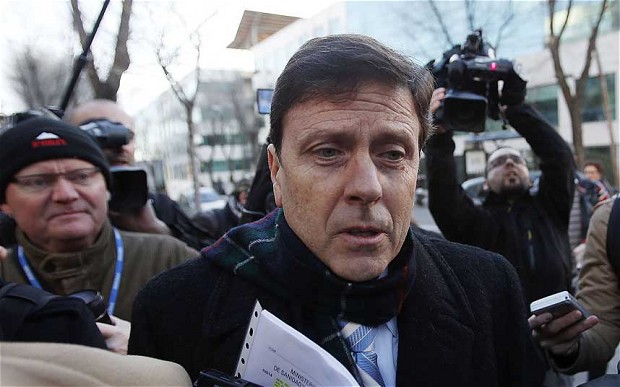
Source: http://www.telegraph.co.uk/sport/othersports/cycling/9834122/Operation-Puerto-doctor-Eufemiano-Fuentes-treated-tennis-players-athletes-footballers-and-a-boxer.html

This case note will analyze the court’s ruling and summarize its most important findings. Given the amount of time passed since the scandal first came to light (2004), the blog will commence with a short background summary of the relevant facts. More...

Unpacking Doyen’s TPO Deals: TPO and Spanish football, friends with(out) benefits?

Update: On 14 April footballleaks released a series of documents concerning Sporting de Gijón. Therefore, I have updated this blog on 19 April to take into account the new information provided.  

Doyen Sports’ TPO (or TPI) model has been touted as a “viable alternative source of finance much needed by the large majority of football clubs in Europe". These are the words of Doyen’s CEO, Nélio Lucas, during a debate on (the prohibition of) TPO held at the European Parliament in Brussels last January. During that same debate, La Liga’s president, Javier Tebas, contended that professional football clubs, as private undertakings, should have the right to obtain funding by private investors to, among other reasons, “pay off the club’s debts or to compete better”. Indeed, defendants of the TPO model continuously argue that third party investors, such as Doyen, only have the clubs’ best interests in mind, being the only ones capable and willing to prevent professional football clubs from going bankrupt. This claim constitutes an important argument for the defendants of the TPO model, such as La Liga and La Liga Portuguesa, who have jointly submitted a complaint in front of the European Commission against FIFA’s ban of the practice.[1]

The eruption of footballleaks provided the essential material necessary to test this claim. It allows us to better analyse and understand the functioning of third party investment and the consequences for clubs who use these services. The leaked contracts between Doyen and, for example, FC Twente, showed that the club’s short term financial boost came at the expense of its long-term financial stability. If a club is incapable of transferring players for at least the minimum price set in Doyen’s contracts, it will find itself in a financially more precarious situation than before signing the Economic Rights Participation Agreement (ERPA). TPO might have made FC Twente more competitive in the short run, in the long run it pushed the club (very) close to bankruptcy.

More than four months after its launch, footballleaks continues to publish documents from the football world, most notably Doyen’s ERPAs involving Spanish clubs.More...

The Spanish TV Rights Distribution System after the Royal Decree: An Introduction. By Luis Torres

On the first of May 2015, the Spanish Government finally signed the Royal Decree allowing the joint selling of the media rights of the Spanish top two football leagues. The Minister for Sport stated that the Decree will allow clubs to “pay their debts with the social security and the tax authorities and will enable the Spanish teams to compete with the biggest European Leagues in terms of revenues from the sale of media rights”.[1]Although the signing of the Royal Decree was supposed to close a very long debate and discussion between the relevant stakeholders, its aftermath shows that the Telenovela is not entirely over. 

This blog post will first provide the background story to the selling of media rights in Spain. It will, thereafter, analyse the main points of the Royal Decree and outline how the system will work in practice. Finally, the blog will shortly address the current frictions between the Spanish League (LFP) and the Spanish football federation (RFEF).More...

Why the European Commission will not star in the Spanish TV rights Telenovela. By Ben Van Rompuy and Oskar van Maren

The selling of media rights is currently a hot topic in European football. Last week, the English Premier League cashed in around 7 billion Euros for the sale of its live domestic media rights (2016 to 2019) – once again a 70 percent increase in comparison to the previous tender. This means that even the bottom club in the Premier League will receive approximately €130 million while the champions can expect well over €200 million per season.

The Premier League’s new deal has already led the President of the Spanish National Professional Football League (LNFP), Javier Tebas, to express his concerns that this could see La Liga lose its position as one of Europe’s leading leagues. He reiterated that establishing a centralised sales model in Spain is of utmost importance, if not long overdue.

Concrete plans to reintroduce a system of joint selling for the media rights of the Primera División, Segunda División A, and la Copa del Rey by means of a Royal Decree were already announced two years ago. The road has surely been long and bumpy. The draft Decree is finally on the table, but now it misses political approval. All the parties involved are blaming each other for the current failure: the LNFP blames the Sport Governmental Council for Sport (CSD) for not taking the lead; the Spanish Football Federation (RFEF) is arguing that the Federation and non-professional football entities should receive more money and that it should have a stronger say in the matter in accordance with the FIFA Statutes;  and there are widespread rumours that the two big earners, Real Madrid and FC Barcelona, are actively lobbying to prevent the Royal Decree of actually being adopted.

To keep the soap opera drama flowing,  on 30 December 2014, FASFE (an organisation consisting of groups of fans, club members, and minority shareholders of several Spanish professional football clubs) and the International Soccer Centre (a movement that aims to obtain more balanced and transparent football and basketball competitions in Spain) filed an antitrust complaint with the European Commission against the LNFP. They argue that the current system of individual selling of LNFP media rights, with unequal shares of revenue widening the gap between clubs, violates EU competition law.


Source:http://www.gopixpic.com/600/buscar%C3%A1n-el-amor-verdadero-nueva-novela-de-televisa/http:%7C%7Cassets*zocalo*com*mx%7Cuploads%7Carticles%7C5%7C134666912427*jpg/

More...


Right to Privacy 1:0 Whereabouts Requirement - A Case Note on a Recent Decision by the Spanish Audiencia Nacional

On the 24th June 2014 the Spanish Audiencia Nacional issued its ruling on a hotly debated sports law topic: The whereabouts requirements imposed to athletes in the fight against doping. This blog aims to go beyond the existing commentaries (here and here) of the case, by putting it in the wider context of a discussion on the legality of the whereabouts requirements. More...

The EU State aid and Sport Saga - A legal guide to the bailout of Valencia CF

After a decade of financial misery, it appears that Valencia CF’s problems are finally over. The foreign takeover by Singaporean billionaire Peter Lim will be concluded in the upcoming weeks, and the construction on the new stadium will resume after five years on hold due to a lack of money. On 3 June Bankia, the Spanish bank that “saved” Valencia CF in 2009 by providing a loan of €81 million, gave the green light for the takeover. However, appearances can be deceiving.More...

Athletes = Workers! Spanish Supreme Court grants labour rights to athletes

Nearly twenty years after the European Court of Justice declared in the Bosman case that all professional athletes within the EU were given the right to a free transfer at the end of their contracts, the Spanish Tribunal Supremo[1] provided a judgment on 26 March 2014 that will heighten a new debate on the rights of professional athletes once their contract expires.

More...