Asser International Sports Law Blog

Our International Sports Law Diary
The Asser International Sports Law Centre is part of the T.M.C. Asser Instituut

The Brussels Court judgment on Financial Fair Play: a futile attempt to pull off a Bosman. By Ben Van Rompuy

On 29 May 2015, the Brussels Court of First Instance delivered its highly anticipated judgment on the challenge brought by football players’ agent Daniel Striani (and others) against UEFA’s Club Licensing and Financial Fair Play Regulations (FFP). In media reports,[1] the judgment was generally portrayed as a significant initial victory for the opponents of FFP. The Brussels Court not only made a reference for a preliminary ruling to the European Court of Justice (CJEU) but also imposed an interim order blocking UEFA from implementing the second phase of the FFP that involves reducing the permitted deficit for clubs.

A careful reading of the judgment, however, challenges the widespread expectation that the CJEU will now pronounce itself on the compatibility of the FFP with EU law. More...

A Bridge Too Far? Bridge Transfers at the Court of Arbitration for Sport. By Antoine Duval and Luis Torres.

FIFA’s freshly adopted TPO ban entered into force on 1 May (see our Blog symposium). Though it is difficult to anticipate to what extent FIFA will be able to enforce the ban, it is likely that many of the third-party investors will try to have recourse to alternative solutions to pursue their commercial involvement in the football transfer market. One potential way to circumvent the FIFA ban is to use the proxy of what has been coined “bridge transfers”. A bridge transfer occurs when a club is used as an intermediary bridge in the transfer of a player from one club to another. The fictitious passage through this club is used to circumscribe, for example, the payment of training compensation or to whitewash a third-party ownership by transforming it into a classical employment relationship. This is a legal construction that has gained currency especially in South American football, but not only. On 5 May 2015, in the Racing Club v. FIFA case, the Court of Arbitration for Sport (CAS) rendered its first award involving directly a bridge transfer. As this practice could become prevalent in the coming years we think that this case deserves a close look. More...

20 Years After Bosman - The New Frontiers of EU Law and Sport - Special Issue of the Maastricht Journal of European and Comparative Law

Editor's note: This is a short introduction written for the special Issue of the Maastricht Journal of European and Comparative Law celebrating the 20 years of the Bosman ruling and dedicated to the new frontiers of EU law and Sport (the articles are available here). For those willing to gain a deeper insight into the content of the Issue we organize (in collaboration with Maastricht University and the Maastricht Journal) a launching event with many of the authors in Brussels tomorrow (More info here).More...

ASSER Exclusive! Interview with Charles “Chuck” Blazer by Piotr Drabik

Editor’s note: Chuck Blazer declined our official interview request but thanks to some trusted sources (the FIFA indictment and Chuck’s testimony) we have reconstructed his likely answers. This is a fictional interview. Any resemblance with real facts is purely coincidental.



Mr Blazer, thank you for agreeing to this interview, especially considering the circumstances. How are you doing?

I am facing ten charges concerning, among others, conspiracy to corrupt and money laundering. But apart from that, I am doing great (laughs)!


It is good to know that you have not lost your spirit. And since you’ve been involved in football, or as you call it soccer, for years could you please first tell us what was your career at FIFA and its affiliates like?

Let me see… Starting from the 1990s I was employed by and associated with FIFA and one of its constituent confederations, namely the Confederation of North, Central American and Caribbean Association Football (CONCACAF). At various times, I also served as a member of several FIFA standing committees, including the marketing and television committee. As CONCACAF’s general secretary, a position I proudly held for 21 years, I was responsible, among many other things, for negotiations concerning media and sponsorship rights. From 1997 to 2013 I also served at FIFA’s executive committee where I participated in the selection process of the host countries for the World Cup tournaments. Those years at the helm of world soccer were truly amazing years of travel and hard work mainly for the good of the beautiful game. I might add that I even managed to document some of my voyages on my blog. I initially called it “Travels with Chuck Blazer” but Vladimir (Putin) convinced me to change the name to “Travels with Chuck Blazer and his Friends”. You should check it out.

 More...


Financial Fair Play: Lessons from the 2014 and 2015 settlement practice of UEFA. By Luis Torres

UEFA announced on 8 May that it had entered into Financial Fair Play settlement agreements with 10 European football clubs. Together with the four other agreements made in February 2015, this brings the total to 14 FFP settlements for 2015 and 23 since UEFA adopted modifications in its Procedural rules and allowed settlements agreements to be made between the Clubs and the Chief Investigator of the UEFA Club Financial Control Body (CFCB).[1] 

In the two years during which UEFA’s FFP regulations have been truly up and running we have witnessed the centrality taken by the settlement procedure in their enforcement. It is extremely rare for a club to be referred to the FFP adjudication chamber. In fact, only the case regarding Dynamo Moscow has been referred to the adjudication chamber. Thus, having a close look at the settlement practice of UEFA is crucial to gaining a good understanding of the functioning of FFP. Hence, this blog offers a detailed analysis of this year’s settlement agreements and compares them with last year’s settlements. More...

Book Review: Reforming FIFA, or Not

Editor’s note: This short book review will be published in a different format in the International Sports Law Journal, due to its timeliness we decided to reproduce it here. 

Reforming FIFA, or Not

 Antoine Duval

Book Review: Mark Pieth (ed.), Reforming FIFA, Dike Verlag, St. Gallen, 2014, 28.00 CHF, p.178
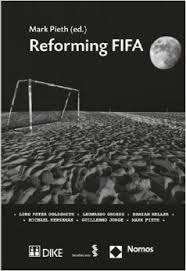


This book looks back at the work of the Independence Governance Committee (IGC). This Committee, constituted in 2011, had as primary objective to drive a reform process of FIFA initiated by its President Sepp Blatter. After ordering from the Swiss anti-corruption expert Mark Pieth, a report on the state of FIFA’s governance, FIFA decided to mandate him with the leadership of a consulting body composed of a mix of independent experts and football insiders, which would be accompanying and supervising the internal reform process of FIFA. The IGC was officially dissolved at the end of 2013, after completing its mandate. The book is composed of eight chapters, written by former members of the IGC, including former chairman Mark Pieth. In addition to the chapters, it includes the different reports (available here, here and here) submitted by the IGC to FIFA across the years. In the words of Pieth, this account is “fascinating because it gives a hands-on, realistic perspective of the concrete efforts, the achievements and the remaining challenges in the struggle for the reform of this organization [FIFA], avoiding the usual glorification or vilification.”[1] This review will first summarize the core of the account of the FIFA reform process provided by the book, before critically engaging with the outcome of the process and outlining the deficiencies that culminated on 29 May 2015 with the re-election of Sepp Blatter as FIFA president.More...


The Spanish TV Rights Distribution System after the Royal Decree: An Introduction. By Luis Torres

On the first of May 2015, the Spanish Government finally signed the Royal Decree allowing the joint selling of the media rights of the Spanish top two football leagues. The Minister for Sport stated that the Decree will allow clubs to “pay their debts with the social security and the tax authorities and will enable the Spanish teams to compete with the biggest European Leagues in terms of revenues from the sale of media rights”.[1]Although the signing of the Royal Decree was supposed to close a very long debate and discussion between the relevant stakeholders, its aftermath shows that the Telenovela is not entirely over. 

This blog post will first provide the background story to the selling of media rights in Spain. It will, thereafter, analyse the main points of the Royal Decree and outline how the system will work in practice. Finally, the blog will shortly address the current frictions between the Spanish League (LFP) and the Spanish football federation (RFEF).More...

Sport and EU Competition Law: New developments and unfinished business. By Ben Van Rompuy

Editor's note: Ben Van Rompuy, Head of the ASSER International Sports Law Centre, was recently interviewed by LexisNexis UK for their in-house adviser service. With kind permission from LexisNexis we reproduce the interview on our blog in its entirety. 

How does competition law affect the sports sector?  

The application of EU competition law to the sports sector is a fairly recent and still unfolding development. It was only in the mid-1990s, due to the growing commercialization of professional sport, that there emerged a need to address competition issues in relation to, for instance, ticketing arrangements or the sale of media rights.  More...


Is FIFA fixing the prices of intermediaries? An EU competition law analysis - By Georgi Antonov (ASSER Institute)

Introduction

On 1 April 2015, the new FIFA Regulations on Working with Intermediaries (hereinafter referred as the Regulations) came into force. These Regulations introduced a number of changes as regards the division of competences between FIFA and its members, the national associations. A particularly interesting issue from an EU competition law perspective is the amended Article 7 of the Regulations. Under paragraph 3, which regulates the rules on payments to intermediaries (also previously referred to as ‘agents’), it is recommended that the total amount of remuneration per transaction due to intermediaries either being engaged to act on a player’s or club’s behalf should not exceed 3% of the player’s basic gross income for the entire duration of the relevant employment contract. In the case of transactions due to intermediaries who have been engaged to act on a club’s behalf in order to conclude a transfer agreement, the total amount of remuneration is recommended to not exceed 3% of the eventual transfer fee paid in relation to the relevant transfer of the player.More...

The Impact of the new FIFA Regulations for Intermediaries: A comparative analysis of Brazil, Spain and England. By Luis Torres

INTRODUCTION

Almost a year after their announcement, the new FIFA Regulations on working with Intermediaries (“FIFA Regulations”) came into force on 1 April 2015. Their purpose is to create a more simple and transparent system of regulation of football agents. It should be noted, however, that the new FIFA rules enable every national football association to regulate their own system on players’ intermediaries, provided they respect the compulsory minimum requirements adopted. In an industry that is already cutthroat, it thus remains to be seen whether FIFA’s “deregulation” indeed creates transparency, or whether it is a Pandora’s Box to future regulatory confusion.

This blog post will provide an overview of the new FIFA Regulations on working with intermediaries and especially its minimum requirements. Provided that national associations are encouraged to “draw up regulations that shall incorporate the principles established in these provisions”[1], three different national regulations have been taken as case-studies: the English FA Regulations, the Spanish RFEF Regulations and the Brazilian CBF Regulations. After mapping their main points of convergence and principal differences, the issues that could arise from these regulatory differences shall be analyzed.  More...

Asser International Sports Law Blog | Our International Sports Law Diary <br/>The <a href="http://www.sportslaw.nl" target="_blank">Asser International Sports Law Centre</a> is part of the <a href="https://www.asser.nl/" target="_blank"><img src="/sportslaw/blog/media/logo_asser_horizontal.jpg" style="vertical-align: bottom; margin-left: 7px;width: 140px" alt="T.M.C. Asser Instituut" /></a>

Asser International Sports Law Blog

Our International Sports Law Diary
The Asser International Sports Law Centre is part of the T.M.C. Asser Instituut

The Court of Arbitration for Sport after Pechstein: Reform or Revolution?

The Pechstein ruling of the Oberlandesgericht (OLG) München rocked the sports arbitration world earlier this year (see our initial commentary of the decision here and a longer version here). The decision has been appealed to the German Bundesgerichtshof (BGH), the highest German civil court, and the final word on the matter is not expected before 2016. In any event, the case has the merit of putting a long-overdue reform of the Court of Arbitration for Sport (CAS) back on the agenda. The last notable reform of the structure and functioning of the CAS dates back to 1994, and was already triggered by a court ruling, namely the famous Gundel case of the Swiss Federal Tribunal (SFT). Since then, the role of the CAS has shifted and its practical significance has radically changed (the growth of CAS’s caseload has been exponential). It has become the most visible arbitration court in Switzerland in terms of the number of awards appealed to the SFT, but more importantly it deals with all the high-profile disputes that arise in global sport: think, for instance, of Pistorius, the recent Dutee Chand decision or the upcoming FIFA elections.More...

Sports governance 20 years after Bosman: Back to the future… or not? By Borja García

Editor's note:

Dr Borja García joined the School of Sport, Health and Exercise Sciences at Loughbourough University in January 2009 as a Lecturer in Sport Management and Policy. He holds a PhD in Politics, International Relations and European Studies from Loughborough University (United Kingdom), where he completed his thesis titled ‘The European Union and the Governance of Football: A game of levels and agendas’.


In this leafy and relatively mild autumn, we are celebrating two important anniversaries. Recently, we just passed ‘Back to the Future day’, marking the arrival of Marty McFly to 2015. In a few weeks, we will be commemorating the 20th anniversary of the Bosman ruling. Difficult to decide which one of the two is more important. As we move well into the 21st century’s second decade, these two dates should mark a moment to consider innovation. They are perhaps occasions to take stock and reflect how much sport has evolved to reach this new future… or not. More...


The 2006 World Cup Tax Evasion Affair in Germany: A short guide. By Gesa Kuebek

Editor's note:

Gesa Kuebek holds an LLM and graduated from the University of Bologna, Gent and Hamburg as part of the Erasmus Mundus Master Programme in Law and Economics and now work as an intern for the Asser Instituut.


On Monday, 9 November, the German Football Association (DFB) announced in a Press Release the resignation of its head, Wolfgang Niersbach, over the 2006 World Cup Affair. In his statement, Niersbach argued that he had “no knowledge whatsoever” about any “payments flows” and is now being confronted with proceedings in which he was “never involved”. However, he is now forced to draw the “political consequences” from the situation. His resignation occurred against the backdrop of last week’s raid of the DFB’s Frankfurt headquarters and the private homes Niersbach, his predecessor Theo Zwanziger and long-standing DFB general secretary Horst R. Schmidt. The public prosecutor’s office investigates a particularly severe act of tax evasion linked to awarding the 2006 World Cup. The 2006 German “summer fairy-tale” came under pressure in mid-October 2015, after the German magazine “Der Spiegel” shocked Fußballdeutschland by claiming that it had seen concrete evidence proving that a €6.7 million loan, designated by the FIFA for a “cultural programme”, ended up on the account of Adidas CEO Robert-Louis Dreyfuß. The magazine further argued that the money was in fact a secret loan that was paid back to Dreyfuß. Allegedly, the loan was kept off the books intentionally in order to be used as bribes to win the 2006 World Cup bid. The public prosecutor now suspects the DFB of failing to register the payment in tax returns. German FA officials admit that the DFB made a “mistake” but deny all allegations of vote buying. However, the current investigations show that the issues at stakes remain far from clear, leaving many questions regarding the awarding of the 2006 World Cup unanswered.

The present blog post aims to shed a light on the matter by synthetizing what we do know about the 2006 World Cup Affair and by highlighting the legal grounds on which the German authorities investigate the tax evasion. More...


Blog Symposium: Ensuring proportionate sanctions under the 2015 World Anti-Doping Code. By Mike Morgan

Introduction: The new WADA Code 2015
Day 1: The impact of the revised World Anti-Doping Code on the work of National Anti-Doping Agencies
Day 2: The “Athlete Patient” and the 2015 World Anti-Doping Code: Competing Under Medical Treatment
Day 3: Proof of intent (or lack thereof) under the 2015 World Anti-Doping Code

Editor's note
Mike Morgan is the founding partner of Morgan Sports Law LLP. His practice is focused exclusively on the sports sector. He advises on regulatory and disciplinary issues and has particular experience advising on doping and corruption disputes.

Mike acted on behalf of National Olympic Committees at three of the last four Olympic Games and has represented other sports bodies, clubs and high profile athletes in proceedings before the High Court, the FIFA Dispute Resolution Chamber, the American Arbitration Association and the Court of Arbitration for Sport. More...


Blog Symposium: Proof of intent (or lack thereof) under the 2015 World Anti-Doping Code. By Howard L. Jacobs

Introduction: The new WADA Code 2015
Day 1: The impact of the revised World Anti-Doping Code on the work of National Anti-Doping Agencies
Day 2: The “Athlete Patient” and the 2015 World Anti-Doping Code: Competing Under Medical Treatment
Day 4: Ensuring proportionate sanctions under the 2015 World Anti-Doping Code

Editor's note

Howard Jacobs is solo practitioner in the Los Angeles suburb of Westlake Village, California. Mr. Jacobs has been identified by various national newspapers and publications as one of the leading sports lawyers in the world. His law practice focuses on the representation of athletes in all types of disputes, with a particular focus on the defense of athletes charged with doping offenses.Mr. Jacobs has represented numerous professional athletes, Olympic athletes, world record holders,  and amateur athletes in disputes involving doping, endorsements, unauthorized use of name and likeness, salary issues, team selection issues, and other matters.  He is at the forefront of many cutting edge legal issues that affect athletes, winning cases that have set precedents that have benefited the athlete community. More information is available at www.athleteslawyer.com. More...


Blog Symposium: The “Athlete Patient” and the 2015 World Anti-Doping Code: Competing Under Medical Treatment. By Marjolaine Viret and Emily Wisnosky

Introduction: The new WADA Code 2015
Day 1: The impact of the revised World Anti-Doping Code on the work of National Anti-Doping Agencies
Day 3: Proof of intent (or lack thereof) under the 2015 World Anti-Doping Code
Day 4: Ensuring proportionate sanctions under the 2015 World Anti-Doping Code

Editor's Note
Marjolaine Viret: An attorney-at-law at the Geneva bar, specialising in sports and health law. Her doctoral work in anti-doping was awarded a summa cum laude by the University of Fribourg in early 2015. She gained significant experience in sports arbitration as a senior associate in one of Switzerland’s leading law firms, advising clients, including major sports federations, on all aspects of anti-doping. She also holds positions within committees in sports organisations and has been involved in a variety of roles in the implementation of the 2015 WADC. Her book “Evidence in Anti-Doping at the Intersection of Science & Law” is scheduled for publication in 2015.

Emily Wisnosky: An attorney-at-law admitted to the California bar, she currently participates in the WADC 2015 Commentary research project as a doctoral researcher. She also holds an LLM from the University of Geneva in International Dispute Settlement, with a focus on sports arbitration. Before studying law, she worked as a civil engineer. More...


Blog Symposium: The impact of the revised World Anti-Doping Code on the work of National Anti-Doping Agencies. By Herman Ram

Introduction: The new WADA Code 2015
Day 2: The “Athlete Patient” and the 2015 World Anti-Doping Code: Competing Under Medical Treatment
Day 3: Proof of intent (or lack thereof) under the 2015 World Anti-Doping Code
Day 4: Ensuring proportionate sanctions under the 2015 World Anti-Doping Code

Editor's note
Herman Ram is the Chief Executive Officer of the Anti-Doping Authority the Netherlands, which is the National Anti-Doping Organization of the country. He has held this position since 2006. After working twelve years as a librarian, Herman Ram started his career in sport management in 1992, when he became Secretary general of the Royal Netherlands Chess Federation. In 1994, he moved on to the same position at the Netherlands Badminton Federation. He was founder and first secretary of the Foundation for the Promotion of Elite Badminton that was instrumental in the advancement of Dutch badminton. In 2000 he was appointed Secretary general of the Netherlands Ski Federation, where he focused, among other things, on the organization of large snowsports events in the Netherlands. Since his appointment as CEO of the Anti-Doping Authority, he has developed a special interest in legal, ethical and managerial aspects of anti-doping policies, on which he has delivered numerous presentations and lectures. On top of that, he acts as Spokesperson for the Doping Authority. Herman Ram holds two Master’s degrees, in Law and in Sport Management. More...


Blog Symposium: The new WADA Code 2015 - Introduction

Day 1: The impact of the revised World Anti-Doping Code on the work of National Anti-Doping Agencies
Day 2: The “Athlete Patient” and the 2015 World Anti-Doping Code: Competing Under Medical Treatment
Day 3: Proof of intent (or lack thereof) under the 2015 World Anti-Doping Code
Day 4: Ensuring proportionate sanctions under the 2015 World Anti-Doping Code

On 1 January, a new version of the World Anti-Doping Code (WADC or Code) entered into force. This blog symposium aims at taking stock of this development and at offering a preliminary analysis of the key legal changes introduced. The present blog will put the WADC into a more general historical and political context. It aims to briefly retrace the emergence of the World Anti-Doping Agency (WADA) and its Code. It will also reconstruct the legislative process that led to the adoption of the WADC 2015 and introduce the various contributions to the blog symposium.More...


To pay or not to pay? That is the question. The case of O’Bannon v. NCAA and the struggle of student athletes in the US. By Zlatka Koleva

Editor's note
Zlatka Koleva is a graduate from the Erasmus University Rotterdam and is currently an Intern at the ASSER International Sports Law Centre.

The decision on appeal in the case of O’Bannon v. NCAA seems, at first sight, to deliver answers right on time regarding the unpaid use of names, images and likenesses (NILs) of amateur college athletes, which has been an ongoing debate in the US after last year’s district court decision that amateur players in the college games deserve to receive compensation for their NILs.[1] The ongoing struggle for compensation in exchange for NILs used in TV broadcasts and video games in the US has reached a turning point and many have waited impatiently for the final say of the Court of Appeal for the 9th circuit. The court’s ruling on appeal for the 9th circuit, however, raises more legitimate concerns for amateur sports in general than it offers consolation to unprofessional college sportsmen. While the appellate court agreed with the district court that NCAA should provide scholarships amounting to the full cost of college attendance to student athletes, the former rejected deferred payment to students of up to 5,000 delines regarding Rule 50, the potential justifications for such a Rule, and the alternatives to its restrictions. To do so, we will be joined by three speakers, Professor Mark James from Manchester Metropolitan University, who has widely published on the Olympic Games and transnational law; Chui Ling Goh, a Doctoral Researcher at Melbourne Law School, who has recently released an (open access) draft of an article on Rule 50 of the Olympic Charter; and David Grevemberg, Chief Innovation and Partnerships Officer at the Centre for Sport and Human Rights, and former Chief Executive of the Commonwealth Games Federation (CGF). 

Guest speakers:

  • Prof. Mark James (Metropolitan Manchester University)
  • Chui Ling Goh (PhD candidate, University of Melbourne)
  • David Grevemberg (Centre for Sport and Human Rights)

Moderators:


Free Registration HERE

WISLaw Blog Symposium - Stick to Sports: The Impact of Rule 50 on American Athletes at the Olympic Games - By Lindsay Brandon

Editor's note: Lindsay Brandon is Associate Attorney at Law Offices of Howard L. Jacobs


“Tell the white people of America and all over the world that if they don’t seem to care for the things black people do, they should not go to see black people perform.” – American sprinter and Olympic Medalist John Carlos

On 21 April 2021, the Athletes’ Commission (AC) of the International Olympic Committee (“IOC”) received the “full support of the IOC Executive Board for a set of recommendations in regard to the Rule 50 of the Olympic Charter and Athlete Expression at the Olympic Games.” This came over a year after the 2020 Tokyo Olympic Games were postponed due to the Covid-19 pandemic, and almost a year after the IOC and AC embarked on an “extensive qualitative and quantitative” consultation process to reform Rule 50 involving over 3,500 athletes from around the globe.

Since its introduction of the new guidelines in January 2020, Rule 50 has been touted by the IOC as a means to protect the neutrality of sport and the Olympic Games, stating that “No kind of demonstration or political, religious or radical propaganda is permitted in any Olympic sites, venues, or other areas.”  In other words, the Olympics are a time to celebrate sport, and any political act or demonstration might ruin their “moment of glory”.

In fact, the Rule 50 Guidelines say that a fundamental principle of sport is that it is neutral, and “must be separate from political, religious or any other type of interference.” But this separation is not necessarily rooted in totality in modern sports culture[1], particularly in the United States (“U.S.”).  This is evidenced by the United States Olympic and Paralympic Committee (“USOPC”) committing to not sanctioning Team USA athletes for protesting at the Olympics. The USOPC Athletes stated “Prohibiting athletes to freely express their views during the Games, particularly those from historically underrepresented and minoritized groups, contributes to the dehumanization of athletes that is at odds with key Olympic and Paralympic values.” More...


WISLaw Blog Symposium - Freedom of Expression in Article 10 of the ECHR and Rule 50 of the IOC Charter: Are these polar opposites? - By Nuray Ekşi

Editor's note: Prof. Dr. Ekşi is a full-time lecturer and chair of Department of Private International Law at Özyeğin University Faculty of Law. Prof. Ekşi is the founder and also editor in chief of the Istanbul Journal of Sports Law which has been in publication since 2019.


While Article 10 of the European Convention on Human Rights (‘ECHR’) secures the right to freedom of expression, Rule 50 of the Olympic Charter of 17 July 2020 (‘Olympic Charter’) restricts this freedom. Following the judgments of the European Court of Human Rights (‘ECtHR’) relating to sports, national and international sports federations have incorporated human rights-related provisions into their statutes and regulations. They also emphasized respect for human rights. For example, Article 3 of the Fédération Internationale de Football Association (‘FIFA’) Statutes, September 2020 edition, provides that “FIFA is committed to respecting all internationally recognised human rights and shall strive to promote the protection of these rights”. Likewise, the Fundamental Principles of Olympism which are listed after the Preamble of the of the Olympic Charter 2020 also contains human rights related provisions. Paragraph 4 of Fundamental Principles of Olympism provides that the practice of sport is a human right. Paragraph 6 forbids discrimination of any kind, such as race, colour, sex, sexual orientation, language, religion, political or other opinion, national or social origin, property, birth or other status. In addition, the International Olympic Committee (‘IOC’) inserted human rights obligations in the 2024 and 2028 Host City Contract.[1] The IOC Athletes’ Rights and Responsibilities Declaration even goes further and aspires to promote the ability and opportunity of athletes to practise sport and compete without being subject to discrimination. Fair and equal gender representation, privacy including protection of personal information, freedom of expression, due process including the right to a fair hearing within a reasonable time by an independent and impartial panel, the right to request a public hearing and the right to an effective remedy are the other human rights and principles stated in the IOC Athletes’ Rights and Responsibilities Declaration. Despite sports federations’ clear commitment to the protection of human rights, it is arguable that their statutes and regulations contain restrictions on athletes and sports governing bodies exercising their human rights during competitions or in the field. In this regard, particular attention should be given to the right to freedom of expression on which certain restrictions are imposed by the federations even if it done with good intentions and with the aim of raising awareness. More...


WISLaw Blog Symposium - 2020 Tokyo Olympic Games - Introduction

Women In Sports Law (WISLaw) is an international, non-profit association based in Switzerland and aimed at promoting women in the sports law sector, through scientific and networking events, annual meetings and annual reports. WISLaw’s objectives are to raise awareness of the presence, role and contribution of women in the sports law sector, enhance their cooperation, and empower its global membership through various initiatives.

This year, WISLaw has partnered with the Asser International Sports Law Blog to organise a special blog symposium featuring WISLaw members. The  symposium will entail both the publication of a series of blog posts authored by WISLaw members, and a virtual webinar (accessible at https://lnkd.in/dgWsy6q with the Passcode 211433) to promote discussion on the selected topics. Article contributions were invited on the topic of legal issues surrounding the Tokyo 2020 Olympics. In the midst of a pandemic and the rise of social justice movements around the world, the Games and their organisation gave rise to a number of interesting legal issues and challenges, which will be explored through a variety of lenses. 

We hope that you enjoy and participate in the discussion.

(A)Political Games? Ubiquitous Nationalism and the IOC’s Hypocrisy

Editor’s note: Thomas Terraz is a L.LM. candidate in the European Law programme at Utrecht University and a former intern of the Asser International Sports Law Centre


1.     Sport Nationalism is Politics

Despite all efforts, the Olympic Games has been and will be immersed in politics. Attempts to shield the Games from social and political realities are almost sure to miss their mark and potentially risk being disproportionate. Moreover, history has laid bare the shortcomings of the attempts to create a sanitized and impenetrable bubble around the Games. The first blog of this series examined the idea of the Games as a sanitized space and dived into the history of political neutrality within the Olympic Movement to unravel the irony that while the IOC aims to keep the Olympic Games ‘clean’ of any politics within its ‘sacred enclosure’, the IOC and the Games itself are largely enveloped in politics. Politics seep into the cracks of this ‘sanitized’ space through: (1) public protests (and their suppression by authoritarian regimes hosting the Games), (2) athletes who use their public image to take a political stand, (3) the IOC who takes decisions on recognizing national Olympic Committees (NOCs) and awarding the Games to countries,[1] and (4) states that use the Games for geo-political posturing.[2] With this background in mind, the aim now is to illustrate the disparity between the IOC’s stance on political neutrality when it concerns athlete protest versus sport nationalism, which also is a form of politics.

As was mentioned in part one of this series, the very first explicit mention of politics in the Olympic Charter was in its 1946 version and aimed to combat ‘the nationalization of sports for political aims’ by preventing ‘a national exultation of success achieved rather than the realization of the common and harmonious objective which is the essential Olympic law’ (emphasis added). This sentiment was further echoed some years later by Avery Brundage (IOC President (1952-1972)) when he declared: ‘The Games are not, and must not become, a contest between nations, which would be entirely contrary to the spirit of the Olympic Movement and would surely lead to disaster’.[3] Regardless of this vision to prevent sport nationalism engulfing the Games and its codification in the Olympic Charter, the current reality paints quite a different picture. One simply has to look at the mass obsession with medal tables during the Olympic Games and its amplification not only by the media but even by members of the Olympic Movement.[4] This is further exacerbated when the achievements of athletes are used for domestic political gain[5] or when they are used to glorify a nation’s prowess on the global stage or to stir nationalism within a populace[6]. Sport nationalism is politics. Arguably, even the worship of national imagery during the Games from the opening ceremony to the medal ceremonies cannot be depoliticized.[7] In many ways, the IOC has turned a blind eye to the politics rooted in these expressions of sport nationalism and instead has focused its energy to sterilize its Olympic spaces and stifle political expression from athletes. One of the ways the IOC has ignored sport nationalism is through its tacit acceptance of medal tables although they are expressly banned by the Olympic Charter.

At this point, the rules restricting athletes’ political protest and those concerning sport nationalism, particularly in terms of medal tables, will be scrutinized in order to highlight the enforcement gap between the two. More...


(A)Political Games: A Critical History of Rule 50 of the Olympic Charter - By Thomas Terraz

Editor’s note: Thomas Terraz is a fourth year LL.B. candidate at the International and European Law programme at The Hague University of Applied Sciences with a specialisation in European Law. Currently he is pursuing an internship at the T.M.C. Asser Institute with a focus on International and European Sports Law.


Since its inception, the Olympic Movement, and in particular the IOC, has tirelessly endeavored to create a clean bubble around sport events, protecting its hallowed grounds from any perceived impurities. Some of these perceived ‘contaminants’ have eventually been accepted as a necessary part of sport over time (e.g. professionalism in sport),[1] while others are still strictly shunned (e.g. political protest and manifestations) and new ones have gained importance over the years (e.g. protection of intellectual property rights). The IOC has adopted a variety of legal mechanisms and measures to defend this sanitized space.  For instance, the IOC has led massive efforts to protect its and its partners’ intellectual property rights through campaigns against ambush marketing (e.g. ‘clean venues’ and minimizing the athletes’ ability to represent their personal sponsors[2]). Nowadays, the idea of the clean bubble is further reinforced through the colossal security operations created to protect the Olympic sites.

Nevertheless, politics, and in particular political protest, has long been regarded as one of the greatest threats to this sanitized space. More recently, politics has resurfaced in the context of the IOC Athletes’ Commission Rule 50 Guidelines. Although Rule 50 is nothing new, the Guidelines stirred considerable criticism, to which Richard Pound personally responded, arguing that Rule 50 is a rule encouraging ‘mutual respect’ through ‘restraint’ with the aim of using sport ‘to bring people together’.[3] In this regard, the Olympic Charter aims to avoid ‘vengeance, especially misguided vengeance’. These statements seem to endorse a view that one’s expression of their political beliefs at the Games is something that will inherently divide people and damage ‘mutual respect’. Thus, the question naturally arises: can the world only get along if ‘politics, religion, race and sexual orientation are set aside’?[4] Should one’s politics, personal belief and identity be considered so unholy that they must be left at the doorstep of the Games in the name of depoliticization and of the protection of the Games’ sanitized bubble? Moreover, is it even possible to separate politics and sport?  

Even Richard Pound would likely agree that politics and sport are at least to a certain degree bound to be intermingled.[5] However, numerous commentators have gone further and expressed their skepticism to the view that athletes should be limited in their freedom of expression during the Games (see here, here and here). Overall, the arguments made by these commentators have pointed out the hypocrisy that while the Games are bathed in politics, athletes – though without their labor there would be no Games – are severely restrained in expressing their own political beliefs. Additionally, they often bring attention to how some of the most iconic moments in the Games history are those where athletes took a stand on a political issue, often stirring significant controversy at the time. Nevertheless, what has not been fully explored is the relationship between the Olympic Games and politics in terms of the divide between the ideals of international unity enshrined in the Olympic Charter and on the other hand the de facto embrace of country versus country competition in the Olympic Games. While the Olympic Charter frames the Games as ‘competitions between athletes in individual or team events and not between countries’, the reality is far from this ideal.[6] Sport nationalism in this context can be considered as a form of politics because a country’s opportunity to host and perform well at the Games is frequently used to validate its global prowess and stature.

To explore this issue, this first blog will first take a historical approach by investigating the origins of political neutrality in sport followed by an examination of the clash between the ideal of political neutrality and the reality that politics permeate many facets of the Olympic Games. It will be argued that overall there has been a failure to separate politics and the Games but that this failure was inevitable and should not be automatically viewed negatively. The second blog will then dive into the Olympic Charter’s legal mechanisms that attempt to enforce political neutrality and minimize sport nationalism, which also is a form of politics. It will attempt to compare and contrast the IOC’s approach to political expression when exercised by the athletes with its treatment of widespread sport nationalism.More...