Three weeks ago, I gave a talk for a group of visiting researchers
at Harvard Law School on the accountability of the IOC for human rights abuses
caused by hosting Olympic Games. On the day of that talk, Human Rights Watch announced
that the International Olympic Committee (“IOC”) would insert new language into
the Host City Contract presumably for the 2022 Olympic Games onwards. The new
language apparently requires the parties to the contract to:
“take all necessary measures to ensure that
development projects necessary for the organization of the Games comply with
local, regional, and national legislation, and international agreements and
protocols, applicable in the host country with regard to planning,
construction, protection of the environment, health, safety, and labour laws.”More...
The IOC has trumpeted it worldwide as a « historical
milestone »:
the United Nations has recognised the sacrosanct autonomy of sport. Indeed, the
Resolution A/69/L.5 (see the final draft) adopted by the General Assembly on 31 October states
that it “supports the independence and autonomy of sport as well as the
mission of the International Olympic Committee in leading the Olympic movement”.
This is a logical conclusion to a year that has brought the two organisations closer
than ever. In April, UN Secretary General Ban Ki-moon appointed former IOC President, Jacques Rogge, Special
Envoy for Youth Refugees and Sport. At
this occasion, the current IOC President, Thomas Bach, made an eloquent speech celebrating a “historic step forward to better
accomplish our common mission for humanity” and a memorandum
understanding was signed between the UN and the IOC. This is all
sweet and well, but is there something new under the sun?More...
A warning
addressed to fans of French teams featuring in the recently launched video game
NBA 2K15: Hurry up! The last jump ball for Strasbourg and Nanterre in NBA 2K 15
may occur earlier than expected. The French Labour Union of Basketball (Syndicat
National du Basket, SNB) is dissatisfied that Euroleague and 2K Games did not
ask (nor paid) for its permission before including the two teams of Pro A in
the NBA 2K15 edition. What is at issue? French
basketball players’ image rights have been transferred to SNB, which intends to
start proceedings before the US Courts against 2K Games requesting 120.000
euros for unauthorized use of the players’ image rights. SNB is clear: it is
not about the money, but rather to defend the players’ rights.[1]
Strasbourg and Nanterre risk to “warm up” the virtual bench if this litigation
goes ahead.
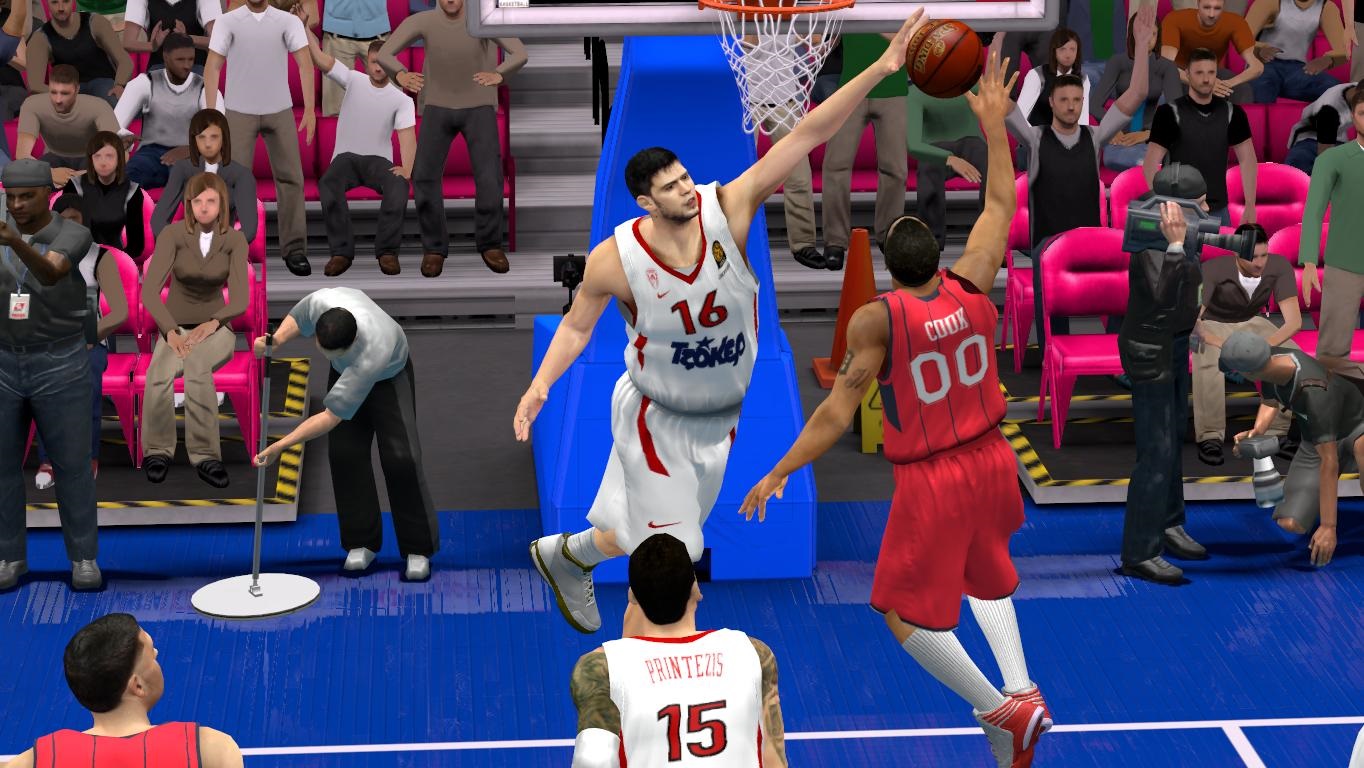
Source: http://forums.nba-live.com/viewtopic.php?f=149&t=88661&start=250 More...
The European
Commission’s competition decisions in the area of sport, which set out broad
principles regarding the interface between sports-related activities and EU
competition law, are widely publicized. As a result of the decentralization of
EU competition law enforcement, however, enforcement activity has largely
shifted to the national level. Since 2004, national competition authorities
(NCAs) and national courts are empowered to fully apply the EU competition
rules on anti-competitive agreements (Article 101 TFEU) and abuse of a dominant
position (Article 102 TFEU).
Even though
NCAs and national courts have addressed a series of interesting competition
cases (notably dealing with the regulatory aspects of sport) during the last
ten years, the academic literature has largely overlooked these developments.
This is unfortunate since all stakeholders (sports organisations, clubs,
practitioners, etc.) increasingly need to learn from pressing issues arising in
national cases and enforcement decisions. In a series of blog posts we will
explore these unknown territories of the application of EU competition law to
sport.
In this second installment of this blog series, we discuss a recent
judgment of the regional court (Landgericht) of Dortmund finding that the
International Handball Federation (IHF)’s mandatory release system of players
for matches of national teams without compensation infringes EU and German
competition law.[1] More...
The year is coming to an end and it
has been a relatively busy one for the CAS Ad Hoc divisions. Indeed, the Ad Hoc
division was, as usual now since the Olympic Games in Atlanta in 1996[1],
settling “Olympic” disputes during the Winter Olympics in Sochi. However,
it was also, and this is a novelty, present at the Asian Games 2014 in Incheon. Both divisions have had to deal with seven (published)
cases in total (four in Sochi and three in Incheon). The early commentaries
available on the web (here,
here
and there),
have been relatively unmoved by this year’s case law. Was it then simply ‘business
as usual’, or is there more to learn from the 2014 Ad Hoc awards? Two different
dimensions of the 2014 decisions by the Ad Hoc Division seem relevant to elaborate on : the jurisdiction quandary (part. 1) and the selection
drama (part. 2). More...
On 6 October 2014, the
CAS upheld the appeal filed by the former General Secretary of the World Karate
Federation (WKF), George Yerolimpos, against the 6 February 2014 decision of
the WKF Appeal Tribunal. With the award, the CAS confirmed a six-months
membership suspension imposed upon the Appellant by the WKF Disciplinary
Tribunal.[1] At a first glance, the
case at issue seems to be an ordinary challenge of a disciplinary sanction
imposed by a sports governing body. Nevertheless, this appeal lies at the heart
of a highly acrimonious political fight for the leadership of the WKF, featuring
two former ‘comrades’: Mr Yerolimpos and
Mr Espinos (current president of WKF). As the CAS puts it very lucidly, "this
is a story about a power struggle within an international sporting body"[2], a story reminding the Saturn devouring his son myth.
This case, therefore, brings
the dirty laundry of sports politics to the fore. Interestingly enough, this
time the CAS does not hesitate to grapple with the political dimension of the case. More...