Asser International Sports Law Blog

Our International Sports Law Diary
The Asser International Sports Law Centre is part of the T.M.C. Asser Instituut

The Brussels Court judgment on Financial Fair Play: a futile attempt to pull off a Bosman. By Ben Van Rompuy

On 29 May 2015, the Brussels Court of First Instance delivered its highly anticipated judgment on the challenge brought by football players’ agent Daniel Striani (and others) against UEFA’s Club Licensing and Financial Fair Play Regulations (FFP). In media reports,[1] the judgment was generally portrayed as a significant initial victory for the opponents of FFP. The Brussels Court not only made a reference for a preliminary ruling to the European Court of Justice (CJEU) but also imposed an interim order blocking UEFA from implementing the second phase of the FFP that involves reducing the permitted deficit for clubs.

A careful reading of the judgment, however, challenges the widespread expectation that the CJEU will now pronounce itself on the compatibility of the FFP with EU law. More...

A Bridge Too Far? Bridge Transfers at the Court of Arbitration for Sport. By Antoine Duval and Luis Torres.

FIFA’s freshly adopted TPO ban entered into force on 1 May (see our Blog symposium). Though it is difficult to anticipate to what extent FIFA will be able to enforce the ban, it is likely that many of the third-party investors will try to have recourse to alternative solutions to pursue their commercial involvement in the football transfer market. One potential way to circumvent the FIFA ban is to use the proxy of what has been coined “bridge transfers”. A bridge transfer occurs when a club is used as an intermediary bridge in the transfer of a player from one club to another. The fictitious passage through this club is used to circumscribe, for example, the payment of training compensation or to whitewash a third-party ownership by transforming it into a classical employment relationship. This is a legal construction that has gained currency especially in South American football, but not only. On 5 May 2015, in the Racing Club v. FIFA case, the Court of Arbitration for Sport (CAS) rendered its first award involving directly a bridge transfer. As this practice could become prevalent in the coming years we think that this case deserves a close look. More...

20 Years After Bosman - The New Frontiers of EU Law and Sport - Special Issue of the Maastricht Journal of European and Comparative Law

Editor's note: This is a short introduction written for the special Issue of the Maastricht Journal of European and Comparative Law celebrating the 20 years of the Bosman ruling and dedicated to the new frontiers of EU law and Sport (the articles are available here). For those willing to gain a deeper insight into the content of the Issue we organize (in collaboration with Maastricht University and the Maastricht Journal) a launching event with many of the authors in Brussels tomorrow (More info here).More...

ASSER Exclusive! Interview with Charles “Chuck” Blazer by Piotr Drabik

Editor’s note: Chuck Blazer declined our official interview request but thanks to some trusted sources (the FIFA indictment and Chuck’s testimony) we have reconstructed his likely answers. This is a fictional interview. Any resemblance with real facts is purely coincidental.



Mr Blazer, thank you for agreeing to this interview, especially considering the circumstances. How are you doing?

I am facing ten charges concerning, among others, conspiracy to corrupt and money laundering. But apart from that, I am doing great (laughs)!


It is good to know that you have not lost your spirit. And since you’ve been involved in football, or as you call it soccer, for years could you please first tell us what was your career at FIFA and its affiliates like?

Let me see… Starting from the 1990s I was employed by and associated with FIFA and one of its constituent confederations, namely the Confederation of North, Central American and Caribbean Association Football (CONCACAF). At various times, I also served as a member of several FIFA standing committees, including the marketing and television committee. As CONCACAF’s general secretary, a position I proudly held for 21 years, I was responsible, among many other things, for negotiations concerning media and sponsorship rights. From 1997 to 2013 I also served at FIFA’s executive committee where I participated in the selection process of the host countries for the World Cup tournaments. Those years at the helm of world soccer were truly amazing years of travel and hard work mainly for the good of the beautiful game. I might add that I even managed to document some of my voyages on my blog. I initially called it “Travels with Chuck Blazer” but Vladimir (Putin) convinced me to change the name to “Travels with Chuck Blazer and his Friends”. You should check it out.

 More...


Financial Fair Play: Lessons from the 2014 and 2015 settlement practice of UEFA. By Luis Torres

UEFA announced on 8 May that it had entered into Financial Fair Play settlement agreements with 10 European football clubs. Together with the four other agreements made in February 2015, this brings the total to 14 FFP settlements for 2015 and 23 since UEFA adopted modifications in its Procedural rules and allowed settlements agreements to be made between the Clubs and the Chief Investigator of the UEFA Club Financial Control Body (CFCB).[1] 

In the two years during which UEFA’s FFP regulations have been truly up and running we have witnessed the centrality taken by the settlement procedure in their enforcement. It is extremely rare for a club to be referred to the FFP adjudication chamber. In fact, only the case regarding Dynamo Moscow has been referred to the adjudication chamber. Thus, having a close look at the settlement practice of UEFA is crucial to gaining a good understanding of the functioning of FFP. Hence, this blog offers a detailed analysis of this year’s settlement agreements and compares them with last year’s settlements. More...

Book Review: Reforming FIFA, or Not

Editor’s note: This short book review will be published in a different format in the International Sports Law Journal, due to its timeliness we decided to reproduce it here. 

Reforming FIFA, or Not

 Antoine Duval

Book Review: Mark Pieth (ed.), Reforming FIFA, Dike Verlag, St. Gallen, 2014, 28.00 CHF, p.178
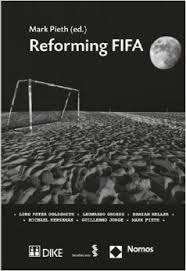


This book looks back at the work of the Independence Governance Committee (IGC). This Committee, constituted in 2011, had as primary objective to drive a reform process of FIFA initiated by its President Sepp Blatter. After ordering from the Swiss anti-corruption expert Mark Pieth, a report on the state of FIFA’s governance, FIFA decided to mandate him with the leadership of a consulting body composed of a mix of independent experts and football insiders, which would be accompanying and supervising the internal reform process of FIFA. The IGC was officially dissolved at the end of 2013, after completing its mandate. The book is composed of eight chapters, written by former members of the IGC, including former chairman Mark Pieth. In addition to the chapters, it includes the different reports (available here, here and here) submitted by the IGC to FIFA across the years. In the words of Pieth, this account is “fascinating because it gives a hands-on, realistic perspective of the concrete efforts, the achievements and the remaining challenges in the struggle for the reform of this organization [FIFA], avoiding the usual glorification or vilification.”[1] This review will first summarize the core of the account of the FIFA reform process provided by the book, before critically engaging with the outcome of the process and outlining the deficiencies that culminated on 29 May 2015 with the re-election of Sepp Blatter as FIFA president.More...


The Spanish TV Rights Distribution System after the Royal Decree: An Introduction. By Luis Torres

On the first of May 2015, the Spanish Government finally signed the Royal Decree allowing the joint selling of the media rights of the Spanish top two football leagues. The Minister for Sport stated that the Decree will allow clubs to “pay their debts with the social security and the tax authorities and will enable the Spanish teams to compete with the biggest European Leagues in terms of revenues from the sale of media rights”.[1]Although the signing of the Royal Decree was supposed to close a very long debate and discussion between the relevant stakeholders, its aftermath shows that the Telenovela is not entirely over. 

This blog post will first provide the background story to the selling of media rights in Spain. It will, thereafter, analyse the main points of the Royal Decree and outline how the system will work in practice. Finally, the blog will shortly address the current frictions between the Spanish League (LFP) and the Spanish football federation (RFEF).More...

Sport and EU Competition Law: New developments and unfinished business. By Ben Van Rompuy

Editor's note: Ben Van Rompuy, Head of the ASSER International Sports Law Centre, was recently interviewed by LexisNexis UK for their in-house adviser service. With kind permission from LexisNexis we reproduce the interview on our blog in its entirety. 

How does competition law affect the sports sector?  

The application of EU competition law to the sports sector is a fairly recent and still unfolding development. It was only in the mid-1990s, due to the growing commercialization of professional sport, that there emerged a need to address competition issues in relation to, for instance, ticketing arrangements or the sale of media rights.  More...


Is FIFA fixing the prices of intermediaries? An EU competition law analysis - By Georgi Antonov (ASSER Institute)

Introduction

On 1 April 2015, the new FIFA Regulations on Working with Intermediaries (hereinafter referred as the Regulations) came into force. These Regulations introduced a number of changes as regards the division of competences between FIFA and its members, the national associations. A particularly interesting issue from an EU competition law perspective is the amended Article 7 of the Regulations. Under paragraph 3, which regulates the rules on payments to intermediaries (also previously referred to as ‘agents’), it is recommended that the total amount of remuneration per transaction due to intermediaries either being engaged to act on a player’s or club’s behalf should not exceed 3% of the player’s basic gross income for the entire duration of the relevant employment contract. In the case of transactions due to intermediaries who have been engaged to act on a club’s behalf in order to conclude a transfer agreement, the total amount of remuneration is recommended to not exceed 3% of the eventual transfer fee paid in relation to the relevant transfer of the player.More...

The Impact of the new FIFA Regulations for Intermediaries: A comparative analysis of Brazil, Spain and England. By Luis Torres

INTRODUCTION

Almost a year after their announcement, the new FIFA Regulations on working with Intermediaries (“FIFA Regulations”) came into force on 1 April 2015. Their purpose is to create a more simple and transparent system of regulation of football agents. It should be noted, however, that the new FIFA rules enable every national football association to regulate their own system on players’ intermediaries, provided they respect the compulsory minimum requirements adopted. In an industry that is already cutthroat, it thus remains to be seen whether FIFA’s “deregulation” indeed creates transparency, or whether it is a Pandora’s Box to future regulatory confusion.

This blog post will provide an overview of the new FIFA Regulations on working with intermediaries and especially its minimum requirements. Provided that national associations are encouraged to “draw up regulations that shall incorporate the principles established in these provisions”[1], three different national regulations have been taken as case-studies: the English FA Regulations, the Spanish RFEF Regulations and the Brazilian CBF Regulations. After mapping their main points of convergence and principal differences, the issues that could arise from these regulatory differences shall be analyzed.  More...

Asser International Sports Law Blog | Our International Sports Law Diary <br/>The <a href="http://www.sportslaw.nl" target="_blank">Asser International Sports Law Centre</a> is part of the <a href="https://www.asser.nl/" target="_blank"><img src="/sportslaw/blog/media/logo_asser_horizontal.jpg" style="vertical-align: bottom; margin-left: 7px;width: 140px" alt="T.M.C. Asser Instituut" /></a>

Asser International Sports Law Blog

Our International Sports Law Diary
The Asser International Sports Law Centre is part of the T.M.C. Asser Instituut

How Data Protection Crystallises Key Legal Challenges in Anti-Doping - By Marjolaine Viret

Editor's Note: Marjolaine is a researcher and attorney admitted to the Geneva bar (Switzerland) who specialises in sports and life sciences. Her interests focus on interdisciplinary approaches as a way of designing effective solutions in the field of anti-doping and other science-based domains. Her book “Evidence in Anti-Doping at the Intersection of Science & Law” was published through T.M.C Asser Press / Springer in late 2015. She participates as a co-author on a project hosted by the University of Neuchâtel to produce the first article-by-article legal commentary of the 2021 World Anti-Doping Code. In her practice, she regularly advises international federations and other sports organisations on doping and other regulatory matters, in particular on aspects of scientific evidence, privacy or research regulation. She also has experience assisting clients in arbitration proceedings before the Court of Arbitration for Sport or other sport tribunals.


Since the spectre of the EU General Data Protection Regulation (‘GDPR’) has loomed over the sports sector,[1] a new wind seems to be blowing on anti-doping, with a palpable growing interest for stakes involved in data processing. Nothing that would quite qualify as a wind of change yet, but a gentle breeze of awareness at the very least.

Though the GDPR does mention the fight against doping in sport as a potential matter of public health in its recitals,[2] EU authorities have not gone so far as to create a standalone ground on which anti-doping organisations could rely to legitimise their data processing. Whether or not anti-doping organisations have a basis to process personal data – and specifically sensitive data – as part of their anti-doping activities, thus remains dependent on the peculiarities of each national law. Even anti-doping organisations that are incorporated outside the EU are affected to the extent they process data about athletes in the EU.[3] This includes international sports federations, many of which are organised as private associations under Swiss law. Moreover, the Swiss Data Protection Act (‘DPA’) is currently under review, and the revised legal framework should largely mirror the GDPR, subject to a few Swiss peculiarities. All anti-doping organisations undertake at a minimum to abide by the WADA International Standard for Privacy and the Protection of Personal Information (‘ISPPPI’), which has been adapted with effect to 1 June 2018 and enshrines requirements similar to those of the GDPR. However, the ISPPPI stops short of actually referring to the GDPR and leaves discretion for anti-doping organisations to adapt to other legislative environments.

The purpose of this blog is not to offer a detailed analysis of the requirements that anti-doping organisations must abide by under data protection laws, but to highlight how issues around data processing have come to crystallise key challenges that anti-doping organisations face globally. Some of these challenges have been on the table since the adoption of the first edition of the World Anti-Doping Code (‘WADC’) but are now exposed in the unforgiving light of data protection requirements. More...


What happens in Switzerland stays in Switzerland: The Striani Judgment of the Brussels Court of Appeals

In the last five years, the Striani case has been the main sword of Damocles hanging over UEFA’s Financial Fair Play Regulations. At the very least, the only real judicial threat they have faced (apart from the relatively harmless challenge mounted in the Galatasaray case at the CAS). Indeed, a Belgian player agent, Daniele Striani, represented by Bosman’s former lawyer Jean-Louis Dupont, attempted, in various fora, to challenge the compatibility of UEFA’s CL&FFP Regulations with EU law. Striani lodged a complaint with the European Commission (which was quickly rejected in October 2014) and initiated a private action for damages before the Brussels Court of First Instance. The latter deemed itself not competent to decide on the matter, but nevertheless accepted to order a provisory stay of the enforcement of the UEFA FFP Regulations pending a preliminary reference to the Court of Justice of the EU (see Ben van Rompuy’s blog on the case here). The CJEU unsurprisingly rejected to enter into the matter, but UEFA and Striani decided to appeal the first instance ruling to the Court of Appeal, which rendered its decision on 11 April. It is unclear at this stage whether Striani will attempt to challenge it at the Belgian Cour de Cassation (Highest Civil Court), however this would entail considerable risks and costs and his lawyers to date have not indicated that they would do so (see here). 

While the ruling of the Court of Appeal does not touch upon the much-discussed question of the compatibility of UEFA’s FFP Regulations with EU law (see our many blogs on the question here, here and here), it remains an interesting decision to discuss broader questions related to the procedural ease in challenging regulatory decisions passed by sports governing bodies (SGBs) based in Switzerland. Competition law constitutes the main legal tool available to sports stakeholders looking to challenge existing regulatory arrangements from the outside (e.g. not going through the internal political systems of the SGBs or the CAS route). Recent cases, such as the ISU decision of the European Commission, the Pechstein case in front of the German courts or the Rule 40 decision of the German competition authority, have demonstrated the potency of competition law to question the legality of the rules and decisions of the SGBs.[1] In this regard, the decision of the Brussels Court of Appeal narrows the range of parties allowed to challenge in European courts the SGBs’ rules and decisions on the basis of competition law. More...

Can European Citizens Participate in National Championships? An Analysis of AG Tanchev’s Opinion in TopFit e.V. Daniele Biffi v Deutscher Leichtathletikverband e.V. - By Thomas Terraz

Editor’s note: Thomas Terraz is a third year LL.B. candidate at the International and European Law programme at The Hague University of Applied Sciences with a specialisation in European Law. Currently he is pursuing an internship at the T.M.C. Asser Institute with a focus on International and European Sports Law.


1.     Introduction

To many it may seem obvious that athletes in a national championship should only be able to participate if they have the nationality of the relevant state. The Dutch Road Cycling National Championships should have Dutch cyclists, and the German Athletics Championships should have German athletes and so forth. However, in reality, foreign competitors are allowed to participate in many national championships in the EU, and there is a wide discrepancy between the rules of national sport governing bodies on this issue. There is no unified practice when investigating this point by country or by sport, and rules on participation range from a complete ban on foreign competitors to absolutely no mention of foreign athletes.[1] Thus, the question arises: should foreign athletes be able to participate in national sport championships?

The Court of Justice of the European Union (CJEU) will soon be required to provide an, at least partial, answer to this dilemma as a result of an application for a preliminary ruling.  A German Court has referred three questions to the CJEU on the case TopFit e.V. Daniele Biffi v Deutscher Leichtathletikverband e.V. (DLV) which in essence ask whether EU citizenship rights and in particular, the requirement of non-discrimination on the basis of nationality, should be applied to non-nationals wishing to participate in an athletics national championship in Germany. In the meantime, the Advocate General (AG), who provides a non-binding opinion to the Court before a decision is delivered, Evgeni Tanchev has delivered an interesting opinion on the case. It addresses the claims from the applicants based on EU citizenship rights and urges the CJEU to instead review the case on the basis of the freedom of establishment.

This blog will dissect the AG’s opinion to assess the main arguments put forward in relation to freedom of establishment and EU citizenship. Furthermore, it will weigh the ramifications this case may have on the boundaries of EU law in relation to sport. To fully appreciate the AG’s opinion, it is necessary to first discuss the intriguing factual and legal background colouring this case. After all, this will not be the first time the CJEU faces thorny issues concerning discrimination on the basis of nationality and sport. More...


International and European Sports Law – Monthly Report – February and March 2019. By Tomáš Grell

Editor's note: This report compiles all relevant news, events and materials on International and European Sports Law based on the daily coverage provided on our twitter feed @Sportslaw_asser. You are invited to complete this survey via the comments section below, feel free to add links to important cases, documents and articles we might have overlooked.


The Headlines

The Court of Arbitration for Sport bans 12 Russian track and field athletes

On 1 February 2019, the Court of Arbitration for Sport (CAS) communicated that it had rendered another 12 decisions in the seemingly endless saga concerning the state-sponsored doping programme in Russia. These first-instance decisions of the CAS involve 12 Russian track and field athletes who were all found guilty of anti-doping rule violations based on the evidence underlying the reports published by professor Richard McLaren and suspended from participating in sports competitions for periods ranging from two to eight years. Arguably the most prominent name that appears on the list of banned athletes is Ivan Ukhov, the 32-year-old high jump champion from the 2012 Olympic Games in London.

The case was brought by the International Association of Athletics Federation (IAAF) that sought to convince the arbitrators that the athletes in question had participated in and/or benefited from anabolic steroid doping programmes and benefited from specific protective methods (washout schedules) in the period between the 2012 Olympic Games in London and the 2013 IAAF World Championships in Moscow. The CAS was acting in lieau of the Russian Athletics Federation that remains suspended and thus unable to conduct any disciplinary procedures. The athletes have had the opportunity to appeal the decisions to the CAS Appeals Arbitration Division.

Federal Cartel Office in Germany finds Rule 40 of the Olympic Charter disproportionately restrictive

At the end of February, the German competition authority Bundeskartellamt announced that it had entered into a commitment agreement with the German Olympic Sports Confederation (DOSB) and the International Olympic Committee (IOC) in which these two organisations had agreed to considerably enhance advertising opportunities for German athletes and their sponsors during the Olympic Games. The respective agreement is a direct consequence of the Bundeskartellamt’s finding that the IOC and the DOSB had abused their dominant position on the market for organising and marketing the Olympic Games by demanding that the athletes refrain from promoting their own sponsors while the Games are ongoing, as well as shortly before and after the Games. This restriction stems from Rule 40(3) of the Olympic Charter under which no competitor who participates in the Games may allow his person, name, picture or sports performances to be used for advertising purposes, unless the IOC Executive Board allows him/her to do so.

As part of fulfilling its obligations under the commitment agreement, the DOSB has relaxed its guidelines on promotional activities of German athletes during the Olympic Games. For its part, the IOC has declared that these new guidelines would take precedence over Rule 40(3) of the Olympic Charter. However, it still remains to be seen whether in response to the conclusions of the German competition authority the IOC will finally change the contentious rule.

The Grand Chamber of the European Court of Human Rights refuses to pronounce itself on Claudia Pechstein’s case

Claudia Pechstein’s challenge against the CAS brought before the European Court of Human Rights (ECtHR) has not yielded the desired result for the German athlete. On 5 February 2019, a Panel of the Grand Chamber of the ECtHR decided that the Grand Chamber would not entertain the case. This means that the judgment handed down by the 3rd Chamber of the ECtHR on 2 October 2018, in which the ECtHR confirmed that except for the lack of publicity of oral hearings the procedures of the CAS are compatible with the right to a fair trial under Article 6(1) of the European Convention on Human Rights, has now become final and binding. However, the protracted legal battle between the five-time Olympic champion in speed skating and the CAS is not over yet since there is one more challenge against the CAS and its independence pending before the German Constitutional Court.  More...

New Event! FIFA and Human Rights: Impacts, Policies, Responsibilities - 8 May 2019 - Asser Institute

In the past few years, FIFA underwent intense public scrutiny for human rights violations surrounding the organisation of the World Cup 2018 in Russia and 2022 in Qatar. This led to a reform process at FIFA, which involved a number of policy changes, such as:

  • Embracing the United Nations Guiding Principles on Business and Human Rights;
  • The inclusion of human rights in the FIFA Statutes;
  • Adopting new bidding rules including human rights requirements;
  • And introducing a Human Rights Advisory Board.

To take stock of these changes, the Asser Institute and the Netherlands Network for Human Rights Research (NNHRR), are organising a conference on the Fédération Internationale de Football Association (FIFA) and human rights, which will take place at the Asser Institute in The Hague on 8 May 2019.

This one-day conference aims to take a deeper look at FIFA’s impacts on human rights and critically investigate the measures it has adopted to deal with them. Finally, we will also address FIFA’s potential legal responsibilities under a variety of human rights laws/instruments.


Preliminary Programme

9:00 Registration & Coffee

9:45 Welcome by Antoine Duval (Asser Institute) & Daniela Heerdt (Tilburg University)

10:00 Opening Remarks by Andreas Graf (Human Rights Officer, FIFA)

10:30 Panel 1: FIFA & Human Rights: Impacts

  • Zoher Shabbir (University of York) – The correlation between forced evictions and developing nations hosting the FIFA World Cup
  • Roman Kiselyov (European Human Rights Advocacy Centre) - FIFA World Cup as a Pretext for a Crackdown on Human Rights
  • Eleanor Drywood (Liverpool University) - FIFA and children’s rights: theory, methodology and practice 

12:00 Lunch

13:00 Panel 2: FIFA & Human Rights: Policies

  • Lisa Schöddert & Bodo Bützler (University of Cologne) – FIFA’s eigen-constitutionalisation and its limits
  • Gigi Alford (World Players Association) - Power Play: FIFA’s voluntary human rights playbook does not diminish Switzerland’s state power to protect against corporate harms
  • Brendan Schwab (World Players Association) & Craig Foster - FIFA, human rights and the threatened refoulement of Hakeem Al Araibi 

14:30 Break

15:00 Panel 3: FIFA & Human Rights: Responsibilities

  • Daniel Rietiker (ECtHR and University of Lausanne) - The European Court of Human Rights and Football: Current Issues and Potential
  • Jan Lukomski (Łukomski Niklewicz law firm) - FIFA and the International Covenant on Economic, Social and Cultural Rights : Obligations, duties and remedies regarding the labour rights         protected under the ICESCR
  • Raquel Regueiro Dubra (Complutense University of Madrid) - Shared international responsibility for human rights violations in global events. The case of the 2022 World Cup in Qatar.
  • Wojciech Lewandowski (Polish Academy of Sciences/University of Warsaw) - Is Bauer the new Bosman? – The implications of the newest CJEU jurisprudence for FIFA and other sport governing bodies

17:00 Closing Remarks by Mary Harvey (Chief Executive, Centre for Sports and Human Rights)


More information and registration at https://www.asser.nl/education-events/events/?id=3064

International and European Sports Law – Monthly Report – January 2019 - By Tomáš Grell

 Editor's note: This report compiles all relevant news, events and materials on International and European Sports Law based on the daily coverage provided on our twitter feed @Sportslaw_asser. You are invited to complete this survey via the comments section below, feel free to add links to important cases, documents and articles we might have overlooked.


The Headlines

#Save(d)Hakeem

The plight of Hakeem al-Araibi – the 25-year-old refugee footballer who was arrested last November in Bangkok upon his arrival from Australia on the basis of a red notice issued by Interpol in contravention of its own policies which afford protection to refugees and asylum-seekers – continued throughout the month of January. Bahrain – the country Hakeem al-Araibi fled in 2014 due to a (well-founded) fear of persecution stemming from his previous experience when he was imprisoned and tortured as part of the crackdown on pro-democracy athletes who had protested against the royal family during the Arab spring – maintained a firm stance, demanding that Hakeem be extradited to serve a prison sentence over a conviction for vandalism charges, which was allegedly based on coerced confessions and ignored evidence.

While international sports governing bodies were critised from the very beginning for not using enough leverage with the governments of Bahrain and Thailand to ensure that Hakeem’s human rights are protected, they have gradually added their voice to the intense campaign for Hakeem’s release led by civil society groups. FIFA, for example, has sent a letter directly to the Prime Minister of Thailand, urging the Thai authorities ‘to take the necessary steps to ensure that Mr al-Araibi is allowed to return safely to Australia at the earliest possible moment, in accordance with the relevant international standards’. Yet many activists have found this action insufficient and called for sporting sanctions to be imposed on the national football associations of Bahrain and Thailand.      

When it looked like Hakeem will continue to be detained in Thailand at least until April this year, the news broke that the Thai authorities agreed to release Hakeem due to the fact that for now the Bahraini government had given up on the idea of bringing Hakeem ‘home’ – a moment that was praised as historic for the sport and human rights movement.

Russia avoids further sanctions from WADA despite missing the deadline for handing over doping data from the Moscow laboratory 

WADA has been back in turmoil ever since the new year began as the Russian authorities failed to provide it with access to crucial doping data from the former Moscow laboratory within the required deadline which expired on 31 December 2018, insisting that the equipment WADA intended to use for the data extraction was not certified under Russian law. The Russian Anti-Doping Agency thus failed to meet one of the two conditions under which its three-year suspension was controversially lifted in September 2018. The missed deadline sparked outrage among many athletes and national anti-doping organisations, who blamed WADA for not applying enough muscle against the Russian authorities.

Following the expiry of the respective deadline, it appeared that further sanctions could be imposed on the Russian Anti-Doping Agency, but such an option was on the table only until WADA finally managed to access the Moscow laboratory and retrieve the doping data on 17 January 2019. Shortly thereafter, WADA President Sir Craig Reedie hailed the progress as a major breakthrough for clean sport and members of the WADA Executive Committee agreed that no further sanctions were needed despite the missed deadline. However, doubts remain as to whether the data have not been manipulated. Before WADA delivers on its promise and builds strong cases against the athletes who doped – to be handled by international sports federations – it first needs to do its homework and verify whether the retrieved data are indeed genuine.  

British track cyclist Jessica Varnish not an employee according to UK employment tribunal

On 16 January 2019, an employment tribunal in Manchester rendered a judgment with wider implications for athletes and sports governing bodies in the United Kingdom, ruling that the female track cyclist Jessica Varnish was neither an employee nor a worker of the national governing body British Cycling and the funding agency UK Sport. The 28-year-old multiple medal winner from the world and European championships takes part in professional sport as an independent contractor but sought to establish before the tribunal that she was in fact an employee of the two organisations. This would enable her to sue either organisation for unfair dismissal as she was dropped from the British cycling squad for the 2016 Olympic Games in Rio de Janeiro and her funding agreement was not renewed, allegedly in response to her critical remarks about some of the previous coaching decisions.

The tribunal eventually dismissed her challenge, concluding that ‘she was not personally performing work provided by the respondent – rather she was personally performing a commitment to train in accordance with the individual rider agreement in the hope of achieving success at international competitions’. Despite the outcome of the dispute, Jessica Varnish has insisted that her legal challenge contributed to a positive change in the structure, policies and personnel of British Cycling and UK Sport, while both organisations have communicated they had already taken action to strengthen the duty of care and welfare provided to athletes.  


Sports Law Related Decisions


Official Documents and Press Releases


In the news

Doping

Football

Other


Academic Materials

International Sports Law Journal

Other


Blog

Law in Sport

Other


Upcoming Events

Call for papers - Third Annual International Sports Law Conference of the International Sports Law Journal - 24 and 25 October 2019 - Asser Institute

The Editors of the International Sports Law Journal (ISLJ) invite you to submit abstracts for the third ISLJ Annual Conference on International Sports Law, which will take place on 24 and 25 October 2019 at the Asser Institute in The Hague. The ISLJ, published by Springer and Asser Press, is the leading academic publication in the field of international sports law. The conference is a unique occasion to discuss the main legal issues affecting international sports with renowned academic experts and practitioners.


We are delighted to announce the following confirmed keynote speakers:


  • Beckie Scott (Chair of the World Anti-Doping Agency (WADA) Athlete Committee, Olympic Champion, former member of the WADA Executive Committee and the International Olympic Committee (IOC)),
  • Ulrich Haas (Professor of Law at Univerzität Zürich, CAS arbitrator), and
  • Kimberly Morris (Head of FIFA Transfer Matching System (TMS) Integrity and Compliance).


We welcome abstracts from academics and practitioners on any question related to international sports law. We also welcome panel proposals (including a minimum of three presenters) on a specific issue. For this year’s edition, we specifically invite submissions on the following themes:


  • The role of athletes in the governance of international sports
  • The evolution of sports arbitration, including the Court of Arbitration for Sport
  •  The role and functioning of the FIFA transfer system, including the FIFA TMS
  •  The intersection between criminal law and international sports (in particular issues of corruption, match-fixing, human trafficking, tax evasion)
  • Hooliganism
  • Protection of minor athletes
  • Civil and criminal liability relating to injuries in sports


Please send your abstract of 300 words and CV no later than 30 April 2019 to a.duval@asser.nl. Selected speakers will be informed by 15 May.


The selected participants will be expected to submit a draft paper by 1 September 2019. All papers presented at the conference are eligible (subjected to peer-review) for publication in a special issue of the ISLJ.  To be considered for inclusion in the conference issue of the journal, the final draft must be submitted for review by 15 December 2019.  Submissions after this date will be considered for publication in later editions of the Journal.


The Asser Institute will cover one night accommodation for the speakers and will provide a limited amount of travel grants (max. 250€). If you wish to be considered for a grant please indicate it in your submission. 

A Reflection on the Second Report of FIFA’s Human Rights Advisory Board - By Daniela Heerdt (Tilburg University)

Editor's note: Daniela Heerdt is a PhD candidate at Tilburg Law School in the Netherlands and works as Research Officer for the Centre for Sports and Human Rights. Her PhD research deals with the establishment of responsibility and accountability for adverse human rights impacts of mega-sporting events, with a focus on FIFA World Cups and Olympic Games. She published an article in the International Sports Law Journal that discusses to what extent the revised bidding and hosting regulations by FIFA, the IOC and UEFA strengthen access to remedy for mega-sporting events-related human rights violations.


On November 26th, the Human Rights Advisory Board[1] of the Fédération Internationale de Football Association (FIFA) published its second report. This blog provides a summary and brief evaluation of the report, by drawing a comparison to the previous report issued by the Human Rights Advisory Board (hereinafter: the Board) based on the content of the recommendations and FIFA’s efforts to implement the Board’s recommendations. The third part of this blog briefly reflects on the broader implications of some of the new recommendations issued for FIFA’s internal policies. The conclusion provides five more general points of observation on the report. More...

The Kristoffersen ruling: the EFTA Court targets athlete endorsement deals - By Sven Demeulemeester and Niels Verborgh

Editor’s note: Sven Demeulemeester and Niels Verborgh are sports lawyers at the Belgium law firm, Altius.


Introduction

In its 16 November 2018 judgment, the Court of Justice of the European Free Trade Association States (the EFTA Court) delivered its eagerly awaited ruling in the case involving Henrik Kristoffersen and the Norwegian Ski Federation (NSF). 

On 17 October 2016, Kristoffersen had taken the NSF to the Oslo District Court over the latter’s refusal to let the renowned alpine skier enter into a sponsorship with Red Bull. At stake were the commercial markings on his helmet and headgear in races organised under the NSF’s umbrella. The NSF refused this sponsorship because it had already granted the advertising on helmet and headgear to its own main sponsor, Telenor. Kristoffersen claimed before the Oslo District Court, that the NSF should be ordered to permit him to enter into an individual marketing contract with Red Bull. In the alternative, Kristoffersen claimed damages up to a maximum of NOK 15 million. By a letter of 25 September 2017, the Oslo District Court referred several legal questions to the EFTA Court in view of shedding light on the compatibility of the rules that the NSF had invoked with EEA law.

If rules do not relate to the conduct of the sport itself, but concern sponsorship rights and hence an economic activity, these rules are subject to EEA law. The EFTA Court ruling is important in that it sets out the framework for dealing with - ever more frequent - cases in which an individual athlete’s endorsement deals conflict with the interest of the national or international sports governing bodies (SGBs) that he or she represents in international competitions.More...