On 29
May 2015, the Brussels Court of First Instance delivered its highly anticipated
judgment on the challenge brought by football players’ agent Daniel Striani (and
others) against UEFA’s Club Licensing and Financial Fair Play Regulations
(FFP). In media reports,[1]
the judgment was generally portrayed as a significant initial victory for the
opponents of FFP. The Brussels Court not only made a reference for a
preliminary ruling to the European Court of Justice (CJEU) but also imposed an
interim order blocking UEFA from implementing the second phase of the FFP that
involves reducing the permitted deficit for clubs.
A
careful reading of the judgment, however, challenges the widespread expectation
that the CJEU will now pronounce itself on the compatibility of the FFP with EU
law. More...
FIFA’s freshly adopted TPO ban entered into
force on 1 May (see our Blog symposium). Though it is difficult to
anticipate to what extent FIFA will be able to enforce the ban, it is likely
that many of the third-party investors will try to have recourse to alternative
solutions to pursue their commercial involvement in the football transfer
market. One potential way to circumvent the FIFA ban is to use the proxy of
what has been coined “bridge transfers”. A bridge transfer occurs when a club
is used as an intermediary bridge in the transfer of a player from one club to
another. The fictitious passage through this club is used to circumscribe, for
example, the payment of training compensation or to whitewash a third-party
ownership by transforming it into a classical employment relationship. This is
a legal construction that has gained currency especially in South American
football, but not only. On 5 May 2015, in the Racing Club v. FIFA case, the Court of Arbitration for Sport (CAS)
rendered its first award involving directly a bridge transfer. As this practice
could become prevalent in the coming years we think that this case deserves a
close look. More...
Editor's note: This is a short introduction written for the special Issue of the Maastricht Journal of European and Comparative Law celebrating the 20 years of the Bosman ruling and dedicated to the new frontiers of EU law and Sport (the articles are available here). For those willing to gain a deeper insight into the content of the Issue we organize (in collaboration with Maastricht University and the Maastricht Journal) a launching event with many of the authors in Brussels tomorrow (More info here).More...
Editor’s
note: Chuck Blazer declined our official interview request but thanks to some trusted
sources (the FIFA indictment and
Chuck’s testimony) we
have reconstructed his likely answers. This is a fictional interview. Any resemblance with real facts is purely coincidental.

Mr
Blazer, thank you for agreeing to this interview, especially considering the
circumstances. How are you doing?
I am facing ten charges concerning, among others,
conspiracy to corrupt and money laundering. But apart from that, I am doing
great (laughs)!
It is
good to know that you have not lost your spirit. And since you’ve been involved
in football, or as you call it soccer, for years could you please first tell us
what was your career at FIFA and its affiliates like?
Let me see… Starting from the 1990s I was employed by and
associated with FIFA and one of its constituent confederations, namely the
Confederation of North, Central American and Caribbean Association Football (CONCACAF).
At various times, I also served as a member of several FIFA standing
committees, including the marketing and television committee. As CONCACAF’s
general secretary, a position I proudly held for 21 years, I was responsible,
among many other things, for negotiations concerning media and sponsorship
rights. From 1997 to 2013 I also served at FIFA’s executive committee where I
participated in the selection process of the host countries for the World Cup
tournaments. Those years at the helm of world soccer were truly amazing years
of travel and hard work mainly for the good of the beautiful game. I might add
that I even managed to document some of my voyages on my blog. I initially
called it “Travels with Chuck Blazer” but Vladimir (Putin) convinced me to
change the name to “Travels
with Chuck Blazer and his Friends”. You should check it out.
More...
UEFA announced on 8
May that it had entered into Financial Fair Play settlement agreements with 10 European
football clubs. Together with the four other agreements made in February 2015, this brings the total to 14 FFP
settlements for 2015 and 23 since UEFA adopted modifications in its Procedural
rules and allowed settlements agreements to be made between the Clubs and the Chief
Investigator of the UEFA Club Financial Control Body (CFCB).[1]
In the two years during
which UEFA’s FFP regulations have been truly up and running we have witnessed the
centrality taken by the settlement procedure in their enforcement. It is
extremely rare for a club to be referred to the FFP adjudication chamber. In
fact, only the case regarding Dynamo Moscow has been referred to the adjudication chamber. Thus, having
a close look at the settlement practice of UEFA is crucial to gaining a good
understanding of the functioning of FFP. Hence, this blog offers a detailed
analysis of this year’s settlement agreements and compares them with last year’s settlements. More...
Editor’s note: This short book review will be
published in a different format in the International Sports Law Journal, due to
its timeliness we decided to reproduce it here.
Reforming
FIFA, or Not
Antoine Duval
Book Review: Mark Pieth
(ed.), Reforming
FIFA, Dike Verlag, St. Gallen, 2014, 28.00 CHF, p.178
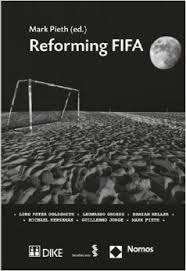
This
book looks back at the work of the Independence Governance Committee
(IGC). This Committee, constituted in 2011, had as
primary objective to drive a reform process of FIFA initiated by its President
Sepp Blatter. After ordering from the Swiss anti-corruption expert Mark Pieth,
a report
on the state of FIFA’s governance, FIFA decided to mandate him with the leadership
of a consulting body composed of a mix of independent experts and football
insiders, which would be accompanying and supervising the internal reform
process of FIFA. The IGC was officially dissolved
at the end of 2013, after completing its mandate. The book is composed of eight
chapters, written by former members of the IGC, including former chairman Mark
Pieth. In addition to the chapters, it includes the different reports
(available here,
here
and here)
submitted by the IGC to FIFA across the years. In the words of Pieth, this
account is “fascinating because it gives a hands-on, realistic perspective of
the concrete efforts, the achievements and the remaining challenges in the
struggle for the reform of this organization [FIFA], avoiding the usual
glorification or vilification.”[1]
This review will first summarize the core of the account of the FIFA reform
process provided by the book, before critically engaging with the outcome of
the process and outlining the deficiencies that culminated on 29 May 2015 with
the re-election of Sepp Blatter as FIFA president.More...
On
the first of May 2015, the Spanish Government finally signed the Royal Decree
allowing the joint selling of the media rights of the Spanish top two football
leagues. The Minister for Sport stated that the Decree will allow clubs to “pay
their debts with the social security and the tax authorities and will enable
the Spanish teams to compete with the biggest European Leagues in terms of
revenues from the sale of media rights”.[1]Although
the signing of the Royal Decree was supposed to close a very long debate and
discussion between the relevant stakeholders, its aftermath shows that the Telenovela is not entirely over.
This
blog post will first provide the background story to the selling of media rights
in Spain. It will, thereafter, analyse the main points of the Royal Decree and outline
how the system will work in practice. Finally, the blog will shortly address
the current frictions between the Spanish League (LFP) and the Spanish football
federation (RFEF).More...
Editor's note: Ben Van Rompuy, Head of the ASSER International Sports Law Centre, was recently interviewed by LexisNexis UK for their in-house adviser service.
With kind permission from LexisNexis we reproduce the interview on our blog in
its entirety.
How does competition law affect the sports sector?
The application of EU competition law to the sports
sector is a fairly recent and still unfolding development. It was only in the
mid-1990s, due to the growing commercialization of professional sport, that
there emerged a need to address competition issues in relation to, for
instance, ticketing arrangements or the sale of media rights. More...
Introduction
On 1 April 2015, the new FIFA Regulations on
Working with Intermediaries (hereinafter referred as the Regulations) came into
force. These Regulations introduced a number of changes as regards the division
of competences between FIFA and its members, the national associations. A particularly
interesting issue from an EU competition law perspective is the amended Article 7 of the Regulations. Under paragraph 3, which regulates
the rules on payments to intermediaries (also previously referred to as ‘agents’), it is recommended that the
total amount of remuneration per transaction due to intermediaries either being
engaged to act on a player’s or club’s behalf should not exceed 3% of the
player’s basic gross income for the entire duration of the relevant employment
contract. In the case of transactions due to intermediaries who have been
engaged to act on a club’s behalf in order to conclude a transfer agreement, the
total amount of remuneration is recommended to not exceed 3% of the eventual
transfer fee paid in relation to the relevant transfer of the player.More...
INTRODUCTION
Almost a year after their announcement, the new
FIFA Regulations on
working with Intermediaries (“FIFA Regulations”) came into force on 1 April 2015. Their purpose is
to create a more simple and transparent system of regulation of football agents.
It should be noted, however, that the new FIFA rules enable every national football
association to regulate their own system on players’ intermediaries, provided
they respect the compulsory minimum requirements adopted. In an industry that
is already cutthroat, it thus remains to be seen whether FIFA’s “deregulation”
indeed creates transparency, or whether it is a Pandora’s Box to future regulatory
confusion.
This blog post will provide an overview of the
new FIFA Regulations on working with intermediaries and especially its minimum
requirements. Provided that
national associations are encouraged to “draw up regulations that shall incorporate
the principles established in these provisions”[1], three different national regulations
have been taken as case-studies: the English FA Regulations, the Spanish RFEF
Regulations and the Brazilian CBF Regulations. After mapping their main points of
convergence and principal differences, the issues that could arise from these regulatory
differences shall be analyzed. More...