Asser International Sports Law Blog

Our International Sports Law Diary
The Asser International Sports Law Centre is part of the T.M.C. Asser Instituut

The Brussels Court judgment on Financial Fair Play: a futile attempt to pull off a Bosman. By Ben Van Rompuy

On 29 May 2015, the Brussels Court of First Instance delivered its highly anticipated judgment on the challenge brought by football players’ agent Daniel Striani (and others) against UEFA’s Club Licensing and Financial Fair Play Regulations (FFP). In media reports,[1] the judgment was generally portrayed as a significant initial victory for the opponents of FFP. The Brussels Court not only made a reference for a preliminary ruling to the European Court of Justice (CJEU) but also imposed an interim order blocking UEFA from implementing the second phase of the FFP that involves reducing the permitted deficit for clubs.

A careful reading of the judgment, however, challenges the widespread expectation that the CJEU will now pronounce itself on the compatibility of the FFP with EU law. More...

A Bridge Too Far? Bridge Transfers at the Court of Arbitration for Sport. By Antoine Duval and Luis Torres.

FIFA’s freshly adopted TPO ban entered into force on 1 May (see our Blog symposium). Though it is difficult to anticipate to what extent FIFA will be able to enforce the ban, it is likely that many of the third-party investors will try to have recourse to alternative solutions to pursue their commercial involvement in the football transfer market. One potential way to circumvent the FIFA ban is to use the proxy of what has been coined “bridge transfers”. A bridge transfer occurs when a club is used as an intermediary bridge in the transfer of a player from one club to another. The fictitious passage through this club is used to circumscribe, for example, the payment of training compensation or to whitewash a third-party ownership by transforming it into a classical employment relationship. This is a legal construction that has gained currency especially in South American football, but not only. On 5 May 2015, in the Racing Club v. FIFA case, the Court of Arbitration for Sport (CAS) rendered its first award involving directly a bridge transfer. As this practice could become prevalent in the coming years we think that this case deserves a close look. More...

20 Years After Bosman - The New Frontiers of EU Law and Sport - Special Issue of the Maastricht Journal of European and Comparative Law

Editor's note: This is a short introduction written for the special Issue of the Maastricht Journal of European and Comparative Law celebrating the 20 years of the Bosman ruling and dedicated to the new frontiers of EU law and Sport (the articles are available here). For those willing to gain a deeper insight into the content of the Issue we organize (in collaboration with Maastricht University and the Maastricht Journal) a launching event with many of the authors in Brussels tomorrow (More info here).More...

ASSER Exclusive! Interview with Charles “Chuck” Blazer by Piotr Drabik

Editor’s note: Chuck Blazer declined our official interview request but thanks to some trusted sources (the FIFA indictment and Chuck’s testimony) we have reconstructed his likely answers. This is a fictional interview. Any resemblance with real facts is purely coincidental.



Mr Blazer, thank you for agreeing to this interview, especially considering the circumstances. How are you doing?

I am facing ten charges concerning, among others, conspiracy to corrupt and money laundering. But apart from that, I am doing great (laughs)!


It is good to know that you have not lost your spirit. And since you’ve been involved in football, or as you call it soccer, for years could you please first tell us what was your career at FIFA and its affiliates like?

Let me see… Starting from the 1990s I was employed by and associated with FIFA and one of its constituent confederations, namely the Confederation of North, Central American and Caribbean Association Football (CONCACAF). At various times, I also served as a member of several FIFA standing committees, including the marketing and television committee. As CONCACAF’s general secretary, a position I proudly held for 21 years, I was responsible, among many other things, for negotiations concerning media and sponsorship rights. From 1997 to 2013 I also served at FIFA’s executive committee where I participated in the selection process of the host countries for the World Cup tournaments. Those years at the helm of world soccer were truly amazing years of travel and hard work mainly for the good of the beautiful game. I might add that I even managed to document some of my voyages on my blog. I initially called it “Travels with Chuck Blazer” but Vladimir (Putin) convinced me to change the name to “Travels with Chuck Blazer and his Friends”. You should check it out.

 More...


Financial Fair Play: Lessons from the 2014 and 2015 settlement practice of UEFA. By Luis Torres

UEFA announced on 8 May that it had entered into Financial Fair Play settlement agreements with 10 European football clubs. Together with the four other agreements made in February 2015, this brings the total to 14 FFP settlements for 2015 and 23 since UEFA adopted modifications in its Procedural rules and allowed settlements agreements to be made between the Clubs and the Chief Investigator of the UEFA Club Financial Control Body (CFCB).[1] 

In the two years during which UEFA’s FFP regulations have been truly up and running we have witnessed the centrality taken by the settlement procedure in their enforcement. It is extremely rare for a club to be referred to the FFP adjudication chamber. In fact, only the case regarding Dynamo Moscow has been referred to the adjudication chamber. Thus, having a close look at the settlement practice of UEFA is crucial to gaining a good understanding of the functioning of FFP. Hence, this blog offers a detailed analysis of this year’s settlement agreements and compares them with last year’s settlements. More...

Book Review: Reforming FIFA, or Not

Editor’s note: This short book review will be published in a different format in the International Sports Law Journal, due to its timeliness we decided to reproduce it here. 

Reforming FIFA, or Not

 Antoine Duval

Book Review: Mark Pieth (ed.), Reforming FIFA, Dike Verlag, St. Gallen, 2014, 28.00 CHF, p.178
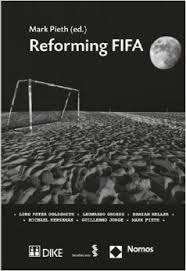


This book looks back at the work of the Independence Governance Committee (IGC). This Committee, constituted in 2011, had as primary objective to drive a reform process of FIFA initiated by its President Sepp Blatter. After ordering from the Swiss anti-corruption expert Mark Pieth, a report on the state of FIFA’s governance, FIFA decided to mandate him with the leadership of a consulting body composed of a mix of independent experts and football insiders, which would be accompanying and supervising the internal reform process of FIFA. The IGC was officially dissolved at the end of 2013, after completing its mandate. The book is composed of eight chapters, written by former members of the IGC, including former chairman Mark Pieth. In addition to the chapters, it includes the different reports (available here, here and here) submitted by the IGC to FIFA across the years. In the words of Pieth, this account is “fascinating because it gives a hands-on, realistic perspective of the concrete efforts, the achievements and the remaining challenges in the struggle for the reform of this organization [FIFA], avoiding the usual glorification or vilification.”[1] This review will first summarize the core of the account of the FIFA reform process provided by the book, before critically engaging with the outcome of the process and outlining the deficiencies that culminated on 29 May 2015 with the re-election of Sepp Blatter as FIFA president.More...


The Spanish TV Rights Distribution System after the Royal Decree: An Introduction. By Luis Torres

On the first of May 2015, the Spanish Government finally signed the Royal Decree allowing the joint selling of the media rights of the Spanish top two football leagues. The Minister for Sport stated that the Decree will allow clubs to “pay their debts with the social security and the tax authorities and will enable the Spanish teams to compete with the biggest European Leagues in terms of revenues from the sale of media rights”.[1]Although the signing of the Royal Decree was supposed to close a very long debate and discussion between the relevant stakeholders, its aftermath shows that the Telenovela is not entirely over. 

This blog post will first provide the background story to the selling of media rights in Spain. It will, thereafter, analyse the main points of the Royal Decree and outline how the system will work in practice. Finally, the blog will shortly address the current frictions between the Spanish League (LFP) and the Spanish football federation (RFEF).More...

Sport and EU Competition Law: New developments and unfinished business. By Ben Van Rompuy

Editor's note: Ben Van Rompuy, Head of the ASSER International Sports Law Centre, was recently interviewed by LexisNexis UK for their in-house adviser service. With kind permission from LexisNexis we reproduce the interview on our blog in its entirety. 

How does competition law affect the sports sector?  

The application of EU competition law to the sports sector is a fairly recent and still unfolding development. It was only in the mid-1990s, due to the growing commercialization of professional sport, that there emerged a need to address competition issues in relation to, for instance, ticketing arrangements or the sale of media rights.  More...


Is FIFA fixing the prices of intermediaries? An EU competition law analysis - By Georgi Antonov (ASSER Institute)

Introduction

On 1 April 2015, the new FIFA Regulations on Working with Intermediaries (hereinafter referred as the Regulations) came into force. These Regulations introduced a number of changes as regards the division of competences between FIFA and its members, the national associations. A particularly interesting issue from an EU competition law perspective is the amended Article 7 of the Regulations. Under paragraph 3, which regulates the rules on payments to intermediaries (also previously referred to as ‘agents’), it is recommended that the total amount of remuneration per transaction due to intermediaries either being engaged to act on a player’s or club’s behalf should not exceed 3% of the player’s basic gross income for the entire duration of the relevant employment contract. In the case of transactions due to intermediaries who have been engaged to act on a club’s behalf in order to conclude a transfer agreement, the total amount of remuneration is recommended to not exceed 3% of the eventual transfer fee paid in relation to the relevant transfer of the player.More...

The Impact of the new FIFA Regulations for Intermediaries: A comparative analysis of Brazil, Spain and England. By Luis Torres

INTRODUCTION

Almost a year after their announcement, the new FIFA Regulations on working with Intermediaries (“FIFA Regulations”) came into force on 1 April 2015. Their purpose is to create a more simple and transparent system of regulation of football agents. It should be noted, however, that the new FIFA rules enable every national football association to regulate their own system on players’ intermediaries, provided they respect the compulsory minimum requirements adopted. In an industry that is already cutthroat, it thus remains to be seen whether FIFA’s “deregulation” indeed creates transparency, or whether it is a Pandora’s Box to future regulatory confusion.

This blog post will provide an overview of the new FIFA Regulations on working with intermediaries and especially its minimum requirements. Provided that national associations are encouraged to “draw up regulations that shall incorporate the principles established in these provisions”[1], three different national regulations have been taken as case-studies: the English FA Regulations, the Spanish RFEF Regulations and the Brazilian CBF Regulations. After mapping their main points of convergence and principal differences, the issues that could arise from these regulatory differences shall be analyzed.  More...

Asser International Sports Law Blog | Our International Sports Law Diary <br/>The <a href="http://www.sportslaw.nl" target="_blank">Asser International Sports Law Centre</a> is part of the <a href="https://www.asser.nl/" target="_blank"><img src="/sportslaw/blog/media/logo_asser_horizontal.jpg" style="vertical-align: bottom; margin-left: 7px;width: 140px" alt="T.M.C. Asser Instituut" /></a>

Asser International Sports Law Blog

Our International Sports Law Diary
The Asser International Sports Law Centre is part of the T.M.C. Asser Instituut

‘The reform of football': Yes, but how? By Marco van der Harst

'Can't fight corruption with con tricks
They use the law to commit crime
And I dread, dread to think what the future will bring
When we're living in gangster time'
The Specials - Gangsters


The pressing need for change 

The Parliamentary Assembly (PACE) of the Council of Europe (CoE), which is composed of 318 MPs chosen from the national parliaments of the 47 CoE member states, unanimously adopted a report entitled ‘the reform of football’ on January 27, 2015. A draft resolution on the report will be debated during the PACE April 2015 session and, interestingly, (only?) FIFA’s president Sepp Blatter has been sent an invitation

The PACE report highlights the pressing need of reforming the governance of football by FIFA and UEFA respectively. Accordingly, the report contains some interesting recommendations to improve FIFA’s (e.g., Qatargate[1]) and UEFA’s governance (e.g., gender representation). Unfortunately, it remains unclear how the report’s recommendations will actually be implemented and enforced. 

The report is a welcomed secondary effect of the recent Qatargate directly involving former FIFA officials such as Jack Warner, Chuck Blazer, and Mohamed Bin Hammam[2] and highlighting the dramatic failures of FIFA’s governance in putting its house in order. Thus, it is undeniably time to correct the governance of football by FIFA and its confederate member UEFA – nolens volens. The real question is how to do it.


            Photograph: Fabrice Coffrini/AFP/Getty Images                   Photograph: Octav Ganea/AP

More...


SV Wilhelmshaven: a Rebel with a cause! Challenging the compatibility of FIFA’s training compensation system with EU law

Due to the legitimate excitement over the recent Pechstein ruling, many have overlooked a previous German decision rendered in the Wilhelmshaven SV case (the German press did report on the decision here and here). The few academic commentaries (see here and here) focused on the fact that the German Court had not recognized the res judicata effect of a CAS award. Thus, it placed Germany at the spearhead of a mounting rebellion against the legitimacy of the CAS and the validity of its awards. None of the commentators weighed in on the substance of the decision, however. Contrary to the Court in Pechstein, the judges decided to evaluate the compatibility of the FIFA rules on training compensations with the EU free movement rights. To properly report on the decision and assess the threat it may constitute for the FIFA training compensation system, we will first summarize the facts of the case (I), briefly explicate the mode of functioning of the FIFA training compensation system (II), and finally reconstruct the reasoning of the Court on the compatibility of the FIFA rules with EU law (III).More...

In Egypt, Broadcasting Football is a Question of Sovereignty … for Now! By Tarek Badawy, Inji Fathalla, and Nadim Magdy

On 15 April 2014, the Cairo Economic Court (the “Court") issued a seminal judgment declaring the broadcasting of a football match a sovereign act of State.[1]


Background

In Al-Jazeera v. the Minister of Culture, Minister of Information, and the Chairman of the Board of Directors of the Radio and Television Union, a case registered under 819/5JY, the Al-Jazeera TV Network (the “Plaintiff” or “Al-Jazeera”) sued the Egyptian Radio and Television Union (“ERTU” or the “Union”) et al. (collectively, the “Respondents”) seeking compensation for material and moral damages amounting to three (3) million USD, in addition to interest, for their alleged breach of the Plaintiff’s exclusive right to broadcast a World Cup-qualification match in Egypt.  Al-Jazeera obtained such exclusive right through an agreement it signed with Sportfive, a sports marketing company that had acquired the right to broadcast Confederation of African Football (“CAF”) World Cup-qualification matches.

ERTU reportedly broadcasted the much-anticipated match between Egypt and Ghana live on 15 October 2013 without obtaining Al-Jazeera’s written approval, in violation of the Plaintiff’s intellectual property rights.

More...


Why the European Commission will not star in the Spanish TV rights Telenovela. By Ben Van Rompuy and Oskar van Maren

The selling of media rights is currently a hot topic in European football. Last week, the English Premier League cashed in around 7 billion Euros for the sale of its live domestic media rights (2016 to 2019) – once again a 70 percent increase in comparison to the previous tender. This means that even the bottom club in the Premier League will receive approximately €130 million while the champions can expect well over €200 million per season.

The Premier League’s new deal has already led the President of the Spanish National Professional Football League (LNFP), Javier Tebas, to express his concerns that this could see La Liga lose its position as one of Europe’s leading leagues. He reiterated that establishing a centralised sales model in Spain is of utmost importance, if not long overdue.

Concrete plans to reintroduce a system of joint selling for the media rights of the Primera División, Segunda División A, and la Copa del Rey by means of a Royal Decree were already announced two years ago. The road has surely been long and bumpy. The draft Decree is finally on the table, but now it misses political approval. All the parties involved are blaming each other for the current failure: the LNFP blames the Sport Governmental Council for Sport (CSD) for not taking the lead; the Spanish Football Federation (RFEF) is arguing that the Federation and non-professional football entities should receive more money and that it should have a stronger say in the matter in accordance with the FIFA Statutes;  and there are widespread rumours that the two big earners, Real Madrid and FC Barcelona, are actively lobbying to prevent the Royal Decree of actually being adopted.

To keep the soap opera drama flowing,  on 30 December 2014, FASFE (an organisation consisting of groups of fans, club members, and minority shareholders of several Spanish professional football clubs) and the International Soccer Centre (a movement that aims to obtain more balanced and transparent football and basketball competitions in Spain) filed an antitrust complaint with the European Commission against the LNFP. They argue that the current system of individual selling of LNFP media rights, with unequal shares of revenue widening the gap between clubs, violates EU competition law.


Source:http://www.gopixpic.com/600/buscar%C3%A1n-el-amor-verdadero-nueva-novela-de-televisa/http:%7C%7Cassets*zocalo*com*mx%7Cuploads%7Carticles%7C5%7C134666912427*jpg/

More...


The 2014 Dortmund judgment: what potential for a follow-on class action? By Zygimantas Juska

Class actions are among the most powerful legal tools available in the US to enforce competition rules. With more than 75 years of experience, the American system offers valuable lessons about the benefits and drawbacks of class actions for private enforcement in competition law. Once believed of as only a US phenomenon, class actions are slowly becoming reality in the EU. After the adoption of the Directive on damages actions in November 2014, the legislative initiative in collective redress (which could prescribe a form of class actions) is expected in 2017.[1] Some pro-active Member States have already taken steps to introduce class actions in some fashion, like, for example, Germany.

What is a class action? It is a lawsuit that allows many similar legal claims with a common interest to be bundled into a single court action. Class actions facilitate access to justice for potential claimants, strengthen the negotiating power and contribute to the efficient administration of justice. This legal mechanism ensures a possibility to claim cessation of illegal behavior (injunctive relief) or to claim compensation for damage suffered (compensatory relief).  More...

The Pechstein ruling of the OLG München - A Rough Translation

The Pechstein decision of the Oberlandesgericht of Munich is “ground-breaking”, “earth-shaking”, “revolutionary”, name it. It was the outmost duty of a “German-reading” sports lawyer to translate it as fast as possible in order to make it available for the sports law community at large (Disclaimer: This is not an official translation and I am no certified legal translator). Below you will find the rough translation of the ruling (the full German text is available here), it is omitting solely the parts, which are of no direct interest to international sports law.

The future of CAS is in the balance and this ruling should trigger some serious rethinking of the institutional set-up that underpins it. As you will see, the ruling is not destructive, the Court is rather favourable to the function of CAS in the sporting context, but it requires a fundamental institutional reshuffling. It also offers a fruitful legal strategy to challenge CAS awards that could be used in front of any national court of the EU as it is based on reasoning analogically applicable to article 102 TFEU (on abuse of a dominant position), which is valid across the EU’s territory.

Enjoy the read! 

Antoine

PS: The translation can also be downloaded at http://papers.ssrn.com/sol3/papers.cfm?abstract_id=2561297

 More...


From Veerpalu to Lalluka: ‘one step forward, two steps back’ for CAS in dealing with Human Growth Hormone tests (by Thalia Diathesopoulou)

In autumn 2011, the Finnish cross-country skier Juha Lalluka, known as a “lone-wolf” because of his training habit, showed an adverse analytical finding with regard to human growth hormone (hGH). The timing was ideal. As the FINADA Supervisory Body in view of the A and B positive samples initiated disciplinary proceedings against Lalluka for violation of anti-doping rules, the Veerpalu case was pending before the CAS. At the athlete’s request, the Supervisory Board postponed the proceedings until the CAS rendered the award in the Veerpalu case. Indeed, on 25 March 2013, the CAS shook the anti-doping order: it cleared Andrus Veerpalu of an anti-doping rule violation for recombinant hGH (rhGH) on the grounds that the decision limits set by WADA to define the ratio beyond which the laboratories should report the presence of rhGH had not proven scientifically reliable.

The Veerpalu precedent has become a rallying flag for athletes suspected of use of hGH and confirmed some concerns raised about the application of the hGH test. Not surprisingly, Sinkewitz and Lallukka followed the road that Veerpalu paved and sought to overturn their doping ban by alleging the scientific unreliability of the hGH decisions limits. Without success, however. With the full text of the CAS award on the Lallukka case released a few weeks ago[1] and the new rules of the 2015 WADA Code coming into force, we grasp the opportunity to outline the ambiguous approach of CAS on the validity of the hGH test. In short: Should the Veerpalu case and its claim that doping sanctions should rely on scientifically well founded assessments be considered as a fundamental precedent or as a mere exception? More...

State Aid and Sport: does anyone really care about rugby? By Beverley Williamson

There has been a lot of Commission interest in potential state aid to professional football clubs in various Member States.  The huge sums of money involved are arguably an important factor in this interest and conversely, is perhaps the reason why state aid in rugby union is not such a concern. But whilst the sums of money may pale into comparison to those of professional football, the implications for the sport are potentially no less serious.

At the end of the 2012/2013 season, Biarritz Olympique (Biarritz) were relegated from the elite of French Rugby Union, the Top 14 to the Pro D2.  By the skin of their teeth, and as a result of an injection of cash from the local council (which amounted to 400,000€), they were spared administrative relegation to the amateur league below, the Fédérale 1, which would have occurred as a result of the financial state of the club.More...

State aid in Croatia and the Dinamo Zagreb case

Introduction

The year 2015 promises to be crucial, and possibly revolutionary, for State aid in football. The European Commission is taking its time in concluding its formal investigations into alleged State aid granted to five Dutch clubs and several Spanish clubs, including Valencia CF and Real Madrid, but the final decisions are due for 2015.

A few months ago, the Commission also received a set of fresh State aid complaints originating from the EU’s newest Member State Croatia. The complaints were launched by a group of minority shareholders of the Croatian football club Hajduk Split, who call themselves Naš Hajduk. According to Naš Hajduk, Hajduk Split’s eternal rival, GNK Dinamo Zagreb, has received more than 30 million Euros in unlawful aid by the city of Zagreb since 2006.More...

“The Odds of Match Fixing – Facts & Figures on the integrity risk of certain sports bets”. By Ben Van Rompuy

Media reports and interested stakeholders often suggest that certain types of sports bets would significantly increase the risks of match fixing occurring. These concerns also surface in policy discussions at both the national and European level. Frequently calls are made to prohibit the supply of “risky” sports bets as a means to preserve the integrity of sports competitions.

Questions about the appropriateness of imposing such limitations on the regulated sports betting, however, still linger. The lack of access to systematic empirical evidence on betting-related match fixing has so far limited the capacity of academic research to make a proper risk assessment of certain types of sports bets. 

The ASSER International Sports Law Centre has conducted the first-ever study that assesses the integrity risks of certain sports bets on the basis of quantitative empirical evidence. 

We uniquely obtained access to key statistics from Sportradar’s Fraud Detection System (FDS). A five-year dataset of football matches worldwide, which the FDS identified as likely to have been targeted by match fixers, enabled us to observe patterns and correlations with certain types of sports bets. In addition, representative samples of football bets placed with sports betting operator Betfair were collected and analysed. 

The results presented in this report, which challenge several claims about the alleged risks generated by certain types of sports bets, hope to inform policy makers about the cost-effectiveness of imposing limits on the regulated sports betting offer.More...