Asser International Sports Law Blog

Our International Sports Law Diary
The Asser International Sports Law Centre is part of the T.M.C. Asser Instituut

UEFA may have won a battle, but it has not won the legal war over FFP

Yesterday, the press revealed that the European Commission decided to reject the complaint filed by Jean-Louis Dupont, the former lawyer of Bosman, on behalf of a player agent Striani, against the UEFA Financial Fair Play (FFP) Regulations. The rejection as such is not a surprise. The Commission had repeatedly expressed support of the principles underlying the UEFA FFP. While these statements were drafted vaguely and with enough heavy caveats to protect the Commission from prejudicing a proper legal assessment, the withdrawal of its support would have been politically embarrassing.

Contrary to what is now widely assumed, this decision does not entail that UEFA FFP regulations are compatible with EU Competition Law. UEFA is clearly the big victor, but the legal reality is more complicated as it looks. More...


The Nine FFP Settlement Agreements: UEFA did not go the full nine yards

The UEFA Club Licensing and Financial Fair Play Regulations have been implemented by UEFA since the season 2011/12 with the aim of encouraging responsible spending by clubs for the long-term benefit of football. However, the enforcement of the break-even requirement as defined in Articles 62 and 63 of the Regulations (arguably the most important rules of FFP) has only started this year. Furthermore, UEFA introduced recently amendments to the Procedural rules governing the Club Financial Control Body (CFCB) allowing settlement agreements to be made between the clubs and the CFCB.  

On Friday 16 May, UEFA finally published the nine separate settlement agreements between the respective clubs and the CFCB regarding the non-compliance with the Financial Fair Play (FFP) break-even requirements. More...

Dahmane v KRC Genk: Bosman 2.0 or Storm in a Teacup?

Mohamed Dahmane is a professional football player of French-Algerian origin, who has played for a variety of European clubs, including French club US Mauberge, Belgian club RAEC Mons and Turkish club Bucaspor. However, he will mostly be remembered as the player whose legal dispute with his former club (Belgian club KRC Genk) revived the debate on football players’ labour rights.  More...

Get Up, Stand Up at the Olympics. A review of the IOC's policy towards political statements by Athletes. By Frédérique Faut

The Olympic Games are a universal moment of celebration of sporting excellence. But, attention is also quickly drawn to their dark side, such as environmental issues, human rights breaches and poor living conditions of people living near the Olympic sites. In comparison, however, little commentary space is devoted to the views of athletes, the people making the Olympics. This article tries to remediate this, by focussing on Rule 50 of the Olympic Charter which prevents athletes from freely expressing their (political) thoughts.  More...

Final Report on the FIFA Governance Reform Project: The Past and Future of FIFA’s Good Governance Gap

Qatar’s successful bid to host the 2022 World Cup left many people thunderstruck: How can a country with a population of 2 million people and with absolutely no football tradition host the biggest football event in the world? Furthermore, how on earth can players and fans alike survive when the temperature is expected to exceed 50 °C during the month (June) the tournament is supposed to take place?

Other people were less surprised when FIFA’s President, Sepp Blatter, pulled the piece of paper with the word “Qatar” out of the envelope on 2 December 2010. This was just the latest move by a sporting body that was reinforcing a reputation of being over-conservative, corrupt, prone to conflict-of-interest and convinced of being above any Law, be it national or international.More...

Doping Paradize – How Jamaica became the Wild West of Doping

Since the landing on the sporting earth of the Übermensch, aka Usain Bolt, Jamaica has been at the centre of doping-related suspicions. Recently, it has been fueling those suspicions with its home-made scandal around the Jamaica Anti-Doping Commission (JADCO). The former executive of JADCO, Renee Anne Shirley, heavily criticized its functioning in August 2013, and Jamaica has been since then in the eye of the doping cyclone. More...

Cocaine, Doping and the Court of Arbitration for sport - “I don’t like the drugs, but the drugs like me”. By Antoine Duval

Beginning of April 2014, the Colombian Olympic Swimmer Omar Pinzón was cleared by the Court of Arbitration for Sport (CAS) of an adverse finding of Cocaine detected in a urine sample in 2013. He got lucky. Indeed, in his case the incredible mismanagement and dilettante habits of Bogotá’s anti-doping laboratory saved him from a dire fate: the two-year ban many other athletes have had the bad luck to experience. More...

Asser International Sports Law Blog | Our International Sports Law Diary <br/>The <a href="http://www.sportslaw.nl" target="_blank">Asser International Sports Law Centre</a> is part of the <a href="https://www.asser.nl/" target="_blank"><img src="/sportslaw/blog/media/logo_asser_horizontal.jpg" style="vertical-align: bottom; margin-left: 7px;width: 140px" alt="T.M.C. Asser Instituut" /></a>

Asser International Sports Law Blog

Our International Sports Law Diary
The Asser International Sports Law Centre is part of the T.M.C. Asser Instituut

A Question of (dis)Proportion: The CAS Award in the Luis Suarez Biting Saga

The summer saga surrounding Luis Suarez’s vampire instincts is long forgotten, even though it might still play a role in his surprisingly muted football debut in FC Barcelona’s magic triangle. However, the full text of the CAS award in the Suarez case has recently be made available on CAS’s website and we want to grasp this opportunity to offer a close reading of its holdings. In this regard, one has to keep in mind that “the object of the appeal is not to request the complete annulment of the sanction imposed on the Player” (par.33). Instead, Suarez and Barcelona were seeking to reduce the sanction imposed by FIFA. In their eyes, the four-month ban handed out by FIFA extending to all football-related activities and to the access to football stadiums was excessive and disproportionate. Accordingly, the case offered a great opportunity for CAS to discuss and analyse the proportionality of disciplinary sanctions based on the FIFA Disciplinary Code (FIFA DC).  More...

The International Sports Law Digest – Issue II – July-December 2014

I. Literature


1. Antitrust/Competition Law and Sport

G Basnier, ‘Sports and competition law: the case of the salary cap in New Zealand rugby union’, (2014) 14 The International Sports Law Journal 3-4, p.155

R Craven, ‘Football and State aid: too important to fail?’ (2014) 14 The International Sports Law Journal 3-4, p.205

R Craven, ‘State Aid and Sports Stadiums: EU Sports Policy or Deference to Professional Football (2014) 35 European Competition Law Review Issue 9, 453


2. Intellectual Property Rights in Sports law / Betting rights/ Spectators’ rights/ Sponsorship Agreements

Books

W T Champion and K DWillis, Intellectual property law in the sports and entertainment industries (Santa Barbara, California; Denver, Colorado; Oxford, England: Praeger 2014)

J-M Marmayou and F Rizzo, Les contrats de sponsoring sportif (Lextenso éditions 2014) 

More...


Time to Cure FIFA’s Chronic Bad Governance Disease

 After Tuesday’s dismissal of Michael Garcia’s complaint against the now infamous Eckert statement synthetizing (misleadingly in his eyes) his Report on the bidding process for the World Cup 2018 and 2022, Garcia finally decided to resign from his position as FIFA Ethics Committee member. On his way out, he noted: “No independent governance committee, investigator, or arbitration panel can change the culture of an organization”. It took Garcia a while to understand this, although others faced similar disappointments before. One needs only to remember the forgotten reform proposals of the Independent Governance Committee led by Prof. Dr. Mark Pieth. More...

The CAS Ad Hoc Division in 2014: Business As Usual? - Part. 2: The Selection Drama

In a first blog last month we discussed the problem of the scope of jurisdiction of the Ad Hoc Division of the Court of Arbitration for Sport. The key issue was whether an athlete could get his case heard in front of the CAS Ad Hoc Division or not. In this second part, we will also focus on whether an athlete can access a forum, but a different kind of forum: the Olympic Games as such. This is a dramatic moment in an athlete’s life, one that will decide the future path of an entire career and most likely a lifetime of opportunities. Thus, it is a decision that should not be taken lightly, nor in disregard of the athletes’ due process rights. In the past, several (non-)selection cases were referred to the Ad Hoc Divisions at the Olympic Games, and this was again the case in 2014, providing us with the opportunity for the present review.

Three out of four cases dealt with by the CAS Ad Hoc Division in Sochi involved an athlete contesting her eviction from the Games. Each case is specific in its factual and legal assessment and deserves an individual review. More...

Should the CAS ‘let Dutee run’? Gender policies in Sport under legal scrutiny. By Thalia Diathesopoulou

The rise of Dutee Chand, India’s 100 and 200-meter champion in the under 18-category, was astonishing. Her achievements were more than promising: after only two years, she broke the 100m and 200m national junior records, competed in the 100m final at the World Youth Athletics Championships in Donetsk and collected two gold medals in the Asian Junior Championships in Chinese Taipei. But, in July 2014, this steady rise was abruptly halted. Following a request from the Athletics Federation of India (AFI), the Sports Authority of India (SAI) conducted blood tests on the Indian sprinters. Dutee was detected with female hyperandrogenism, i.e a condition where the female body produces high levels of testosterone. As a result, a few days before the Commonwealth Games in Glasgow, the AFI declared Dutee ineligible to compete under the IAAF Regulations and prevented her from competing in future national and international events in the female category. Pursuant to the IAAF ‘Hyperandrogenism Policy’, the AFI would allow Dutee to return to competition only if she lowers her testosterone level beneath the male range by means of medical or surgical treatment.[1] On 25 September 2014, Dutee filed an appeal before the CAS, seeking to overturn the AFI’s decision and declare IAAF and IOC’s hyperandrogenism regulations null and void. She is defending her right to compete the way she actually is: a woman with high levels of testosterone. Interestingly enough, albeit a respondent, AFI supports her case.

IAAF and IOC rules set limits to female hyperandrogenism, which is deemed an unfair advantage that erodes female sports integrity. While these rules have been contested with regard to their scientific and ethical aspects, this is the first time that they will be debated in court. This appeal could have far-reaching ramifications for the sports world. It does not only seek to pave the way for a better ‘deal’ for female athletes with hyperandrogenism, who are coerced into hormonal treatment and even surgeries to ‘normalise’ themselves as women[2], but it rather brings the CAS, for the first time, before the thorny question:

How to strike a right balance between the core principle of ‘fair play’ and norms of non-discrimination, in cases where a determination of who qualifies as a ‘woman’ for the purposes of sport has to be made? More...

The O’Bannon Case: The end of the US college sport’s amateurism model? By Zygimantas Juska

On 8 August, U.S. District Judge Claudia Wilken ruled in favour of former UCLA basketball player O'Bannon and 19 others, declaring that NCAA's longstanding refusal to compensate athletes for the use of their name, image and likenesses (NILs) violates US antitrust laws. In particular, the long-held amateurism justification promoted by the NCAA was deemed unconvincing.

On 14 November, the NCAA has appealed the judgment, claiming that federal judge erred in law by not applying a 1984 Supreme Court ruling. One week later, the NCAA received support from leading antitrust professors who are challenging the Judge Wilken’s reasoning in an amicus curiae. They are concerned that the judgment may jeopardize the proper regulation of college athletics. The professors argued that if Wilken’s judgment is upheld, it

would substantially expand the power of the federal courts to alter organizational rules that serve important social and academic interests…This approach expands the ‘less restrictive alternative prong’ of the antitrust rule of reason well beyond any appropriate boundaries and would install the judiciary as a regulatory agency for collegiate athletics”.   

More...

Image Rights in Professional Basketball (Part II): Lessons from the American College Athletes cases. By Thalia Diathesopoulou

In the wake of the French Labour Union of Basketball (Syndicat National du Basket, SNB) image rights dispute with Euroleague and EA Games, we threw the “jump ball” to start a series on players’ image rights in international professional basketball. In our first blogpost, we discussed why image rights contracts in professional basketball became a fertile ground for disputes when it comes to the enforcement of these contracts by the Basketball Arbitral Tribunal (BAT). Indeed, we pointed out that clubs might take advantage of the BAT’s inconsistent jurisprudence to escape obligations deriving from image rights contracts.

In this second limb, we will open a second field of legal battles “around the rim”: the unauthorized use of players’ image rights by third parties. We will use as a point of reference the US College Athletes image rights cases before US Courts and we will thereby examine the legal nature of image rights and the precise circumstances in which such rights may be infringed. Then, coming back to where we started, we will discuss the French case through the lens of US case law on players’ image rights. 


Source: http://philadelphia.cbslocal.com/2013/09/27/ea-sports-settles-college-likeness-case/ More...


The Olympic Agenda 2020: The devil is in the implementation!

The 40 recommendations of the Olympic Agenda 2020 are out! First thought: one should not underplay the 40 recommendations, they constitute (on paper at least) a potential leap forward for the IOC. The media will focus on the hot stuff: the Olympic channel, the pluri-localisation of the Games, or their dynamic format. More importantly, and to some extent surprisingly to us, however, the IOC has also fully embraced sustainability and good governance. Nonetheless, the long-term legacy of the Olympic Agenda 2020 will hinge on the IOC’s determination to be true to these fundamental commitments. Indeed, the devil is always in the implementation, and the laudable intents of some recommendations will depend on future political choices by Olympic bureaucrats. 

For those interested in human rights and democracy at (and around) the Olympics, two aspects are crucial: the IOC’s confession that the autonomy of sport is intimately linked to the quality of its governance standards and the central role the concept of sustainability is to play in the bidding process and the host city contract.  More...

UEFA’s tax-free Euro 2016 in France: State aid or no State aid?

Last week, the French newspaper Les Echos broke the story that UEFA (or better said its subsidiary) will be exempted from paying taxes in France on revenues derived from Euro 2016. At a time when International Sporting Federations, most notably FIFA, are facing heavy criticisms for their bidding procedures and the special treatment enjoyed by their officials, this tax exemption was not likely to go unnoticed. The French minister for sport, confronted with an angry public opinion, responded by stating that tax exemptions are common practice regarding international sporting events. The former French government agreed to this exemption. In fact, he stressed that without it “France would never have hosted the competition and the Euro 2016 would have gone elsewhere”. More...

The New Olympic Host City Contract: Human Rights à la carte? by Ryan Gauthier, PhD Researcher (Erasmus University Rotterdam)

Three weeks ago, I gave a talk for a group of visiting researchers at Harvard Law School on the accountability of the IOC for human rights abuses caused by hosting Olympic Games. On the day of that talk, Human Rights Watch announced that the International Olympic Committee (“IOC”) would insert new language into the Host City Contract presumably for the 2022 Olympic Games onwards. The new language apparently requires the parties to the contract to:

“take all necessary measures to ensure that development projects necessary for the organization of the Games comply with local, regional, and national legislation, and international agreements and protocols, applicable in the host country with regard to planning, construction, protection of the environment, health, safety, and labour laws.”More...

Asser International Sports Law Blog | Our International Sports Law Diary <br/>The <a href="http://www.sportslaw.nl" target="_blank">Asser International Sports Law Centre</a> is part of the <a href="https://www.asser.nl/" target="_blank"><img src="/sportslaw/blog/media/logo_asser_horizontal.jpg" style="vertical-align: bottom; margin-left: 7px;width: 140px" alt="T.M.C. Asser Instituut" /></a>

Asser International Sports Law Blog

Our International Sports Law Diary
The Asser International Sports Law Centre is part of the T.M.C. Asser Instituut

Why the CAS #LetDuteeRun: the Proportionality of the Regulation of Hyperandrogenism in Athletics by Piotr Drabik

Editor's note
Piotr is an intern at the ASSER International Sports Law Centre.

Introduction

On 24 July the Court of Arbitration for Sport (CAS) issued its decision in the proceedings brought by the Indian athlete Ms. Dutee Chand against the Athletics Federation of India (AFI) and the International Association of Athletics Federations (IAAF) in which she challenged the validity of the IAAF Regulations Governing Eligibility of Female with Hyperandrogenism to Compete in Women’s Competition (Regulations). The Regulations were established in 2011 as a response to the controversies surrounding South African athlete Caster Semenya (see e.g. here, here, and here), and for the purpose of safeguarding fairness in sport by prohibiting women with hyperandrogenism, i.e. those with excessive levels of endogenous (naturally occurring) testosterone, from competing in women athletics competitions. Owing to the subject-matter that the Regulations cover, the case before the CAS generated complex legal, scientific and ethical questions. The following case note thus aims at explaining how the Panel addressed the issues raised by the Indian athlete. It follows a previous blog we published in December 2014 that analysed the arguments raised in favour of Ms. Chand. More...


Not comfortably satisfied? The upcoming Court of Arbitration for Sport case of the thirty-four current and former players of the Essendon football club. By James Kitching

Editor's note: James Kitching is Legal Counsel and Secretary to the AFC judicial bodies at the Asian Football Confederation. James is an Australian and Italian citizen and one of the few Australians working in international sports law. He is admitted as barrister and solicitor in the Supreme Court of South Australia. James graduated from the International Master in the Management, Law, and Humanities of Sport offered by the Centre International d'Etude du Sport in July 2012.


Introduction

On 12 May 2015, the Court of Arbitration for Sport (CAS) announced that the World Anti-Doping Agency (WADA) had filed an appeal against the decision issued by the Australian Football League (AFL) Anti-Doping Tribunal (AADT) that thirty-four current and former players of Essendon Football Club (Essendon) had not committed any anti-doping rule violation (ADRV) identified within the AFL Anti-Doping Code (AADC). The players had each been charged with using Thymosin-Beta 4 (TB4) during the 2012 AFL season.

On 1 June 2015, WADA announced that it had filed an appeal against the decision by the AADT to clear Mr. Stephen Dank (Dank), a sports scientist employed at Essendon during the relevant period, of twenty-one charges of violating the AADC. Dank was, however, found guilty of ten charges and banned for life.

This blog will solely discuss the likelihood of the first AADT decision (the Decision) being overturned by the CAS. It will briefly summarise the facts, discuss the applicable rules and decision of the AADT, review similar cases involving ‘non-analytical positive’ ADRVs relating to the use of a prohibited substance or a prohibited method, and examine whether the Code of Sports-related Arbitration (CAS Code) is able to assist WADA in its appeal.

This blog will not examine the soap opera that was the two years leading-up to the Decision. Readers seeking a comprehensive factual background should view the excellent up-to-date timeline published by the Australian Broadcasting Corporation. More...


EU Law is not enough: Why FIFA's TPO ban survived its first challenge before the Brussels Court


Star Lawyer Jean-Louis Dupont is almost a monopolist as far as high profile EU law and football cases are concerned. This year, besides a mediatised challenge against UEFA’s FFP regulations, he is going after FIFA’s TPO ban on behalf of the Spanish and Portuguese leagues in front of the EU Commission, but also before the Brussels First Instance Court defending the infamous Malta-based football investment firm Doyen Sport. FIFA and UEFA’s archenemy, probably electrified by the 20 years of the Bosman ruling, is emphatically trying to reproduce his world-famous legal prowess. Despite a first spark at a success in the FFP case against UEFA with the Court of first instance of Brussels sending a preliminary reference to the Court of Justice of the EU (CJEU), this has proven to be a mirage as the CJEU refused, as foretold, to answer the questions of the Brussels Court, while the provisory measures ordered by the judge have been suspended due to UEFA’s appeal. But, there was still hope, the case against FIFA’s TPO ban, also involving UEFA and the Belgium federation, was pending in front of the same Brussels Court of First Instance, which had proven to be very willing to block UEFA’s FFP regulations. Yet, the final ruling is another disappointment for Dupont (and good news for FIFA). The Court refused to give way to Doyen’s demands for provisional measures and a preliminary reference. The likelihood of a timely Bosman bis repetita is fading away. Fortunately, we got hold of the judgment of the Brussels court and it is certainly of interest to all those eagerly awaiting to know whether FIFA’s TPO ban will be deemed compatible or not with EU law. More...


The New FIFA Intermediaries Regulations under EU Law Fire in Germany. By Tine Misic

I'm sure that in 1985, plutonium is available in every corner drugstore, but in 1955, it's a little hard to come by.” (Dr. Emmett L. Brown)[1]


Back to the future?

Availing oneself of EU law in the ambit of sports in 1995 must have felt a bit like digging for plutonium, but following the landmark ruling of the European Court of Justice (ECJ) in the Bosman case[2], 20 years later, with all the buzz surrounding several cases where EU law is being used as an efficient ammunition for shelling various sports governing or organising bodies, one may wonder if in 2015 EU law is to be “found in every drug store” and the recent cases (see inter alia Heinz Müller v 1. FSV Mainz 05, Daniel Striani ao v UEFA, Doyen Sports ao v URBSFA, FIFA, UEFA) [3] cannot but invitingly evoke the spirit of 1995.

One of the aforementioned cases that also stands out pertains to the injunction decision[4] issued on 29 April 2015 by the Regional Court (Landesgericht) in Frankfurt am Main (hereinafter: the Court) in the dispute between the intermediary company Firma Rogon Sportmanagement (hereinafter: the claimant) and the German Football Federation (Deutschen Fußball-Bund, DFB), where the claimant challenged the provisions of the newly adopted DFB Regulations on Intermediaries (hereinafter: DFB Regulations)[5] for being incompatible with Articles 101 and 102 TFEU.[6] The Court, by acknowledging the urgency of the matter stemming from the upcoming transfer window and the potential loss of clients, deemed a couple of shells directed at the DFB Regulations to be well-aimed, and granted an injunction due to breach of Article 101 TFEU. More...


Compatibility of fixed-term contracts in football with Directive 1999/70/EC. Part 2: The Heinz Müller case. By Piotr Drabik

Introduction
The first part of the present blog article provided a general introduction to the compatibility of fixed-term contracts in football with Directive 1999/70/EC[1] (Directive). However, as the Member States of the European Union enjoy a considerable discretion in the implementation of a directive, grasping the impact of the Directive on the world of football would not be possible without considering the national context. The recent ruling of the Arbeitsgericht Mainz (the lowest German labour court; hereinafter the Court) in proceedings brought by a German footballer Heinz Müller provides an important example in this regard. This second part of the blog on the legality of fixed-term contract in football is devoted to presenting and assessing the Court’s decision.


I. Facts and Procedure
Heinz Müller, the main protagonist of this case, was a goalkeeper playing for 1.FSV Mainz 05 a club partaking to the German Bundesliga. More...


Compatibility of Fixed-Term Contracts in Football with Directive 1999/70/EC. Part.1: The General Framework. By Piotr Drabik

Introduction
On 25 March 2015, the Labour Court of Mainz issued its decision in proceedings brought by a German footballer, Heinz Müller, against his (now former) club 1. FSV Mainz 05 (Mainz 05). The Court sided with the player and ruled that Müller should have been employed by Mainz 05 for an indefinite period following his 2009 three year contract with the club which was subsequently extended in 2011 to run until mid-2014. The judgment was based on national law implementing Directive 1999/70 on fixed-term work[1] (Directive) with the latter being introduced pursuant to art. 155(2) TFEU (ex art. 139(2) TEC). On the basis of this article, European social partners’ may request a framework agreement which they conclude to be implemented on the European Union (EU, Union) level by a Council decision on a proposal from the Commission. One of the objectives of the framework agreement,[2] and therefore of the Directive, was to establish a system to prevent abuse arising from the use of successive fixed-term employment contracts or relationships[3] which lies at the heart of the discussed problem.[4] More...

UEFA’s FFP out in the open: The Dynamo Moscow Case

Ever since UEFA started imposing disciplinary measures to football clubs for not complying with Financial Fair Play’s break-even requirement in 2014, it remained a mystery how UEFA’s disciplinary bodies were enforcing the Club Licensing and Financial Fair Play (“FFP”) regulations, what measures it was imposing, and what the justifications were for the imposition of these measures. For over a year, the general public could only take note of the 23 settlement agreements between Europe’s footballing body and the clubs. The evidential obstacle for a proper analysis was that the actual settlements remained confidential, as was stressed in several of our previous Blogs.[1] The information provided by the press releases lacked the necessary information to answer the abovementioned questions.

On 24 April 2015, the UEFA Club Financial Control Body lifted part of the veil by referring FC Dynamo Moscow to the Adjudicatory Body. Finally, the Adjudicatory Body had the opportunity to decide on a “FFP case. The anxiously-awaited Decision was reached by the Adjudicatory Chamber on 19 June and published not long after. Now that the Decision has been made public, a new stage of the debate regarding UEFA’s FFP policy can start.More...

Policing the (in)dependence of National Federations through the prism of the FIFA Statutes. By Tine Misic

…and everything under the sun is in tune,

but the sun is eclipsed by the moon…[1] 


The issue

Ruffling a few feathers, on 30 May 2015 the FIFA Executive Committee rather unsurprisingly, considering the previous warnings,[2] adopted a decision to suspend with immediate effect the Indonesian Football Federation (PSSI) until such time as PSSI is able to comply with its obligations under Articles 13 and 17 of the FIFA Statutes.[3] Stripping PSSI of its membership rights, the decision results in a prohibition of all Indonesian teams (national or club) from having any international sporting contact. In other words, the decision precludes all Indonesian teams from participating in any competition organised by either FIFA or the Asian Football Confederation (AFC). In addition, the suspension of rights also precludes all PSSI members and officials from benefits of any FIFA or AFC development programme, course or training during the term of suspension. This decision coincides with a very recent award by the Court of Arbitration for Sport (CAS) in this ambit, which shall be discussed further below.[4]More...


The Brussels Court judgment on Financial Fair Play: a futile attempt to pull off a Bosman. By Ben Van Rompuy

On 29 May 2015, the Brussels Court of First Instance delivered its highly anticipated judgment on the challenge brought by football players’ agent Daniel Striani (and others) against UEFA’s Club Licensing and Financial Fair Play Regulations (FFP). In media reports,[1] the judgment was generally portrayed as a significant initial victory for the opponents of FFP. The Brussels Court not only made a reference for a preliminary ruling to the European Court of Justice (CJEU) but also imposed an interim order blocking UEFA from implementing the second phase of the FFP that involves reducing the permitted deficit for clubs.

A careful reading of the judgment, however, challenges the widespread expectation that the CJEU will now pronounce itself on the compatibility of the FFP with EU law. More...

A Bridge Too Far? Bridge Transfers at the Court of Arbitration for Sport. By Antoine Duval and Luis Torres.

FIFA’s freshly adopted TPO ban entered into force on 1 May (see our Blog symposium). Though it is difficult to anticipate to what extent FIFA will be able to enforce the ban, it is likely that many of the third-party investors will try to have recourse to alternative solutions to pursue their commercial involvement in the football transfer market. One potential way to circumvent the FIFA ban is to use the proxy of what has been coined “bridge transfers”. A bridge transfer occurs when a club is used as an intermediary bridge in the transfer of a player from one club to another. The fictitious passage through this club is used to circumscribe, for example, the payment of training compensation or to whitewash a third-party ownership by transforming it into a classical employment relationship. This is a legal construction that has gained currency especially in South American football, but not only. On 5 May 2015, in the Racing Club v. FIFA case, the Court of Arbitration for Sport (CAS) rendered its first award involving directly a bridge transfer. As this practice could become prevalent in the coming years we think that this case deserves a close look. More...

Asser International Sports Law Blog | Our International Sports Law Diary <br/>The <a href="http://www.sportslaw.nl" target="_blank">Asser International Sports Law Centre</a> is part of the <a href="https://www.asser.nl/" target="_blank"><img src="/sportslaw/blog/media/logo_asser_horizontal.jpg" style="vertical-align: bottom; margin-left: 7px;width: 140px" alt="T.M.C. Asser Instituut" /></a>

Asser International Sports Law Blog

Our International Sports Law Diary
The Asser International Sports Law Centre is part of the T.M.C. Asser Instituut

The CAS jurisprudence on match-fixing in football: What can we learn from the Turkish cases? - Part 1 - By Thalia Diathesopoulou

The editor’s note:

Two weeks ago we received the unpublished CAS award rendered in the Eskişehirspor case and decided to comment on it. In this post Thalia Diathesopoulou (Intern at the ASSER International Sports Law Centre) analyses the legal steps followed and interpretations adopted by CAS panels in this case and in a series of other Turkish match-fixing cases. The first part of the post will deal with the question of the legal nature of the ineligibility decision opposed by UEFA to clubs involved in one way or another into match-fixing and with the personal and material scope of UEFA’s rule on which this ineligibility is based. The second part is dedicated to the procedural rules applied in match-fixing cases.


Introduction

The unpredictability of the outcome is a sine qua non feature of sports. It is this inherent uncertainty that draws the line between sports and entertainment and triggers the interest of spectators, broadcasters and sponsors. Thus, match-fixing by jeopardising the integrity and unpredictability of sporting outcomes has been described, along with doping, as one of the major threats to modern sport.[1] More...


Sport and EU Competition Law: uncharted territories - (I) The Swedish Bodybuilding case. By Ben Van Rompuy

The European Commission’s competition decisions in the area of sport, which set out broad principles regarding the interface between sports-related activities and EU competition law, are widely publicized. As a result of the decentralization of EU competition law enforcement, however, enforcement activity has largely shifted to the national level. Since 2004, national competition authorities (NCAs) and national courts are empowered to fully apply the EU competition rules on anti-competitive agreements (Article 101 TFEU) and abuse of a dominant position (Article 102 TFEU).

Even though NCAs have addressed a series of interesting competition cases (notably dealing with the regulatory aspects of sport) during the last ten years, the academic literature has largely overlooked these developments. This is unfortunate since all stakeholders (sports organisations, clubs, practitioners, etc.) increasingly need to learn from pressing issues arising in national cases and enforcement decisions. In a series of blog posts we will explore these unknown territories of the application of EU competition law to sport.More...

The Legia Warszawa case: The ‘Draconian’ effect of the forfeiture sanction in the light of the proportionality principle. By Thalia Diathesopoulou

The CAS denial of the urgent request for provisional measures filed by the Legia Warszawa SA in the course of its appeal against the UEFA Appeals Body Decision of 13 August 2014 put a premature end to Legia’s participation in the play-offs of the UEFA Champion’s League (CL) 2014/2015. Legia’s fans- and fans of Polish football - will now have to wait at least one more year to watch a Polish team playing in the CL group stage for the first time since 1996. More...

The EU State aid and Sport Saga – A blockade to Florentino Perez’ latest “galactic” ambitions (part 1)

This is the first part of a blog series involving the Real Madrid State aid case.

Apart from being favoured by many of Spain’s most important politicians, there have always been suspicions surrounding the world’s richest football club regarding possible financial aid by the Madrid City Council. Indeed, in the late 90’s a terrain qualification change by the Madrid City Council proved to be tremendously favourable to the king’s club. The change allowed Real Madrid to sell its old training grounds for a huge sum. Though the exact price for the grounds remains unknown, Real Madrid was suddenly capable of buying players like Figo and Zidane for record fees. However, the European Commission, even though agreeing that an advantage was conferred to the club, simply stated that the new qualification of the terrain in question does not appear to involve any transfer of resources by the State and could therefore not be regarded as State aid within the meaning of article 107 TFEU.

Agreements between the club and the Council have been a regularity for the last 25 years.  A more recent example concerns an agreement signed on 29 July 2011 (Convenio29-07-2011.pdf (8MB). More...

UEFA Financial Fair Play Regulations Put PSG and Manchester City on a Transfer Diet

The main lesson of this year’s transfer window is that UEFA’s Financial Fair Play (FFP) rules have a true bite (no pun intended). Surely, the transfer fees have reached usual highs with Suarez’s move to FC Barcelona and Rodriguez’s transfer from AS Monaco to Real Madrid and overall spending are roughly equal to 2013 (or go beyond as in the UK). But clubs sanctioned under the FFP rules (prominently PSG and Manchester City) have seemingly complied with the settlements reached with UEFA capping their transfer spending and wages. More...

Right to Privacy 1:0 Whereabouts Requirement - A Case Note on a Recent Decision by the Spanish Audiencia Nacional

On the 24th June 2014 the Spanish Audiencia Nacional issued its ruling on a hotly debated sports law topic: The whereabouts requirements imposed to athletes in the fight against doping. This blog aims to go beyond the existing commentaries (here and here) of the case, by putting it in the wider context of a discussion on the legality of the whereabouts requirements. More...

The Rules of the Electoral Game for the FIFA 2015 Presidential Elections

After the success of this year’s World Cup in Brazil, FIFA President Sepp Blatter can start concentrating on his Presidential campaign for next June’s FIFA elections. Even though the 78-year old Swiss is not officially a candidate yet, he is still very popular in large parts of the world, and therefore the favourite to win the race. Nonetheless, even for the highly experienced Mr. Blatter these elections will be different. All candidates will have to respect the newly introduced Electoral Regulations for the FIFA PresidencyMore...

Can (national or EU) public policy stop CAS awards? By Marco van der Harst (LL.M, PhD Candidate and researcher at the AISLC)

Introduction[1]

The Court of Arbitration for Sport (CAS) registers approximately 300 cases every year. Recently, the Swiss Federal Supreme Court – which is the sole judicial authority to review arbitral awards rendered in Switzerland – reminded in the Matuzalém Case (Case 4A_558/2011) that CAS awards may be enforced in other States that are parties to the New York Convention on the recognition and enforcement of foreign arbitral awards.More...

Chess and Doping: Two ships passing in the Night? By Salomeja Zaksaite, Postdoctoral researcher at Mykolas Romeris University (Lithuania), and Woman International Chess Master (WIM)

It may come as a surprise to laymen, but chess players are subjected to doping testing. Naturally, then, the questions follow as to why they are tested, and if they are really tested (at least, with a level of scrutiny comparable to that which physically-oriented athletes are regularly subjected). More...

The International Sports Law Digest – Issue I – January-June 2014 (by Frédérique Faut)

The International Sports Law Digest will be a bi-annual post gathering recent material on International and European Sports Law. This is an attempt at providing a useful overview of the new, relevant, academic contributions, cases, awards and disciplinary decisions in the field of European and International Sports Law. If you feel we have overlooked something please do let us know (we will update the post).

Antoine Duval More...


Asser International Sports Law Blog | Our International Sports Law Diary <br/>The <a href="http://www.sportslaw.nl" target="_blank">Asser International Sports Law Centre</a> is part of the <a href="https://www.asser.nl/" target="_blank"><img src="/sportslaw/blog/media/logo_asser_horizontal.jpg" style="vertical-align: bottom; margin-left: 7px;width: 140px" alt="T.M.C. Asser Instituut" /></a>

Asser International Sports Law Blog

Our International Sports Law Diary
The Asser International Sports Law Centre is part of the T.M.C. Asser Instituut

The 2006 World Cup Tax Evasion Affair in Germany: A short guide. By Gesa Kuebek

Editor's note:

Gesa Kuebek holds an LLM and graduated from the University of Bologna, Gent and Hamburg as part of the Erasmus Mundus Master Programme in Law and Economics and now work as an intern for the Asser Instituut.


On Monday, 9 November, the German Football Association (DFB) announced in a Press Release the resignation of its head, Wolfgang Niersbach, over the 2006 World Cup Affair. In his statement, Niersbach argued that he had “no knowledge whatsoever” about any “payments flows” and is now being confronted with proceedings in which he was “never involved”. However, he is now forced to draw the “political consequences” from the situation. His resignation occurred against the backdrop of last week’s raid of the DFB’s Frankfurt headquarters and the private homes Niersbach, his predecessor Theo Zwanziger and long-standing DFB general secretary Horst R. Schmidt. The public prosecutor’s office investigates a particularly severe act of tax evasion linked to awarding the 2006 World Cup. The 2006 German “summer fairy-tale” came under pressure in mid-October 2015, after the German magazine “Der Spiegel” shocked Fußballdeutschland by claiming that it had seen concrete evidence proving that a €6.7 million loan, designated by the FIFA for a “cultural programme”, ended up on the account of Adidas CEO Robert-Louis Dreyfuß. The magazine further argued that the money was in fact a secret loan that was paid back to Dreyfuß. Allegedly, the loan was kept off the books intentionally in order to be used as bribes to win the 2006 World Cup bid. The public prosecutor now suspects the DFB of failing to register the payment in tax returns. German FA officials admit that the DFB made a “mistake” but deny all allegations of vote buying. However, the current investigations show that the issues at stakes remain far from clear, leaving many questions regarding the awarding of the 2006 World Cup unanswered.

The present blog post aims to shed a light on the matter by synthetizing what we do know about the 2006 World Cup Affair and by highlighting the legal grounds on which the German authorities investigate the tax evasion. More...


Blog Symposium: Ensuring proportionate sanctions under the 2015 World Anti-Doping Code. By Mike Morgan

Introduction: The new WADA Code 2015
Day 1: The impact of the revised World Anti-Doping Code on the work of National Anti-Doping Agencies
Day 2: The “Athlete Patient” and the 2015 World Anti-Doping Code: Competing Under Medical Treatment
Day 3: Proof of intent (or lack thereof) under the 2015 World Anti-Doping Code

Editor's note
Mike Morgan is the founding partner of Morgan Sports Law LLP. His practice is focused exclusively on the sports sector. He advises on regulatory and disciplinary issues and has particular experience advising on doping and corruption disputes.

Mike acted on behalf of National Olympic Committees at three of the last four Olympic Games and has represented other sports bodies, clubs and high profile athletes in proceedings before the High Court, the FIFA Dispute Resolution Chamber, the American Arbitration Association and the Court of Arbitration for Sport. More...


Blog Symposium: Proof of intent (or lack thereof) under the 2015 World Anti-Doping Code. By Howard L. Jacobs

Introduction: The new WADA Code 2015
Day 1: The impact of the revised World Anti-Doping Code on the work of National Anti-Doping Agencies
Day 2: The “Athlete Patient” and the 2015 World Anti-Doping Code: Competing Under Medical Treatment
Day 4: Ensuring proportionate sanctions under the 2015 World Anti-Doping Code

Editor's note

Howard Jacobs is solo practitioner in the Los Angeles suburb of Westlake Village, California. Mr. Jacobs has been identified by various national newspapers and publications as one of the leading sports lawyers in the world. His law practice focuses on the representation of athletes in all types of disputes, with a particular focus on the defense of athletes charged with doping offenses.Mr. Jacobs has represented numerous professional athletes, Olympic athletes, world record holders,  and amateur athletes in disputes involving doping, endorsements, unauthorized use of name and likeness, salary issues, team selection issues, and other matters.  He is at the forefront of many cutting edge legal issues that affect athletes, winning cases that have set precedents that have benefited the athlete community. More information is available at www.athleteslawyer.com. More...


Blog Symposium: The “Athlete Patient” and the 2015 World Anti-Doping Code: Competing Under Medical Treatment. By Marjolaine Viret and Emily Wisnosky

Introduction: The new WADA Code 2015
Day 1: The impact of the revised World Anti-Doping Code on the work of National Anti-Doping Agencies
Day 3: Proof of intent (or lack thereof) under the 2015 World Anti-Doping Code
Day 4: Ensuring proportionate sanctions under the 2015 World Anti-Doping Code

Editor's Note
Marjolaine Viret: An attorney-at-law at the Geneva bar, specialising in sports and health law. Her doctoral work in anti-doping was awarded a summa cum laude by the University of Fribourg in early 2015. She gained significant experience in sports arbitration as a senior associate in one of Switzerland’s leading law firms, advising clients, including major sports federations, on all aspects of anti-doping. She also holds positions within committees in sports organisations and has been involved in a variety of roles in the implementation of the 2015 WADC. Her book “Evidence in Anti-Doping at the Intersection of Science & Law” is scheduled for publication in 2015.

Emily Wisnosky: An attorney-at-law admitted to the California bar, she currently participates in the WADC 2015 Commentary research project as a doctoral researcher. She also holds an LLM from the University of Geneva in International Dispute Settlement, with a focus on sports arbitration. Before studying law, she worked as a civil engineer. More...


Blog Symposium: The impact of the revised World Anti-Doping Code on the work of National Anti-Doping Agencies. By Herman Ram

Introduction: The new WADA Code 2015
Day 2: The “Athlete Patient” and the 2015 World Anti-Doping Code: Competing Under Medical Treatment
Day 3: Proof of intent (or lack thereof) under the 2015 World Anti-Doping Code
Day 4: Ensuring proportionate sanctions under the 2015 World Anti-Doping Code

Editor's note
Herman Ram is the Chief Executive Officer of the Anti-Doping Authority the Netherlands, which is the National Anti-Doping Organization of the country. He has held this position since 2006. After working twelve years as a librarian, Herman Ram started his career in sport management in 1992, when he became Secretary general of the Royal Netherlands Chess Federation. In 1994, he moved on to the same position at the Netherlands Badminton Federation. He was founder and first secretary of the Foundation for the Promotion of Elite Badminton that was instrumental in the advancement of Dutch badminton. In 2000 he was appointed Secretary general of the Netherlands Ski Federation, where he focused, among other things, on the organization of large snowsports events in the Netherlands. Since his appointment as CEO of the Anti-Doping Authority, he has developed a special interest in legal, ethical and managerial aspects of anti-doping policies, on which he has delivered numerous presentations and lectures. On top of that, he acts as Spokesperson for the Doping Authority. Herman Ram holds two Master’s degrees, in Law and in Sport Management. More...


Blog Symposium: The new WADA Code 2015 - Introduction

Day 1: The impact of the revised World Anti-Doping Code on the work of National Anti-Doping Agencies
Day 2: The “Athlete Patient” and the 2015 World Anti-Doping Code: Competing Under Medical Treatment
Day 3: Proof of intent (or lack thereof) under the 2015 World Anti-Doping Code
Day 4: Ensuring proportionate sanctions under the 2015 World Anti-Doping Code

On 1 January, a new version of the World Anti-Doping Code (WADC or Code) entered into force. This blog symposium aims at taking stock of this development and at offering a preliminary analysis of the key legal changes introduced. The present blog will put the WADC into a more general historical and political context. It aims to briefly retrace the emergence of the World Anti-Doping Agency (WADA) and its Code. It will also reconstruct the legislative process that led to the adoption of the WADC 2015 and introduce the various contributions to the blog symposium.More...


To pay or not to pay? That is the question. The case of O’Bannon v. NCAA and the struggle of student athletes in the US. By Zlatka Koleva

Editor's note
Zlatka Koleva is a graduate from the Erasmus University Rotterdam and is currently an Intern at the ASSER International Sports Law Centre.

The decision on appeal in the case of O’Bannon v. NCAA seems, at first sight, to deliver answers right on time regarding the unpaid use of names, images and likenesses (NILs) of amateur college athletes, which has been an ongoing debate in the US after last year’s district court decision that amateur players in the college games deserve to receive compensation for their NILs.[1] The ongoing struggle for compensation in exchange for NILs used in TV broadcasts and video games in the US has reached a turning point and many have waited impatiently for the final say of the Court of Appeal for the 9th circuit. The court’s ruling on appeal for the 9th circuit, however, raises more legitimate concerns for amateur sports in general than it offers consolation to unprofessional college sportsmen. While the appellate court agreed with the district court that NCAA should provide scholarships amounting to the full cost of college attendance to student athletes, the former rejected deferred payment to students of up to 5,000 dollars for NILs rights. The conclusions reached in the case relate to the central antitrust concerns raised by NCAA, namely the preservation of consumer demand for amateur sports and how these interests can be best protected under antitrust law. More...


The European Commission’s ISU antitrust investigation explained. By Ben Van Rompuy

In June 2014, two prominent Dutch speed skaters, Mark Tuitert (Olympic Champion 1500m) and Niels Kerstholt (World Champion short track), filed a competition law complaint against the International Skating Union (ISU) with the European Commission.


ChanceToCompeteTwitter.png (50.4KB)


Today, the European Commission announced that it has opened a formal antitrust investigation into International Skating Union (ISU) rules that permanently ban skaters from competitions such as the Winter Olympics and the ISU World and European Championships if they take part in events not organised or promoted by the ISU. The Commissioner for Competition, Margrethe Vestager, stated that the Commission "will investigate if such rules are being abused to enforce a monopoly over the organisation of sporting events or otherwise restrict competition. Athletes can only compete at the highest level for a limited number of years, so there must be good reasons for preventing them to take part in events."

Since the case originates from legal advice provided by the ASSER International Sports Law Centre, we thought it would be helpful to provide some clarifications on the background of the case and the main legal issues at stake. More...


Interview with Wil van Megen (Legal Director of FIFPro) on FIFPro’s EU Competition Law complaint against the FIFA Transfer System

Editor’s note
Wil is working as a lawyer since 1980. He started his legal career at Rechtshulp Rotterdam. Later on he worked for the Dutch national trade union FNV and law firm Varrolaan Advocaten. Currently he is participating in the Labour Law Section of lawfirm MHZ-advocaten in Schiedam in the Netherlands. He is also a member of a joint committee advising the government in labour issues.

Since 1991 he is dealing with the labour issues of the trade union for professional football players VVCS and cyclists’ union VVBW. Since 2002, he works for FIFPro, the worldwide union for professional football players based in Hoofddorp in the Netherlands. He is involved in many international football cases and provides legal support for FIFPro members all over the world. Wil was also involved in the FIFPro Black Book campaign on match fixing and corruption in Eastern Europe. More...


The Scala reform proposals for FIFA: Old wine in new bottles?

Rien ne va plus at FIFA. The news that FIFA’s Secretary General Jérôme Valcke was put on leave and released from his duties has been quickly overtaken by the opening of a criminal investigation targeting both Blatter and Platini.

With FIFA hopping from one scandal to the next, one tends to disregard the fact that it has been attempting (or rather pretending) to improve the governance of the organisation for some years now. In previous blogs (here and here), we discussed the so-called ‘FIFA Governance Reform Project’, a project carried out by the Independent Governance Committee (IGC) under the leadership of Prof. Dr. Mark Pieth of the Basel Institute on Governance. Their third and final report, published on 22 April 2014, listed a set of achievements made by FIFA in the area of good governance since 2011, such as establishing an Audit and Compliance Committee (A&C). However, the report also indicated the reform proposals that FIFA had not met. These proposals included the introduction of term limits for specific FIFA officials (e.g. the President) as well as introducing an integrity review procedure for all the members of the Executive Committee (ExCo) and the Standing Committees. More...

Asser International Sports Law Blog | Our International Sports Law Diary <br/>The <a href="http://www.sportslaw.nl" target="_blank">Asser International Sports Law Centre</a> is part of the <a href="https://www.asser.nl/" target="_blank"><img src="/sportslaw/blog/media/logo_asser_horizontal.jpg" style="vertical-align: bottom; margin-left: 7px;width: 140px" alt="T.M.C. Asser Instituut" /></a>

Asser International Sports Law Blog

Our International Sports Law Diary
The Asser International Sports Law Centre is part of the T.M.C. Asser Instituut

20 Years After Bosman - The New Frontiers of EU Law and Sport - Special Issue of the Maastricht Journal of European and Comparative Law

Editor's note: This is a short introduction written for the special Issue of the Maastricht Journal of European and Comparative Law celebrating the 20 years of the Bosman ruling and dedicated to the new frontiers of EU law and Sport (the articles are available here). For those willing to gain a deeper insight into the content of the Issue we organize (in collaboration with Maastricht University and the Maastricht Journal) a launching event with many of the authors in Brussels tomorrow (More info here).More...

ASSER Exclusive! Interview with Charles “Chuck” Blazer by Piotr Drabik

Editor’s note: Chuck Blazer declined our official interview request but thanks to some trusted sources (the FIFA indictment and Chuck’s testimony) we have reconstructed his likely answers. This is a fictional interview. Any resemblance with real facts is purely coincidental.



Mr Blazer, thank you for agreeing to this interview, especially considering the circumstances. How are you doing?

I am facing ten charges concerning, among others, conspiracy to corrupt and money laundering. But apart from that, I am doing great (laughs)!


It is good to know that you have not lost your spirit. And since you’ve been involved in football, or as you call it soccer, for years could you please first tell us what was your career at FIFA and its affiliates like?

Let me see… Starting from the 1990s I was employed by and associated with FIFA and one of its constituent confederations, namely the Confederation of North, Central American and Caribbean Association Football (CONCACAF). At various times, I also served as a member of several FIFA standing committees, including the marketing and television committee. As CONCACAF’s general secretary, a position I proudly held for 21 years, I was responsible, among many other things, for negotiations concerning media and sponsorship rights. From 1997 to 2013 I also served at FIFA’s executive committee where I participated in the selection process of the host countries for the World Cup tournaments. Those years at the helm of world soccer were truly amazing years of travel and hard work mainly for the good of the beautiful game. I might add that I even managed to document some of my voyages on my blog. I initially called it “Travels with Chuck Blazer” but Vladimir (Putin) convinced me to change the name to “Travels with Chuck Blazer and his Friends”. You should check it out.

 More...


Financial Fair Play: Lessons from the 2014 and 2015 settlement practice of UEFA. By Luis Torres

UEFA announced on 8 May that it had entered into Financial Fair Play settlement agreements with 10 European football clubs. Together with the four other agreements made in February 2015, this brings the total to 14 FFP settlements for 2015 and 23 since UEFA adopted modifications in its Procedural rules and allowed settlements agreements to be made between the Clubs and the Chief Investigator of the UEFA Club Financial Control Body (CFCB).[1] 

In the two years during which UEFA’s FFP regulations have been truly up and running we have witnessed the centrality taken by the settlement procedure in their enforcement. It is extremely rare for a club to be referred to the FFP adjudication chamber. In fact, only the case regarding Dynamo Moscow has been referred to the adjudication chamber. Thus, having a close look at the settlement practice of UEFA is crucial to gaining a good understanding of the functioning of FFP. Hence, this blog offers a detailed analysis of this year’s settlement agreements and compares them with last year’s settlements. More...

Book Review: Reforming FIFA, or Not

Editor’s note: This short book review will be published in a different format in the International Sports Law Journal, due to its timeliness we decided to reproduce it here. 

Reforming FIFA, or Not

 Antoine Duval

Book Review: Mark Pieth (ed.), Reforming FIFA, Dike Verlag, St. Gallen, 2014, 28.00 CHF, p.178
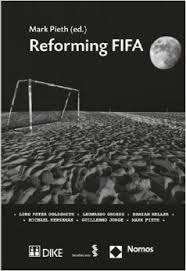


This book looks back at the work of the Independence Governance Committee (IGC). This Committee, constituted in 2011, had as primary objective to drive a reform process of FIFA initiated by its President Sepp Blatter. After ordering from the Swiss anti-corruption expert Mark Pieth, a report on the state of FIFA’s governance, FIFA decided to mandate him with the leadership of a consulting body composed of a mix of independent experts and football insiders, which would be accompanying and supervising the internal reform process of FIFA. The IGC was officially dissolved at the end of 2013, after completing its mandate. The book is composed of eight chapters, written by former members of the IGC, including former chairman Mark Pieth. In addition to the chapters, it includes the different reports (available here, here and here) submitted by the IGC to FIFA across the years. In the words of Pieth, this account is “fascinating because it gives a hands-on, realistic perspective of the concrete efforts, the achievements and the remaining challenges in the struggle for the reform of this organization [FIFA], avoiding the usual glorification or vilification.”[1] This review will first summarize the core of the account of the FIFA reform process provided by the book, before critically engaging with the outcome of the process and outlining the deficiencies that culminated on 29 May 2015 with the re-election of Sepp Blatter as FIFA president.More...


The Spanish TV Rights Distribution System after the Royal Decree: An Introduction. By Luis Torres

On the first of May 2015, the Spanish Government finally signed the Royal Decree allowing the joint selling of the media rights of the Spanish top two football leagues. The Minister for Sport stated that the Decree will allow clubs to “pay their debts with the social security and the tax authorities and will enable the Spanish teams to compete with the biggest European Leagues in terms of revenues from the sale of media rights”.[1]Although the signing of the Royal Decree was supposed to close a very long debate and discussion between the relevant stakeholders, its aftermath shows that the Telenovela is not entirely over. 

This blog post will first provide the background story to the selling of media rights in Spain. It will, thereafter, analyse the main points of the Royal Decree and outline how the system will work in practice. Finally, the blog will shortly address the current frictions between the Spanish League (LFP) and the Spanish football federation (RFEF).More...

Sport and EU Competition Law: New developments and unfinished business. By Ben Van Rompuy

Editor's note: Ben Van Rompuy, Head of the ASSER International Sports Law Centre, was recently interviewed by LexisNexis UK for their in-house adviser service. With kind permission from LexisNexis we reproduce the interview on our blog in its entirety. 

How does competition law affect the sports sector?  

The application of EU competition law to the sports sector is a fairly recent and still unfolding development. It was only in the mid-1990s, due to the growing commercialization of professional sport, that there emerged a need to address competition issues in relation to, for instance, ticketing arrangements or the sale of media rights.  More...


Is FIFA fixing the prices of intermediaries? An EU competition law analysis - By Georgi Antonov (ASSER Institute)

Introduction

On 1 April 2015, the new FIFA Regulations on Working with Intermediaries (hereinafter referred as the Regulations) came into force. These Regulations introduced a number of changes as regards the division of competences between FIFA and its members, the national associations. A particularly interesting issue from an EU competition law perspective is the amended Article 7 of the Regulations. Under paragraph 3, which regulates the rules on payments to intermediaries (also previously referred to as ‘agents’), it is recommended that the total amount of remuneration per transaction due to intermediaries either being engaged to act on a player’s or club’s behalf should not exceed 3% of the player’s basic gross income for the entire duration of the relevant employment contract. In the case of transactions due to intermediaries who have been engaged to act on a club’s behalf in order to conclude a transfer agreement, the total amount of remuneration is recommended to not exceed 3% of the eventual transfer fee paid in relation to the relevant transfer of the player.More...

The Impact of the new FIFA Regulations for Intermediaries: A comparative analysis of Brazil, Spain and England. By Luis Torres

INTRODUCTION

Almost a year after their announcement, the new FIFA Regulations on working with Intermediaries (“FIFA Regulations”) came into force on 1 April 2015. Their purpose is to create a more simple and transparent system of regulation of football agents. It should be noted, however, that the new FIFA rules enable every national football association to regulate their own system on players’ intermediaries, provided they respect the compulsory minimum requirements adopted. In an industry that is already cutthroat, it thus remains to be seen whether FIFA’s “deregulation” indeed creates transparency, or whether it is a Pandora’s Box to future regulatory confusion.

This blog post will provide an overview of the new FIFA Regulations on working with intermediaries and especially its minimum requirements. Provided that national associations are encouraged to “draw up regulations that shall incorporate the principles established in these provisions”[1], three different national regulations have been taken as case-studies: the English FA Regulations, the Spanish RFEF Regulations and the Brazilian CBF Regulations. After mapping their main points of convergence and principal differences, the issues that could arise from these regulatory differences shall be analyzed.  More...

Blog Symposium: Why FIFA's TPO ban is justified. By Prof. Dr. Christian Duve

Introduction: FIFA’s TPO ban and its compatibility with EU competition law.
Day 1: FIFA must regulate TPO, not ban it.
Day 2: Third-party entitlement to shares of transfer fees: problems and solutions
Day 3: The Impact of the TPO Ban on South American Football.
Day 4: Third Party Investment from a UK Perspective. 

Editor’s note: Finally, the last blog of our TPO ban Symposium has arrived! Due to unforeseen circumstances, FIFA had to reconsider presenting its own views on the matter. However, FIFA advised us to contact Prof. Dr. Christian Duve to author the eagerly awaited blog on their behalf. Prof. Dr. Christian Duve is a lawyer and partner with Freshfields Bruckhaus Deringer LLP and an honorary professor at the University of Heidelberg. He has been a CAS arbitrator until 2014. Thus, as planned, we will conclude this symposium with a post defending the compatibility of the TPO ban with EU law. Many thanks to Prof. Dr. Duve for having accepted this last-minute challenge! More...


Blog Symposium: Third Party Investment from a UK Perspective. By Daniel Geey

Introduction: FIFA’s TPO ban and its compatibility with EU competition law.
Day 1: FIFA must regulate TPO, not ban it.
Day 2: Third-party entitlement to shares of transfer fees: problems and solutions
Day 3: The Impact of the TPO Ban on South American Football.
Day 5: Why FIFA's TPO ban is justified.

Editor's note: In this fourth part of our blog symposium on FIFA's TPO ban Daniel Geey shares his 'UK perspective' on the ban. The English Premier League being one of the first leagues to have outlawed TPO in 2010, Daniel will outline the regulatory steps taken to do so and critically assess them. Daniel is an associate in Field Fisher Waterhouse LLP's Competition and EU Regulatory Law Group. As well as being a famous 'football law' twitterer, he has also published numerous articles and blogs on the subject.


What is Third Party Investment?
In brief Third Party Investment (TPI) in the football industry, is where a football club does not own, or is not entitled to, 100% of the future transfer value of a player that is registered to play for that team. There are numerous models for third party player agreements but the basic premise is that companies, businesses and/or individuals provide football clubs or players with money in return for owning a percentage of a player’s future transfer value. This transfer value is also commonly referred to as a player’s economic rights. There are instances where entities will act as speculators by purchasing a percentage share in a player directly from a club in return for a lump sum that the club can then use as it wishes. More...