Asser International Sports Law Blog

Our International Sports Law Diary
The Asser International Sports Law Centre is part of the T.M.C. Asser Instituut

In blood we trust? The Kreuziger Biological Passport Case. By Thalia Diathesopoulou

Over the last twenty years, professional cycling has developed the reputation of one of the “most drug soaked sports in the world”.[1] This should not come as a surprise. The sport’s integrity has plummeted down due to an unprecedented succession of doping scandals. La crème de la crème of professional cyclists has been involved in doping incidents including Tyler Hamilton, Floyd Landis, Alejandro Valverde and Lance Armstrong. The once prestigious Tour de France has been stigmatized as a race of “pharmacological feat, not a physical one”.[2]

In view of these overwhelming shadows, in 2008, the International Cycling Union (UCI), in cooperation with the World Anti-Doping Agency (WADA) took a leap in the fight against doping. It became the first International Sports Federation to implement a radical new anti-doping program known as the Athlete Biological Passport (ABP).[3] More...

A Question of (dis)Proportion: The CAS Award in the Luis Suarez Biting Saga

The summer saga surrounding Luis Suarez’s vampire instincts is long forgotten, even though it might still play a role in his surprisingly muted football debut in FC Barcelona’s magic triangle. However, the full text of the CAS award in the Suarez case has recently be made available on CAS’s website and we want to grasp this opportunity to offer a close reading of its holdings. In this regard, one has to keep in mind that “the object of the appeal is not to request the complete annulment of the sanction imposed on the Player” (par.33). Instead, Suarez and Barcelona were seeking to reduce the sanction imposed by FIFA. In their eyes, the four-month ban handed out by FIFA extending to all football-related activities and to the access to football stadiums was excessive and disproportionate. Accordingly, the case offered a great opportunity for CAS to discuss and analyse the proportionality of disciplinary sanctions based on the FIFA Disciplinary Code (FIFA DC).  More...

The International Sports Law Digest – Issue II – July-December 2014

I. Literature


1. Antitrust/Competition Law and Sport

G Basnier, ‘Sports and competition law: the case of the salary cap in New Zealand rugby union’, (2014) 14 The International Sports Law Journal 3-4, p.155

R Craven, ‘Football and State aid: too important to fail?’ (2014) 14 The International Sports Law Journal 3-4, p.205

R Craven, ‘State Aid and Sports Stadiums: EU Sports Policy or Deference to Professional Football (2014) 35 European Competition Law Review Issue 9, 453


2. Intellectual Property Rights in Sports law / Betting rights/ Spectators’ rights/ Sponsorship Agreements

Books

W T Champion and K DWillis, Intellectual property law in the sports and entertainment industries (Santa Barbara, California; Denver, Colorado; Oxford, England: Praeger 2014)

J-M Marmayou and F Rizzo, Les contrats de sponsoring sportif (Lextenso éditions 2014) 

More...


Time to Cure FIFA’s Chronic Bad Governance Disease

 After Tuesday’s dismissal of Michael Garcia’s complaint against the now infamous Eckert statement synthetizing (misleadingly in his eyes) his Report on the bidding process for the World Cup 2018 and 2022, Garcia finally decided to resign from his position as FIFA Ethics Committee member. On his way out, he noted: “No independent governance committee, investigator, or arbitration panel can change the culture of an organization”. It took Garcia a while to understand this, although others faced similar disappointments before. One needs only to remember the forgotten reform proposals of the Independent Governance Committee led by Prof. Dr. Mark Pieth. More...

The CAS Ad Hoc Division in 2014: Business As Usual? - Part. 2: The Selection Drama

In a first blog last month we discussed the problem of the scope of jurisdiction of the Ad Hoc Division of the Court of Arbitration for Sport. The key issue was whether an athlete could get his case heard in front of the CAS Ad Hoc Division or not. In this second part, we will also focus on whether an athlete can access a forum, but a different kind of forum: the Olympic Games as such. This is a dramatic moment in an athlete’s life, one that will decide the future path of an entire career and most likely a lifetime of opportunities. Thus, it is a decision that should not be taken lightly, nor in disregard of the athletes’ due process rights. In the past, several (non-)selection cases were referred to the Ad Hoc Divisions at the Olympic Games, and this was again the case in 2014, providing us with the opportunity for the present review.

Three out of four cases dealt with by the CAS Ad Hoc Division in Sochi involved an athlete contesting her eviction from the Games. Each case is specific in its factual and legal assessment and deserves an individual review. More...

Should the CAS ‘let Dutee run’? Gender policies in Sport under legal scrutiny. By Thalia Diathesopoulou

The rise of Dutee Chand, India’s 100 and 200-meter champion in the under 18-category, was astonishing. Her achievements were more than promising: after only two years, she broke the 100m and 200m national junior records, competed in the 100m final at the World Youth Athletics Championships in Donetsk and collected two gold medals in the Asian Junior Championships in Chinese Taipei. But, in July 2014, this steady rise was abruptly halted. Following a request from the Athletics Federation of India (AFI), the Sports Authority of India (SAI) conducted blood tests on the Indian sprinters. Dutee was detected with female hyperandrogenism, i.e a condition where the female body produces high levels of testosterone. As a result, a few days before the Commonwealth Games in Glasgow, the AFI declared Dutee ineligible to compete under the IAAF Regulations and prevented her from competing in future national and international events in the female category. Pursuant to the IAAF ‘Hyperandrogenism Policy’, the AFI would allow Dutee to return to competition only if she lowers her testosterone level beneath the male range by means of medical or surgical treatment.[1] On 25 September 2014, Dutee filed an appeal before the CAS, seeking to overturn the AFI’s decision and declare IAAF and IOC’s hyperandrogenism regulations null and void. She is defending her right to compete the way she actually is: a woman with high levels of testosterone. Interestingly enough, albeit a respondent, AFI supports her case.

IAAF and IOC rules set limits to female hyperandrogenism, which is deemed an unfair advantage that erodes female sports integrity. While these rules have been contested with regard to their scientific and ethical aspects, this is the first time that they will be debated in court. This appeal could have far-reaching ramifications for the sports world. It does not only seek to pave the way for a better ‘deal’ for female athletes with hyperandrogenism, who are coerced into hormonal treatment and even surgeries to ‘normalise’ themselves as women[2], but it rather brings the CAS, for the first time, before the thorny question:

How to strike a right balance between the core principle of ‘fair play’ and norms of non-discrimination, in cases where a determination of who qualifies as a ‘woman’ for the purposes of sport has to be made? More...

The O’Bannon Case: The end of the US college sport’s amateurism model? By Zygimantas Juska

On 8 August, U.S. District Judge Claudia Wilken ruled in favour of former UCLA basketball player O'Bannon and 19 others, declaring that NCAA's longstanding refusal to compensate athletes for the use of their name, image and likenesses (NILs) violates US antitrust laws. In particular, the long-held amateurism justification promoted by the NCAA was deemed unconvincing.

On 14 November, the NCAA has appealed the judgment, claiming that federal judge erred in law by not applying a 1984 Supreme Court ruling. One week later, the NCAA received support from leading antitrust professors who are challenging the Judge Wilken’s reasoning in an amicus curiae. They are concerned that the judgment may jeopardize the proper regulation of college athletics. The professors argued that if Wilken’s judgment is upheld, it

would substantially expand the power of the federal courts to alter organizational rules that serve important social and academic interests…This approach expands the ‘less restrictive alternative prong’ of the antitrust rule of reason well beyond any appropriate boundaries and would install the judiciary as a regulatory agency for collegiate athletics”.   

More...

Image Rights in Professional Basketball (Part II): Lessons from the American College Athletes cases. By Thalia Diathesopoulou

In the wake of the French Labour Union of Basketball (Syndicat National du Basket, SNB) image rights dispute with Euroleague and EA Games, we threw the “jump ball” to start a series on players’ image rights in international professional basketball. In our first blogpost, we discussed why image rights contracts in professional basketball became a fertile ground for disputes when it comes to the enforcement of these contracts by the Basketball Arbitral Tribunal (BAT). Indeed, we pointed out that clubs might take advantage of the BAT’s inconsistent jurisprudence to escape obligations deriving from image rights contracts.

In this second limb, we will open a second field of legal battles “around the rim”: the unauthorized use of players’ image rights by third parties. We will use as a point of reference the US College Athletes image rights cases before US Courts and we will thereby examine the legal nature of image rights and the precise circumstances in which such rights may be infringed. Then, coming back to where we started, we will discuss the French case through the lens of US case law on players’ image rights. 
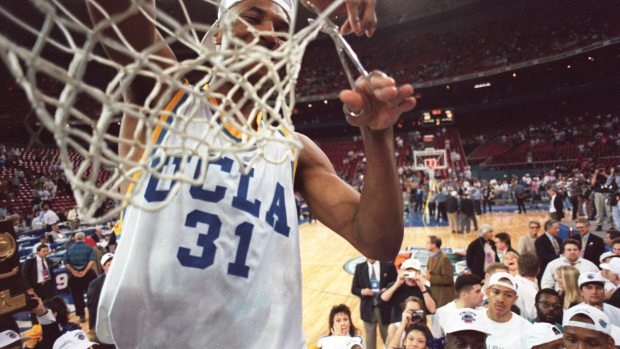

Source: http://philadelphia.cbslocal.com/2013/09/27/ea-sports-settles-college-likeness-case/ More...


The Olympic Agenda 2020: The devil is in the implementation!

The 40 recommendations of the Olympic Agenda 2020 are out! First thought: one should not underplay the 40 recommendations, they constitute (on paper at least) a potential leap forward for the IOC. The media will focus on the hot stuff: the Olympic channel, the pluri-localisation of the Games, or their dynamic format. More importantly, and to some extent surprisingly to us, however, the IOC has also fully embraced sustainability and good governance. Nonetheless, the long-term legacy of the Olympic Agenda 2020 will hinge on the IOC’s determination to be true to these fundamental commitments. Indeed, the devil is always in the implementation, and the laudable intents of some recommendations will depend on future political choices by Olympic bureaucrats. 

For those interested in human rights and democracy at (and around) the Olympics, two aspects are crucial: the IOC’s confession that the autonomy of sport is intimately linked to the quality of its governance standards and the central role the concept of sustainability is to play in the bidding process and the host city contract.  More...

UEFA’s tax-free Euro 2016 in France: State aid or no State aid?

Last week, the French newspaper Les Echos broke the story that UEFA (or better said its subsidiary) will be exempted from paying taxes in France on revenues derived from Euro 2016. At a time when International Sporting Federations, most notably FIFA, are facing heavy criticisms for their bidding procedures and the special treatment enjoyed by their officials, this tax exemption was not likely to go unnoticed. The French minister for sport, confronted with an angry public opinion, responded by stating that tax exemptions are common practice regarding international sporting events. The former French government agreed to this exemption. In fact, he stressed that without it “France would never have hosted the competition and the Euro 2016 would have gone elsewhere”. More...

Asser International Sports Law Blog | Our International Sports Law Diary <br/>The <a href="http://www.sportslaw.nl" target="_blank">Asser International Sports Law Centre</a> is part of the <a href="https://www.asser.nl/" target="_blank"><img src="/sportslaw/blog/media/logo_asser_horizontal.jpg" style="vertical-align: bottom; margin-left: 7px;width: 140px" alt="T.M.C. Asser Instituut" /></a>

Asser International Sports Law Blog

Our International Sports Law Diary
The Asser International Sports Law Centre is part of the T.M.C. Asser Instituut

Special Issue Call for Papers: Legal Aspects of Fantasy Sports - International Sports Law Journal

The International Sports Law Journal (ISLJ) invites submissions to a special issue focusing on legal aspects of fantasy sports. For some time, fantasy sports has been a major phenomena in North America and this has been reflected in the sports law literature. Fantasy sports have more recently grown in popularity in the rest of world, raising a number of novel legal questions. The ISLJ wants to support fruitful global discussions about these questions through a special issue. We welcome contributions from different jurisdictions analyzing fantasy sports from the perspective of various areas of law including, but not limited to, intellectual property law, gambling law, and competition law.

Please submit proposed papers through the ISLJ submission system (http://islj.edmgr.com/) no later than November 15, 2020. Submissions should have a reccomended length of 8,000–12,000 words and be prepared in accordance with the ISLJ's house style guidelines (https://www.springer.com/journal/40318/submission-guidelines). All submissions will be subject to double-blind peer review.

Question about the special issue can be directed to the Editor–in-Chief, Johan Lindholm (johan.lindholm@umu.se).

Free Event! Mega-sporting events and human rights: What role can EU sports diplomacy play? - 5 March at the Asser Institute in The Hague

The upcoming 2022 FIFA World Cup in Qatar and its links to human rights violations has been the subject of many debates in the media and beyond. In particular, the respect of migrant workers’ labour rights was at the forefront of much public criticisms directed against FIFA. Similarly, past Olympics in Rio, Sochi or Beijing have also been in the limelight for various human rights issues, such as the lack of freedom of the press, systematic discrimination on the basis of sexual orientation or forced evictions. These controversies have led sports governing bodies (SGBs) to slowly embrace human rights as an integral part of their core values and policies. Leading to an increased expectation for SGBs to put their (private) diplomatic capital at the service of human rights by using their leverage vis-à-vis host countries of their mega-sporting events (MSEs). In turn, this also raises the question of the need for the EU to accompany this change by putting human rights at the heart of its own sports diplomacy.


Research collective 
This Multiplier Sporting Event, organised in the framework of the transnational project on ‘Promoting a Strategic Approach to EU Sports Diplomacy’ funded by the Erasmus + Programme, aims to trigger discussions on the role of an EU sports diplomacy in strengthening respect for human rights in the context of MSEs both at home and abroad. It will feature two roundtables focused on the one hand on the diplomatic power and capacity of SGBs to fend for human rights during MSEs and on the other on the EU’s integration of human rights considerations linked to MSEs in its own sports diplomacy.


Programme

13:20 – 14:00 – Welcome and opening speech –Antoine Duval (Asser Institute)
14:00 - 15:30 - Panel 1: Leveraging the Diplomatic Power of the Sports Governing Bodies for Human Rights

  • Lucy Amis (Unicef UK/Institute for Human Rights and Business)
  • Guido Battaglia (Centre for Sport and Human Rights)
  • Florian Kirschner (World Players Association/UNI Global Union)
  • Claire Jenkin (University of Hertfordshire)

15:30 – 16:00 - Coffee Break

16:00 - 17:30 - Panel 2: A Human Rights Dimension for the EU’s Sports Diplomacy?

  • Arnout Geeraert (Utrecht University)
  • Agata Dziarnowska (European Commission)
  • Alexandre Mestre (Sport and Citizenship)
  • Ministry of Health, Welfare and Sport (TBC)

17:30 - Reception

International and European Sports Law – Monthly Report – January 2020 - By Thomas Terraz

Editor's note: This report compiles the most relevant legal news, events and materials on International and European Sports Law based on the daily coverage provided on our twitter feed @Sportslaw_asser. 


The Headlines

IOC Athlete Commission releases its Rule 50 Guidelines for Tokyo 2020

The IOC Athlete Commission presented its Rule 50 Guidelines for Tokyo 2020 at its annual joint meeting with the IOC Executive Board. It comes as Thomas Bach had recently underlined the importance of political neutrality for the IOC and the Olympic Games in his New Year’s message. Generally, rule 50 of the Olympic Charter prohibits any political and religious expression by athletes and their team during the Games, subject to certain exceptions. The Guidelines clarify that this includes the ‘field of play’, anywhere inside the Olympic Village, ‘during Olympic medal ceremonies’ and ‘during the Opening, Closing and other official ceremonies’. On the other hand, athletes may express their views ‘during press conferences and interview’, ‘at team meetings’ and ‘on digital or traditional media, or on other platforms. While rule 50 is nothing new, the Guidelines have reignited a debate on whether it could be considered as a justified restriction on one’s freedom of expression.


The IOC has made the case that it is defending the neutrality of sport and that the Olympics is an international forum that should help bring people together instead of focusing on divisions. Specifically, Richard Pound has recently made the argument that the Guidelines have been formulated by the athletes themselves and are a justified restriction on free expression with its basis in ‘mutual respect’. However, many commentators have expressed their skepticism to this view (see here, here and here) citing that politics and the Olympics are inherently mixed, that the IOC is heavily involved in politics, and that the Olympics has often served as the grounds for some of history’s most iconic political protests. All in all, the Guidelines have certainly been a catalyst for a discussion on the extent to which the Olympics can be considered neutral. It also further highlights a divide between athlete committees from within the Olympic Movement structures and other independent athlete representation groups (see Global Athlete and FIFPro’s statements on rule 50).


Doping and Corruption Allegations in Weightlifting 

The International Weightlifting Federation (IWF) has found itself embroiled in a doping and corruption scandal after an ARD documentary was aired early in January which raised a wide array of allegations, including against the President of the IWF, Tamás Aján. The documentary also included hidden camera interviews from a Thai Olympic medalist who admits having taken anabolic steroids before having won a bronze medal at the 2012 London Olympic Games and from a team doctor from the Moldovan national team who describes paying for clean doping tests. The IWF’s initial reaction to the documentary was hostile, describing the allegations as ‘insinuations, unfounded accusations and distorted information’ and ‘categorically denies the unsubstantiated’ accusations. It further claims that it has ‘immediately acted’ concerning the situation with the Thai athletes, and WADA has stated that it will follow up with the concerned actors. However, as the matter gained further attention in the main stream media and faced increasing criticism, the IWF moved to try to ‘restore’ its reputation. In practice, this means that Tamás Aján has ‘delegated a range of operation responsibilities’ to Ursual Papandrea, IWF Vice President, while ‘independent experts’ will conduct a review of the allegations made in the ARD documentary. Richard McLaren has been announced to lead the investigation and ‘is empowered to take whatever measures he sees fit to ensure each and every allegation is fully investigated and reported’. The IWF has also stated that it will open a whistleblower line to help aid the investigation.More...


How 2019 Will Shape the International Sports Law of the 2020s - By Thomas Terraz

Editor’s note: Thomas Terraz is a fourth year LL.B. candidate at the International and European Law programme at The Hague University of Applied Sciences with a specialisation in European Law. Currently he is pursuing an internship at the T.M.C. Asser Institute with a focus on International and European Sports Law.


1.     Introduction

As we begin plunging into a new decade, it can be helpful to look back and reflect on some of the most influential developments and trends from 2019 that may continue to shape international sports law in 2020 and beyond. Hence, this piece will not attempt to recount every single sports law news item but rather identify a few key sports law stories of 2019 that may have a continued impact in the 2020s. The following sections are not in a particular order.More...

International and European Sports Law – Monthly Report – November and December 2019- By Thomas Terraz

Editor's note: This report compiles the most relevant legal news, events and materials on International and European Sports Law based on the daily coverage provided on our twitter feed @Sportslaw_asser. 


The Headlines

WADA Conference and the Adoption of 2021 WADA Code Amid Calls for Reform

On November 5-7, WADA held its Fifth World Conference on Doping in Sport where it faced a busy schedule, including the adoption of the revised 2021 World Anti-Doping Code and the election of a new WADA President and Vice-President by the Foundation Board. Concerning the latter, Witold Bańka, Poland’s Minister of Sport and Tourism, was elected as WADA President and Yang Yang, a former Chinese speed skater, elected as Vice-President, replacing Sir Craig Reedie and Linda Helleland respectively.  As Helleland leaves her position, she has expressed some strong views on the state of sport governance, particularly that ‘there is an absence of good governance, openness and independence in the highest levels of international sports’. Helleland was not the only one to recently voice governance concerns, as Rob Koehler, Director General of Global Athlete, also called for a ‘wholesale structural change at WADA’, which includes giving ‘independent’ athletes a vote in WADA’s Foundation Board, ensuring a greater ‘separation of powers’ and ensuring greater protection of athletes’ rights.

In the midst of the calls for reform, the amended 2021 WADA Code and the amended International Standards were also adopted after a two year, three stage code review process. Furthermore, a major milestone in athletes’ rights was achieved with the adoption of the Athletes’ Anti-Doping Rights Acts (separate from the WADA Code), which enumerates certain basic rights to help ‘ensure that Athlete rights within anti-doping are clearly set out, accessible, and universally applicable’. On the other hand, the Act ‘is not a legal document’, which clearly circumscribes some of the potential effects the Act may have. Nonetheless, athlete representative groups have ‘cautiously welcomed’ some of the changes brought by the 2021 WADA Code, such as the ‘modified sanctions for substances of abuse violations’.

Sung Yang’s Historical Public Hearing at the CAS

After much anticipation, the second public hearing in CAS history occurred on November 15 in Montreux, Switzerland in the Sun Yang case (details of this case were discussed in August and September’s monthly report), which was livestreamed and can be seen in its totality in four different parts (Part 1, Part 2, Part 3, Part 4). This was an extremely unique opportunity, which hopefully will become a more common occurrence, to see just how CAS hearings are conducted and perhaps get a taste of some of the logistical issues that can emerge during live oral hearings. One of these problems, accurate translations, rapidly became apparent as soon as Sun Yang sat in the witness chair to give his opening statements. The translators in the box seemed to struggle to provide an intelligible English interpretation of Sun Yang and other witnesses’ statements, while Sun Yang also seemingly had trouble understanding the translated questions being posed to him. The situation degenerated to such an extent that ultimately one of WADA’s officials was called to replace the translators. However, the translation drama did not end there, since during Sun Yang’s closing statements an almost seemingly random person from the public appeared next to Sun Yang who claimed to have been requested from Sun Yang’s team to ‘facilitate’ the translation. Franco Frattini, president of the panel, questioned the identity of the ‘facilitator’ and explained that one could not just simply appear before the court without notice. Interestingly, Sun Yang’s legal team also rapidly intervened claiming that it had not been made of aware of the inclusion of the supporting translator, further complicating the matter. In the end, Sun Yang concluded his statements with the translation from the WADA official.

While it was Sun Yang’s legal team that had provided the original translators in the box, it still raises the question as to how translation at CAS could be improved to ensure a certain standard of translators. After all, quality translation is critical to the parties’ right to be heard under Article 6 (e) ECHR. Regardless, in the end, neither parties made an objection that their right to be heard was violated.

Russian Doping Saga Continues: WADA Compliance Review Committee Recommends Strong Sanctions

As was already discussed in August and September’s monthly report, WADA uncovered numerous inconsistencies concerning data taken from the Moscow Laboratory. After further investigation, WADA’s Compliance Review Committee has recommended that the Russian Anti-Doping Agency (RUSADA) be found non-compliant with the WADA Code. Accompanying the recommendation, the Compliance Review Committee also suggested several sanctions, which include prohibiting Russian athletes from participating in major events like the Olympic Games and ‘any World Championships organized or sanctioned by any Signatory’ for the next four years unless they may ‘dmonstrate that they are not implicated in any way by the non-compliance’. It would also see an embargo on events hosted in Russia during the same period. However, these sanctions did not go far enough for some, like Travis Tygart, chief executive of USADA, who wishes to prevent a repeat of Rio 2016 and PyeongChang 2018 ‘in which a secretly-managed process permitting Russians to compete – did not work’. On the other hand, the IOC has advocated for a softer, individual based approach that pursues ‘the rules of natural justice and respect human rights’. In the midst of these developments, the Athletics Integrity Unit also decided to charge several members of the Russian Athletics Federation (RusAF), including its President Dmitry Shlyakhtin, after a 15 month investigation for ‘tampering and complicity’ concerning a Russian athlete’s whereabouts violations.

Following many calls for strong consequences, the WADA Executive Committee met on December 9th and adopted the recommendations of the Compliance Review Committee. Athlete representatives have expressed their disappointment with the sanctions, calling the decision ‘spineless’ since it did not pursue a complete ban on Russian participation at events such as Euro 2020 and the 2020 Olympics. At this point, RUSADA has sent notice to WADA that it will be disputing the decision of WADA’s Executive Committee’s decision at the CAS.More...


Balancing Athletes’ Interests and The Olympic Partner Programme: the Bundeskartellamt’s Rule 40 Decision - By Thomas Terraz

Editor’s note: Thomas Terraz is a fourth year LL.B. candidate at the International and European Law programme at The Hague University of Applied Sciences with a specialisation in European Law. Currently he is pursuing an internship at the T.M.C. Asser Institute with a focus on International and European Sports Law.


1        Introduction

The International Olympic Committee (IOC), after many years of ineffective pushback (see here, here and here) over bye law 3 of rule 40[1] of the Olympic Charter (OC), which restricts the ability of athletes and their entourage to advertise themselves during the ‘blackout’ period’[2] (also known as the ‘frozen period’) of the Olympic Games, may have been gifted a silver bullet to address a major criticism of its rules. This (potentially) magic formula was handed down in a relatively recent decision of the Bundeskartellamt, the German competition law authority, which elucidated how restrictions to athletes’ advertisements during the frozen period may be scrutinized under EU competition law. The following blog begins by explaining the historical and economic context of rule 40 followed by the facts that led to the decision of the Bundeskartellamt. With this background, the decision of the Bundeskartellamt is analyzed to show to what extent it may serve as a model for EU competition law authorities. More...

Is UCI the new ISU? Analysing Velon’s Competition Law Complaint to the European Commission - By Thomas Terraz

Editor’s note: Thomas Terraz is a fourth year LL.B. candidate at the International and European Law programme at The Hague University of Applied Sciences with a specialisation in European Law. Currently he is pursuing an internship at the T.M.C. Asser Institute with a focus on International and European Sports Law.


1.     Introduction

The UCI may soon have to navigate treacherous legal waters after being the subject of two competition law based complaints (see here and here) to the European Commission in less than a month over rule changes and decisions made over the past year. One of these complaints stems from Velon, a private limited company owned by 11 out of the 18 World Tour Teams,[1] and the other comes from the Lega del Ciclismo Professionistico, an entity based in Italy representing an amalgamation of stakeholders in Italian professional cycling. While each of the complaints differ on the actual substance, the essence is the same: both are challenging the way the UCI exercises its regulatory power over cycling because of a growing sense that the UCI is impeding the development of cycling as a sport. Albeit in different ways: Velon sees the UCI infringing on its ability to introduce new race structures and technologies; the Lega del Ciclismo Professionistico believes the UCI is cutting opportunities for semi-professional cycling teams, the middle ground between the World Tour Teams and the amateur teams.

While some of the details remain vague, this blog will aim to unpack part of the claims made by Velon in light of previous case law from both the European Commission and the Court of Justice of the European Union (CJEU) to give a preliminary overview of the main legal issues at stake and some of the potential outcomes of the complaint. First, it will be crucial to understand just who/what Velon is before analyzing the substance of Velon’s complaint. More...

International and European Sports Law – Monthly Report – October 2019 by Thomas Terraz

Editor's note: This report compiles the most relevant legal news, events and materials on International and European Sports Law based on the daily coverage provided on our twitter feed @Sportslaw_asser. 


The Headlines

International Sports Law Journal (ISLJ) Conference 2019

The T.M.C. Asser Institute and the Asser International Sports Law Centre held the third International Sports Law Journal (ISLJ) Conference on October 24-25. The Conference created a forum for academics and practitioners to discuss, debate and share knowledge on the latest developments of sports law. It featured six uniquely themed panels, which included topics such as ‘Transfer systems in international sports’ and ‘Revisiting the (in)dependence and transparency of the CAS’ to ‘The future of sports: sports law of the future’. The ISLJ Conference was also honored to have two exceptional keynote speakers: Moya Dodd and Ulrich Haas. To kick off the conference, Moya Dodd shared her experiences from an athlete’s perspective in the various boardrooms of FIFA. The second day was then launched by Ulrich Haas, who gave an incredibly thorough and insightful lecture on the importance, function and legal basis of association tribunals in international sport. For a detailed overview of this year’s ISLJ Conference, click here for the official conference report.

The Asser International Sports Law Centre was delighted to have been able to host another great edition of the ISLJ Conference and is thankful to all the participants and speakers who made this edition such a success.

Moving towards greater transparency: Launch of FIFA’s Legal Portal

On October 31, FIFA announced that it was introducing a new legal portal on its website that will give greater access to numerous documents that previously were kept private. FIFA explains that this is in order to help increase its transparency, which was one of the key ‘Guiding Principles’ highlighted in FIFA 2.0: The Vision for the Future released in 2016. This development comes as many sport governing bodies face increasing criticism for the opacity of its judicial bodies’ decisions, which can have tremendous economic and societal impacts. The newly available documents will include: ‘decisions rendered on the merits by the FIFA Disciplinary Committee and the FIFA Appeal Committee (notified as of 1 January 2019); decisions rendered on the merits by the FIFA Ethics Committee (notified since 1 January 2019); decisions rendered on the merits by the FIFA Players’ Status Committee and the FIFA Dispute Resolution Chamber; non-confidential CAS awards in proceedings to which FIFA is a party (notified since 1 January 2019); list of CAS arbitrators proposed by FIFA for appointment by ICAS, and the number of times they have been nominated in CAS proceedings’. The list of decisions from all the aforementioned bodies are updated every four months, according to their respective webpages. However, time will ultimately tell how consistently decisions are published. Nevertheless, this move is a major milestone in FIFA’s journey towards increasing its transparency.

Hong Kong Protests, Human Rights and (e)Sports Law: The Blizzard and NBA controversies

Both Blizzard, a major video game developer, and the NBA received a flurry of criticism for their responses to persons expressing support for the Hong Kong protests over the past month. On October 8, Blizzard sanctioned Blitzchung, a professional Hearthstone player who expressed support of the Hong Kong protest during a post-match interview, by eliminating the prize money he had won and suspending him for one year from any Hearthstone tournament. Additionally, Blizzard will cease to work with the casters who conducted the interview. With mounting disapproval over the sanctions,  J. Allen Brack, the president of Blizzard, restored the prize money and reduced the period of ineligibility to 6 months.

The NBA controversy started when Daryl Morey, the general manager of the Houston Rockets, tweeted his support for the protests in Hong Kong. The tweet garnered much attention, especially in China where it received a lot of backlash, including an announcement from CCTV, the official state broadcaster in China, that it was suspending all broadcasts of the NBA preseason games. In attempts to appease its Chinese audience, which is a highly profitable market for the NBA, Morey deleted the tweet and posted an apology, and the NBA responded by saying that the initial tweet was ‘regrettable’. Many scolded these actions and accused the NBA of censorship to which the NBA Commissioner, Adam Silver, responded that the NBA remains committed to freedom of expression.

Both cases highlighted how (e)sport organizations may be faced with competing interests to either guarantee greater protection of human rights or to pursue interests that perhaps have certain financial motivations. More...


ISLJ International Sports Law Conference 2019 - Conference Report - By Thomas Terraz

On October 24th and 25th 2019, the T.M.C. Asser Institute and the International Sports Law Centre hosted the International Sports Law Journal (ISLJ) Conference for a third year in a row, bringing together a group of academics and practitioners from around the world. This year’s conference celebrated the 20th year of the International Sports Law Journal, which was originally started by Robert Siekmann. Over the past 20 years, the ISLJ has aimed to be a truly international journal that addresses global topics in sports law while keeping the highest academic standards.

With this background, the conference facilitated discussions and exchanges over six differently themed panels on international sports law’s most pertinent issues and gave participants wide opportunities to engage with one another. Additionally, this year’s edition also had the great honor of hosting two distinguished keynote speakers, Moya Dodd and Ulrich Haas, who were able to share their wealth of experience and knowledge with the conference participants.

The following report aims to give an overview of the ISLJ Conference 2019 to extract and underline the fundamental ideas raised by the different speakers.More...

International and European Sports Law – Monthly Report – August and September 2019 - By Thomas Terraz

Editor's note: This report compiles all relevant news, events and materials on International and European Sports Law based on the daily coverage provided on our twitter feed @Sportslaw_asser. You are invited to complete this survey via the comments section below, feel free to add links to important cases, documents and articles we might have overlooked.


The Headlines

Another Russian Doping Crisis? Inconsistencies Uncovered in the Data from the Moscow Lab

Storm clouds are brewing once more in the Russian Doping Saga, after several inconsistencies were uncovered by WADA from data retrieved from the Moscow Laboratory. More specifically, a certain number of positive tests had been removed from the data WADA retrieved from the Moscow Laboratory compared to the one received from the original whistleblower. WADA launched a formal compliance procedure on 23 September, giving three weeks for Russian authorities to respond and provide their explanations. WADA’s Compliance Review Committee is set to meet on 23 October in order to determine whether to recommend declaring Russia non-compliant.

Russian authorities are not the only ones now facing questions in light of these new revelations. Criticism of WADA’s decision to declare Russia compliant back in September 2018 have been reignited by stakeholders. That original decision had been vehemently criticized (see also Edwin Moses’ response), particularly by athlete representative groups.

The fallout of these data discrepancies may be far reaching if Russian authorities are unable to provide a satisfying response. There are already whispers of another impending Olympic Games ban and the possibility of a ban extending to other sports signed to the WADA Code. In the meantime, the IAAF has already confirmed that the Russian Athletes would compete as ‘authorised neutral athletes’ at the World Athletics Championship in Doha, Qatar.

Legal Challenges Ahead to Changes to the FIFA Football Transfer Market

FIFA is set to make amendments to its player transfer market that take aim at setting new boundaries for football agents. These changes will prohibit individuals from representing both the buying and selling club in the same transaction and set new limits on agent commissions (3 percent for the buying club and player representative and 10 percent for the selling team). FIFA is already in the process of creating a central clearinghouse through which all transfer payments would have to pass through, including agent commissions. FIFA will be making a final decision on these proposed changes at the FIFA Council meeting on 24 October.

If these proposed changes are confirmed, they will almost certainly be challenged in court. The British trade organization representing football agents, Association of Football Agents, has already begun its preparations for a costly legal battle by sending a plea to its members for donations. It claims that it had not been properly consulted by FIFA before this decision had been made. On the other hand, FIFA claims that ‘there has been a consultation process with a representative group of agents’ and that FIFA kept ‘an open dialogue with agents’. Regardless, if these proposed changes go through, FIFA will be on course to a looming legal showdown.

CAS Public Hearing in the Sun Yang Case: One Step Forward for Transparency?

On 20 August, 2019, the Court of Arbitration for Sport (CAS) announced that the hearing in the appeal procedure of the Sun Yang case will be held publicly. It will be only the second time in its history that a public hearing has been held (the last one being in 1999, Michelle Smith De Bruin v. FINA). WADA has appealed the original decision of the FINA Doping Panel which had cleared Sun Yang from an alleged anti-doping rule violation. The decision to make the hearing public was at the request of both parties. The hearing is set to take place November 15th and is likely to be an important milestone in improving the CAS’ transparency.

Sun Yang, who has already served a doping ban for a previous violation in 2014, has also been at the center of another controversy, where Mack Horton, an Australian swimmer, refused to shake hands and stand on the podium with Sun Yang at the world championships in Gwangju. More...