Asser International Sports Law Blog

Our International Sports Law Diary
The Asser International Sports Law Centre is part of the T.M.C. Asser Instituut

Blog Symposium: The Impact of the TPO Ban on South American Football. By Ariel N. Reck

Introduction: FIFA’s TPO ban and its compatibility with EU competition law.
Day 1: FIFA must regulate TPO, not ban it.
Day 2: Third-party entitlement to shares of transfer fees: problems and solutions
Day 4: Third Party Investment from a UK Perspective.
Day 5: Why FIFA's TPO ban is justified.

Editor’s note: Ariel N. Reck is an Argentine lawyer specialized in the football industry. He is a guest professor at ISDE’s Global Executive Master in International Sports Law, at the FIFA CIES Sports law & Management course (Universidad Católica Argentina) and the Universidad Austral Sports Law diploma (Argentina) among other prestigious courses. He is a regular conference speaker and author in the field of sports law.

Being an Argentine lawyer, Ariel will focus on the impact FIFA’s TPO ban will have (and is already having) on South American football.More...


Blog Symposium: Third-party entitlement to shares of transfer fees: problems and solutions - By Dr. Raffaele Poli (Head of CIES Football Observatory)

Introduction: FIFA’s TPO ban and its compatibility with EU competition law.
Day 1: FIFA must regulate TPO, not ban it.
Day 3: The Impact of the TPO Ban on South American Football.
Day 4: Third Party Investment from a UK Perspective.
Day 5: Why FIFA's TPO ban is justified.

Editor’s note: Raffaele Poli is a human geographer. Since 2002, he has studied the labour and transfer markets of football players. Within the context of his PhD thesis on the transfer networks of African footballers, he set up the CIES Football Observatory based at the International Centre for Sports Studies (CIES) located in Neuchâtel, Switzerland. Since 2005, this research group develops original research in the area of football from a multidisciplinary perspective combining quantitative and qualitative methods. Raffaele was also involved in a recent study on TPO providing FIFA with more background information on its functioning and regulation (the executive summary is available here).

This is the third blog of our Symposium on FIFA’s TPO ban, it is meant to provide an interdisciplinary view on the question. Therefore, it will venture beyond the purely legal aspects of the ban to introduce its social, political and economical context and the related challenges it faces. More...


Blog Symposium: FIFA must regulate TPO, not ban it. The point of view of La Liga.

Introduction: FIFA’s TPO ban and its compatibility with EU competition law.
Day 2: Third-party entitlement to shares of transfer fees: problems and solutions
Day 3: The Impact of the TPO Ban on South American Football.
Day 4: Third Party Investment from a UK Perspective.
Day 5: Why FIFA's TPO ban is justified.

Editor's note: This is the first blog of our symposium on FIFA's TPO ban, it features the position of La Liga regarding the ban and especially highlights some alternative regulatory measures it would favour. La Liga has launched a complaint in front of the European Commission challenging the compatibility of the ban with EU law, its ability to show that realistic less restrictive alternatives were available is key to winning this challenge. We wish to thank La Liga for sharing its legal (and political) analysis of FIFA's TPO ban with us.

INTRODUCTION

The Spanish Football League (La Liga) has argued for months that the funding of clubs through the conveyance of part of players' economic rights (TPO) is a useful practice for clubs. However, it also recognized that the practice must be strictly regulated. In July 2014, it approved a provisional regulation that was sent to many of the relevant stakeholders, including FIFA’s Legal Affairs Department. More...


Blog Symposium: FIFA’s TPO ban and its compatibility with EU competition law - Introduction - Antoine Duval & Oskar van Maren

Day 1: FIFA must regulate TPO, not ban it.
Day 2: Third-party entitlement to shares of transfer fees: problems and solutions
Day 3: The Impact of the TPO Ban on South American Football.
Day 4: Third Party Investment from a UK Perspective.
Day 5: Why FIFA's TPO ban is justified.

On 22 December 2014, FIFA officially introduced an amendment to its Regulations on the Status and Transfers of Players banning third-party ownership of players’ economic rights (TPO) in football. This decision to put a definitive end to the use of TPO in football is controversial, especially in countries where TPO is a mainstream financing mechanism for clubs, and has led the Portuguese and Spanish football leagues to launch a complaint in front of the European Commission, asking it to find the FIFA ban contrary to EU competition law.

Next week, we will feature a Blog Symposium discussing the FIFA TPO ban and its compatibility with EU competition law. We are proud and honoured to welcome contributions from both the complainant (the Spanish football league, La Liga) and the defendant (FIFA) and three renowned experts on TPO matters: Daniel Geey ( Competition lawyer at Fieldfisher, aka @FootballLaw), Ariel Reck (lawyer at Reck Sports law in Argentina, aka @arielreck) and Raffaele Poli (Social scientist and head of the CIES Football Observatory). The contributions will focus on different aspects of the functioning of TPO and on the impact and consequences of the ban. More...


The CAS and Mutu - Episode 4 - Interpreting the FIFA Transfer Regulations with a little help from EU Law

On 21 January 2015, the Court of arbitration for sport (CAS) rendered its award in the latest avatar of the Mutu case, aka THE sports law case that keeps on giving (this decision might still be appealed to the Swiss Federal tribunal and a complaint by Mutu is still pending in front of the European Court of Human Right). The decision was finally published on the CAS website on Tuesday. Basically, the core question focuses on the interpretation of Article 14. 3 of the FIFA Regulations on the Status and Transfer of Players in its 2001 version. More precisely, whether, in case of a dismissal of a player (Mutu) due to a breach of the contract without just cause by the player, the new club (Juventus and/or Livorno) bears the duty to pay the compensation due by the player to his former club (Chelsea). Despite winning maybe the most high profile case in the history of the CAS, Chelsea has been desperately hunting for its money since the rendering of the award (as far as the US), but it is a daunting task. Thus, the English football club had the idea to turn against Mutu’s first employers after his dismissal in 2005, Juventus and Livorno, with success in front of the FIFA Dispute Resolution Chamber (DRC), but as we will see the CAS decided otherwise[1]. More...

The UCI Report: The new dawn of professional cycling?

The world of professional cycling and doping have been closely intertwined for many years. Cycling’s International governing Body, Union Cycliste Internationale (UCI), is currently trying to clean up the image of the sport and strengthen its credibility. In order to achieve this goal, in January 2014 the UCI established the Cycling Independent Reform Commission (CIRC) “to conduct a wide ranging independent investigation into the causes of the pattern of doping that developed within cycling and allegations which implicate the UCI and other governing bodies and officials over ineffective investigation of such doping practices.”[1] The final report was submitted to the UCI President on 26 February 2015 and published on the UCI website on 9 March 2015. The report outlines the history of the relationship between cycling and doping throughout the years. Furthermore, it scrutinizes the role of the UCI during the years in which doping usage was at its maximum and addresses the allegations made against the UCI, including allegations of corruption, bad governance, as well as failure to apply or enforce its own anti-doping rules. Finally, the report turns to the state of doping in cycling today, before listing some of the key practical recommendations.[2]

Since the day of publication, articles and commentaries (here and here) on the report have been burgeoning and many of the stakeholders have expressed their views (here and here). However, given the fact that the report is over 200 pages long, commentators could only focus on a limited number of aspects of the report, or only take into account the position of a few stakeholders. In the following two blogs we will try to give a comprehensive overview of the report in a synthetic fashion.

This first blogpost will focus on the relevant findings and recommendations of the report. In continuation, a second blogpost will address the reforms engaged by the UCI and other long and short term consequences the report could have on professional cycling. Will the recommendations lead to a different governing structure within the UCI, or will the report fundamentally change the way the UCI and other sport governing bodies deal with the doping problem? More...

Book Review - Camille Boillat & Raffaele Poli: Governance models across football associations and leagues (2014)

Camille Boillat & Raffaele Poli: Governance models across football associations and leagues (2014)

Vol. 4, Centre International d'Etude du Sport, Neuchâtel, Switzerland, softback, 114 pages, ISBN 2-940241-24-4, Price: €24


Source: http://www.cies.ch/en/cies/news/news/article/new-publication-in-the-collection-editions-cies-governance-models-across-football-associations-an/

More...


The aftermath of the Pechstein ruling: Can the Swiss Federal Tribunal save CAS arbitration? By Thalia Diathesopoulou

It took only days for the de facto immunity of the Court of Arbitration for Sport (CAS) awards from State court interference to collapse like a house of cards on the grounds of the public policy exception mandated under Article V(2)(b) of the New York Convention on the Recognition and Enforcement of Foreign Arbitral Awards . On 15 January 2015, the Munich Court of Appeals signalled an unprecedented turn in the longstanding legal dispute between the German speed skater, Claudia Pechstein, and the International Skating Union (ISU). It refused to recognise a CAS arbitral award, confirming the validity of a doping ban, on the grounds that it violated a core principle of German cartel law which forms part of the German public policy. A few weeks before, namely on 30 December 2014, the Court of Appeal of Bremen held a CAS award, which ordered the German Club, SV Wilhelmshaven, to pay ‘training compensation’, unenforceable for non-compliance with mandatory European Union law and, thereby, for violation of German ordre public. More...

‘The reform of football': Yes, but how? By Marco van der Harst

'Can't fight corruption with con tricks
They use the law to commit crime
And I dread, dread to think what the future will bring
When we're living in gangster time'
The Specials - Gangsters


The pressing need for change 

The Parliamentary Assembly (PACE) of the Council of Europe (CoE), which is composed of 318 MPs chosen from the national parliaments of the 47 CoE member states, unanimously adopted a report entitled ‘the reform of football’ on January 27, 2015. A draft resolution on the report will be debated during the PACE April 2015 session and, interestingly, (only?) FIFA’s president Sepp Blatter has been sent an invitation

The PACE report highlights the pressing need of reforming the governance of football by FIFA and UEFA respectively. Accordingly, the report contains some interesting recommendations to improve FIFA’s (e.g., Qatargate[1]) and UEFA’s governance (e.g., gender representation). Unfortunately, it remains unclear how the report’s recommendations will actually be implemented and enforced. 

The report is a welcomed secondary effect of the recent Qatargate directly involving former FIFA officials such as Jack Warner, Chuck Blazer, and Mohamed Bin Hammam[2] and highlighting the dramatic failures of FIFA’s governance in putting its house in order. Thus, it is undeniably time to correct the governance of football by FIFA and its confederate member UEFA – nolens volens. The real question is how to do it.
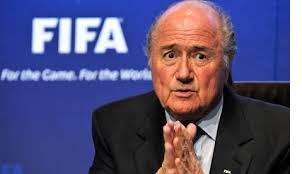


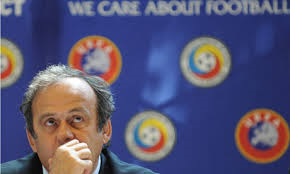
            Photograph: Fabrice Coffrini/AFP/Getty Images                   Photograph: Octav Ganea/AP

More...


SV Wilhelmshaven: a Rebel with a cause! Challenging the compatibility of FIFA’s training compensation system with EU law

Due to the legitimate excitement over the recent Pechstein ruling, many have overlooked a previous German decision rendered in the Wilhelmshaven SV case (the German press did report on the decision here and here). The few academic commentaries (see here and here) focused on the fact that the German Court had not recognized the res judicata effect of a CAS award. Thus, it placed Germany at the spearhead of a mounting rebellion against the legitimacy of the CAS and the validity of its awards. None of the commentators weighed in on the substance of the decision, however. Contrary to the Court in Pechstein, the judges decided to evaluate the compatibility of the FIFA rules on training compensations with the EU free movement rights. To properly report on the decision and assess the threat it may constitute for the FIFA training compensation system, we will first summarize the facts of the case (I), briefly explicate the mode of functioning of the FIFA training compensation system (II), and finally reconstruct the reasoning of the Court on the compatibility of the FIFA rules with EU law (III).More...

Asser International Sports Law Blog | Our International Sports Law Diary <br/>The <a href="http://www.sportslaw.nl" target="_blank">Asser International Sports Law Centre</a> is part of the <a href="https://www.asser.nl/" target="_blank"><img src="/sportslaw/blog/media/logo_asser_horizontal.jpg" style="vertical-align: bottom; margin-left: 7px;width: 140px" alt="T.M.C. Asser Instituut" /></a>

Asser International Sports Law Blog

Our International Sports Law Diary
The Asser International Sports Law Centre is part of the T.M.C. Asser Instituut

The French “betting right”: a legislative Dr. Jekyll and Mr. Hyde. By Ben Van Rompuy

The European Commission has published the “Study on Sports Organisers’ Rights in the EU”, which was carried out by the ASSER International Sports Law Centre (T.M.C. Asser Institute) and the Institute for Information Law (University of Amsterdam). 

The study critically examines the legal protection of rights to sports events (sports organisers’ rights) and various issues regarding their commercial exploitation in the field of media and sports betting, both from a national and EU law perspective.  

In a number of posts, we will highlight some of the key findings of the study. 


“It was Hyde, after all, and Hyde alone, that was guilty.” 


In recent years, numerous national and European sports organisers have called for the adoption of a specific right to consent to the organisation of bets (“right to consent to bets”), by virtue of which no betting operator could offer bets on a sports event without first entering into a contractual agreement with the organiser. More...


Five Years UEFA Club Licensing Benchmarking Report – A Report on the Reports. By Frédérique Faut, Giandonato Marino and Oskar van Maren

Last week, UEFA, presented its annual Club Licensing Benchmark Report, which analyses socio-economic trends in European club football. The report is relevant in regard to the FFP rules, as it has been hailed by UEFA as a vindication of the early (positive) impact of FFP. This blog post is a report on the report. We go back in time, analysing the last 5 UEFA Benchmarking Reports, to provide a dynamic account of the reports findings. Indeed, the 2012 Benchmarking Report, can be better grasped in this context and longer-lasting trends be identified.More...

The EU State aid and Sport Saga – Setting the scene

The last years has seen the European Commission being put under increasing pressure to enforce EU State aid law in sport. For example, numerous Parliamentary questions have been asked by Members of the European Parliament[1] regarding alleged State aid to sporting clubs.  In reply to this pressure, on 21 March 2012, the European Commission, together with UEFA, issued a statement. More...

FFP for Dummies. All you need to know about UEFA’s Financial Fair Play Regulations.

Football-wise, 2014 will not only be remembered for the World Cup in Brazil. This year will also determine the credibility of UEFA’s highly controversial Financial Fair Play (FFP) Regulations. The FFP debate will soon be reaching a climax, since up to 76 European football clubs are facing sanctions by the UEFA Club Financial Control Body (CFCB). More...

Prof. Weatherill's lecture on : Three Strategies for defending 'Sporting Autonomy'

On 10 April, the ASSER Sports Law Centre had the honour of welcoming Prof. Weatherill (Oxford University) for a thought-provoking lecture.

In his lecture, Prof. Weatherill outlined to what extent the rules of Sports Governing Bodies enjoy legal autonomy (the so-called lex sportiva) and to what extent this autonomy could be limited by other fields of law such as EU Law. The 45 minutes long lecture lays out three main strategies used in different contexts (National, European or International) by the lex sportiva to secure its autonomy. The first strategy, "The contractual solution", relies on arbitration to escape the purview of national and European law. The second strategy, is to have recourse to "The legislative solution", i.e. to use the medium of national legislations to impose lex sportiva's autonomy. The third and last strategy - "The interpretative or adjudicative solution"- relies on the use of interpretation in front of courts to secure an autonomous realm to the lex sportiva


Enjoy!


Tapping TV Money: Players' Union Scores A Goal In Brazil. By Giandonato Marino

On March 27, 2014, a Brazilian court ruling authorized the Football Players’ Union in the State of Sao Paulo[1] to tap funds generated by TV rights agreements destined to a Brazilian Club, Comercial Futebol Clube (hereinafter “Comercial”). The Court came to this decision after Comercial did not comply with its obligation  to pay players’ salaries. It is a peculiar decision when taking into account the global problem of clubs overspending and not complying with their financial obligations.  Furthermore, it could create a precedent for future cases regarding default by professional sporting clubs.

More...

International transfers of minors: The sword of Damocles over FC Barcelona’s head? by Giandonato Marino and Oskar van Maren

In the same week that saw Europe’s best eight teams compete in the Champions League quarter finals, one of its competitors received such a severe disciplinary sanction by FIFA that it could see its status as one of the world’s top teams jeopardized. FC Barcelona, a club that owes its success both at a national and international level for a large part to its outstanding youth academy, La Masia, got to FIFA’s attention for breaching FIFA Regulations on international transfers of minors. More...

Athletes = Workers! Spanish Supreme Court grants labour rights to athletes

Nearly twenty years after the European Court of Justice declared in the Bosman case that all professional athletes within the EU were given the right to a free transfer at the end of their contracts, the Spanish Tribunal Supremo[1] provided a judgment on 26 March 2014 that will heighten a new debate on the rights of professional athletes once their contract expires.

More...

Welcome to the ASSER International Sports Law Blog!

Dear Reader,

Today the ASSER International Sports Law Centre is very pleased to unveil its new blog. Not so surprisingly, it will cover everything you need to know on International Sports Law: Cases, Events, Publications. It will also feature short academic commentaries on "hot topics".

This is an interactive universe. You, reader, are more than welcome to engage with us via your comments on the posts, or a message through the contact form (we will answer ASAP).

This is an exciting development for the Centre, a new dynamic way to showcase our scholarly output and to engage with the sports law world. We hope you will enjoy it and that it will push you to come and visit us on our own playing field in The Hague.

With sporting regards,

The Editors


Asser International Sports Law Blog |

Asser International Sports Law Blog

Our International Sports Law Diary
The Asser International Sports Law Centre is part of the T.M.C. Asser Instituut

The French “betting right”: a legislative Dr. Jekyll and Mr. Hyde. By Ben Van Rompuy

The European Commission has published the “Study on Sports Organisers’ Rights in the EU”, which was carried out by the ASSER International Sports Law Centre (T.M.C. Asser Institute) and the Institute for Information Law (University of Amsterdam). 

The study critically examines the legal protection of rights to sports events (sports organisers’ rights) and various issues regarding their commercial exploitation in the field of media and sports betting, both from a national and EU law perspective.  

In a number of posts, we will highlight some of the key findings of the study. 


“It was Hyde, after all, and Hyde alone, that was guilty.” 


In recent years, numerous national and European sports organisers have called for the adoption of a specific right to consent to the organisation of bets (“right to consent to bets”), by virtue of which no betting operator could offer bets on a sports event without first entering into a contractual agreement with the organiser. More...


Five Years UEFA Club Licensing Benchmarking Report – A Report on the Reports. By Frédérique Faut, Giandonato Marino and Oskar van Maren

Last week, UEFA, presented its annual Club Licensing Benchmark Report, which analyses socio-economic trends in European club football. The report is relevant in regard to the FFP rules, as it has been hailed by UEFA as a vindication of the early (positive) impact of FFP. This blog post is a report on the report. We go back in time, analysing the last 5 UEFA Benchmarking Reports, to provide a dynamic account of the reports findings. Indeed, the 2012 Benchmarking Report, can be better grasped in this context and longer-lasting trends be identified.More...

The EU State aid and Sport Saga – Setting the scene

The last years has seen the European Commission being put under increasing pressure to enforce EU State aid law in sport. For example, numerous Parliamentary questions have been asked by Members of the European Parliament[1] regarding alleged State aid to sporting clubs.  In reply to this pressure, on 21 March 2012, the European Commission, together with UEFA, issued a statement. More...

FFP for Dummies. All you need to know about UEFA’s Financial Fair Play Regulations.

Football-wise, 2014 will not only be remembered for the World Cup in Brazil. This year will also determine the credibility of UEFA’s highly controversial Financial Fair Play (FFP) Regulations. The FFP debate will soon be reaching a climax, since up to 76 European football clubs are facing sanctions by the UEFA Club Financial Control Body (CFCB). More...

Prof. Weatherill's lecture on : Three Strategies for defending 'Sporting Autonomy'

On 10 April, the ASSER Sports Law Centre had the honour of welcoming Prof. Weatherill (Oxford University) for a thought-provoking lecture.

In his lecture, Prof. Weatherill outlined to what extent the rules of Sports Governing Bodies enjoy legal autonomy (the so-called lex sportiva) and to what extent this autonomy could be limited by other fields of law such as EU Law. The 45 minutes long lecture lays out three main strategies used in different contexts (National, European or International) by the lex sportiva to secure its autonomy. The first strategy, "The contractual solution", relies on arbitration to escape the purview of national and European law. The second strategy, is to have recourse to "The legislative solution", i.e. to use the medium of national legislations to impose lex sportiva's autonomy. The third and last strategy - "The interpretative or adjudicative solution"- relies on the use of interpretation in front of courts to secure an autonomous realm to the lex sportiva


Enjoy!


Tapping TV Money: Players' Union Scores A Goal In Brazil. By Giandonato Marino

On March 27, 2014, a Brazilian court ruling authorized the Football Players’ Union in the State of Sao Paulo[1] to tap funds generated by TV rights agreements destined to a Brazilian Club, Comercial Futebol Clube (hereinafter “Comercial”). The Court came to this decision after Comercial did not comply with its obligation  to pay players’ salaries. It is a peculiar decision when taking into account the global problem of clubs overspending and not complying with their financial obligations.  Furthermore, it could create a precedent for future cases regarding default by professional sporting clubs.

More...

International transfers of minors: The sword of Damocles over FC Barcelona’s head? by Giandonato Marino and Oskar van Maren

In the same week that saw Europe’s best eight teams compete in the Champions League quarter finals, one of its competitors received such a severe disciplinary sanction by FIFA that it could see its status as one of the world’s top teams jeopardized. FC Barcelona, a club that owes its success both at a national and international level for a large part to its outstanding youth academy, La Masia, got to FIFA’s attention for breaching FIFA Regulations on international transfers of minors. More...

Athletes = Workers! Spanish Supreme Court grants labour rights to athletes

Nearly twenty years after the European Court of Justice declared in the Bosman case that all professional athletes within the EU were given the right to a free transfer at the end of their contracts, the Spanish Tribunal Supremo[1] provided a judgment on 26 March 2014 that will heighten a new debate on the rights of professional athletes once their contract expires.

More...

Welcome to the ASSER International Sports Law Blog!

Dear Reader,

Today the ASSER International Sports Law Centre is very pleased to unveil its new blog. Not so surprisingly, it will cover everything you need to know on International Sports Law: Cases, Events, Publications. It will also feature short academic commentaries on "hot topics".

This is an interactive universe. You, reader, are more than welcome to engage with us via your comments on the posts, or a message through the contact form (we will answer ASAP).

This is an exciting development for the Centre, a new dynamic way to showcase our scholarly output and to engage with the sports law world. We hope you will enjoy it and that it will push you to come and visit us on our own playing field in The Hague.

With sporting regards,

The Editors


Asser International Sports Law Blog | Our International Sports Law Diary <br/>The <a href="http://www.sportslaw.nl" target="_blank">Asser International Sports Law Centre</a> is part of the <a href="https://www.asser.nl/" target="_blank"><img src="/sportslaw/blog/media/logo_asser_horizontal.jpg" style="vertical-align: bottom; margin-left: 7px;width: 140px" alt="T.M.C. Asser Instituut" /></a>

Asser International Sports Law Blog

Our International Sports Law Diary
The Asser International Sports Law Centre is part of the T.M.C. Asser Instituut

The Evolution of UEFA’s Financial Fair Play Rules – Part 2: The Legal Challenges. By Christopher Flanagan

The first part of this series looked at the legal framework in which FFP sits, concluding that FFP occupied a ‘marginal’ legal position – perhaps legal, perhaps not. Given the significant financial interests in European football – UEFA’s figures suggest aggregate revenue of nearly €17 billion as at clubs’ 2015 accounts – and the close correlation between clubs’ spending on wages and their success on the field,[1] a legal challenge to the legality of FFP’s ‘break even’ requirement (the Break Even Requirement), which restricts a particular means of spending, was perhaps inevitable.

And so it followed.

Challenges to the legality of the Break Even Requirement have been brought by football agent Daniel Striani, through various organs of justice of the European Union and through the Belgian courts; and by Galatasaray in the Court of Arbitration for Sport. As an interesting footnote, both Striani and Galatasaray were advised by “avocat superstar” Jean-Louis Dupont, the lawyer who acted in several of sports law’s most famous cases, including the seminal Bosman case. Dupont has been a vocal critic of FFP’s legality since its inception. More...


The Evolution of UEFA’s Financial Fair Play Rules – Part 1: Background and EU Law. By Christopher Flanagan

Editor's Note: Christopher is an editor of the Asser International Sports Law Blog. His research interests cover a spectrum of sports law topics, with a focus on financial regulatory disputes, particularly in professional football, a topic on which he has regularly lectured at the University of the West of England.


It is five years since the Union of European Football Associations (UEFA) formally introduced ‘Financial Fair Play’ (FFP) into European football through its Club Licensing and Financial Fair Play Regulations, Edition 2012. With FFP having now been in place for a number of years, we are in a position to analyse its effect, its legality, and how the rules have altered over the last half decade in response to legal challenges and changing policy priorities. This article is split into three parts: The first will look at the background, context and law applicable to FFP; Part Two will look at the legal challenges FFP has faced; and Part Three will look at how FFP has iteratively changed, considering its normative impact, and the future of the rules. More...


International and European Sports Law – Monthly Report – July and August 2017. By Tomáš Grell

 Editor's note: This report compiles all relevant news, events and materials on International and European Sports Law based on the daily coverage provided on our twitter feed @Sportslaw_asser.


The Headlines

ISLJ Annual Conference on International Sports Law 

On 26 and 27 October 2017, the T.M.C. Asser Institute in The Hague will host the first ever ISLJ Annual International Sports Law Conference. This year's edition will feature panels on the Court of Arbitration for Sport, the world anti-doping system, the FIFA transfer regulations, human rights and sports, the labour rights of athletes, and EU law and sport. We will also welcome the following distinguished keynote speakers:

  • Miguel Maduro, former Advocate General at the European Court of Justice and former head of the FIFA's Governance Committee;
  • Michael Beloff QC, English barrister known as one of the 'Godfathers' of sports law;
  • Stephen Weatherill, Professor at Oxford University and a scholarly authority on EU law and sport;
  • Richard McLaren, CAS Arbitrator, sports law scholar and former head of the World Anti-Doping Agency's investigation into the Russian doping scandal.

You will find all the necessary information related to the conference here. Do not forget to register as soon as possible if you want to secure a place on the international sports law pitch! [Please note that we have a limited amount of seats available, which will be attributed on a 'first come, first served' basis.] More...

FIFA's Human Rights Agenda: Is the Game Beautiful Again? – By Tomáš Grell

Editor’s note: Tomáš Grell holds an LL.M. in Public International Law from Leiden University. He contributes to the work of the ASSER International Sports Law Centre as a research intern.


Concerns about adverse human rights impacts related to FIFA's activities have intensified ever since its late 2010 decision to award the 2018 and 2022 World Cup to Russia and Qatar respectively. However, until recently, the world's governing body of football had done little to eliminate these concerns, thereby encouraging human rights advocates to exercise their critical eye on FIFA. 

In response to growing criticism, the Extraordinary FIFA Congress, held in February 2016, decided to include an explicit human rights commitment in the revised FIFA Statutes which came into force in April 2016. This commitment is encapsulated in Article 3 which reads as follows: ''FIFA is committed to respecting all internationally recognized human rights and shall strive to promote the protection of these rights''. At around the same time, Professor John Ruggie, the author of the United Nations Guiding Principles on Business and Human Rights ('UN Guiding Principles') presented in his report 25 specific recommendations for FIFA on how to further embed respect for human rights across its global operations. While praising the decision to make a human rights commitment part of the organization's constituent document, Ruggie concluded that ''FIFA does not have yet adequate systems in place enabling it to know and show that it respects human rights in practice''.[1]

With the 2018 World Cup in Russia less than a year away, the time is ripe to look at whether Ruggie's statement about FIFA's inability to respect human rights still holds true today. This blog outlines the most salient human rights risks related to FIFA's activities and offers a general overview of what the world's governing body of football did over the past twelve months to mitigate these risks. Information about FIFA's human rights activities is collected primarily from its Activity Update on Human Rights published alongside FIFA's Human Rights Policy in June 2017. More...

International and European Sports Law – Monthly Report – June 2017. By Tomáš Grell

 Editor's note: This report compiles all relevant news, events and materials on International and European Sports Law based on the daily coverage provided on our twitter feed @Sportslaw_asser. You are invited to complete this survey via the comments section below, feel free to add links to important cases, documents and articles we might have overlooked.


The Headlines

 
ISLJ Annual Conference on International Sports Law

On 26 and 27 October, the T.M.C. Asser Institute in The Hague will host the first ever ISLJ Annual International Sports Law Conference. This year’s edition will feature panels on the Court of Arbitration for Sport, the world anti-doping system, the FIFA transfer regulations, human rights and sports, the labour rights of athletes, and EU law and sport. More...


Mitigating Circumstances and Strict Liability of Clubs in Match-fixing: Are We Going in the Wrong Direction? An Analysis of the Novara and Pro Patria Cases - By Mario Vigna


Editor’s note: Mario Vigna is a Senior Associate at Coccia De Angelis Vecchio & Associati in Rome, Italy. His main practice areas are sports law, commercial law, and IP law. He also has extensive experience in the Anti-doping field, serving as Deputy-Chief Prosecutor of the Italian NADO and as counsel in domestic and international sports proceedings. He is a frequent speaker at various conferences and workshops. He was not involved in either of the cases discussed below.


I.               Introduction 

Gambling in football is a popular and potentially lucrative activity. It also raises numerous issues. When faced with the issue of gambling, the European Court of Justice (now Court of Justice of the EU) determined that gambling was economic activity per se, notwithstanding gambling’s vulnerability to ethical issues, and thus could not be prohibited outright.[1] With the legality of gambling established, it was left to the proper legislative bodies (national legislatures, national and international federations, etc.) to regulate gambling in order to guard against fraud and corruption. Gambling was not going to disappear; the dangers inherent to gambling would require attention.  More...


Overdue payables in action: Reviewing two years of FIFA jurisprudence on the 12bis procedure – Part 2. By Frans M. de Weger and Frank John Vrolijk.

Editor's Note: Frans M. de Weger is legal counsel for the Federation of Dutch Professional Football Clubs (FBO) and CAS arbitrator. De Weger is author of the book “The Jurisprudence of the FIFA Dispute Resolution Chamber”, 2nd edition, published by T.M.C. Asser Press in 2016. Frank John Vrolijk specialises in Sports, Labour and Company Law and is a former legal trainee of FBO and DRC Database.

This second blog will focus specifically on the sanctions available for FIFA under Article 12bis. It will provide explanatory guidelines covering the sanctions imposed during the period surveyed.


Introduction

The possibility to impose sanctions under article 12bis constitutes one of the pillars of the 12bis procedure. Pursuant to Article 12bis of the RSTP, edition 2016, the DRC and the PSC may impose a sanction on a club if the club is found to have delayed a due payment for more than 30 days without a prima facie contractual basis[1] and the creditor have put the debtor club in default in writing, granting a deadline of at least 10 days.[2] The jurisprudence in relation to Article 12bis also shows that sanctions are imposed ex officio by the DRC or the PSC and not per request of the claimant.More...


Overdue payables in action: Reviewing two years of FIFA jurisprudence on the 12bis procedure – Part 1. By Frans M. de Weger and Frank John Vrolijk.

Editor's Note: Frans M. de Weger is legal counsel for the Federation of Dutch Professional Football Clubs (FBO) and CAS arbitrator. De Weger is author of the book “The Jurisprudence of the FIFA Dispute Resolution Chamber”, 2nd edition, published by T.M.C. Asser Press in 2016. Frank John Vrolijk specialises in Sports, Labour and Company Law and is a former legal trainee of FBO and DRC Database.

In this first blog, we will try to answer some questions raised in relation to the Article 12bis procedure on overdue payables based on the jurisprudence of the DRC and the PSC during the last two years: from 1 April 2015 until 1 April 2017. [1] The awards of the Court of Arbitration for Sport (hereinafter: “the CAS”) in relation to Article 12bis that are published on CAS’s website will also be brought to the reader’s attention. In the second blog, we will focus specifically on the sanctions applied by FIFA under Article 12bis. In addition, explanatory guidelines will be offered covering the sanctions imposed during the period surveyed. A more extensive version of both blogs is pending for publication with the International Sports Law Journal (ISLJ). If necessary, and for a more detailed and extensive analysis at certain points, we will make reference to this more extensive article in the ISLJ. More...

International and European Sports Law – Monthly Report – May 2017. By Tomáš Grell

Editor's note: This report compiles all relevant news, events and materials on International and European Sports Law based on the daily coverage provided on our twitter feed @Sportslaw_asser. You are invited to complete this survey via the comments section below, feel free to add links to important cases, documents and articles we might have overlooked.

The Headlines

The end of governance reforms at FIFA?

The main sports governance story that surfaced in the press (see here and here) during the last month is related to significant personal changes made by the FIFA Council within the organization’s institutional structure. In particular, the FIFA Council dismissed the heads of the investigatory (Mr Cornel Borbély) and adjudicatory (Mr Hans-Joachim Eckert) chambers of the Independent Ethics Committee, as well as the Head (Mr Miguel Maduro) of the Governance and Review Committee. The decision to remove Mr Maduro was taken arguably in response to his active role in barring Mr Vitaly Mutko, a Deputy Prime Minister of Russia, from sitting on the FIFA Council due to an imminent conflict of interests. These events constitute a major setback to governance reforms initiated by the football’s world governing body in 2015. For a more detailed insight into the governance reforms at FIFA, we invite you to read the recent blog written by our senior researcher Mr Antoine Duval. More...

Asser International Sports Law Blog | Our International Sports Law Diary <br/>The <a href="http://www.sportslaw.nl" target="_blank">Asser International Sports Law Centre</a> is part of the <a href="https://www.asser.nl/" target="_blank"><img src="/sportslaw/blog/media/logo_asser_horizontal.jpg" style="vertical-align: bottom; margin-left: 7px;width: 140px" alt="T.M.C. Asser Instituut" /></a>

Asser International Sports Law Blog

Our International Sports Law Diary
The Asser International Sports Law Centre is part of the T.M.C. Asser Instituut

Call for papers: Annual International Sports Law Conference of the International Sports Law Journal - 25 & 26 October - Asser Institute, The Hague

 Call for papers: Annual International Sports Law Conference of the International Sports Law Journal

Asser Institute, The Hague

25 and 26 October 2018

The editorial board of the International Sports Law Journal (ISLJ) is inviting you to submit abstracts for its second ISLJ Annual Conference on International Sports Law, which will take place on 25 and 26 October at the Asser Institute in The Hague. The ISLJ published by Springer in collaboration with Asser Press is the leading academic publication in the field of international sports law. Its readership includes academics and many practitioners active in the field. This call is open to researchers as well as practitioners. 

We are also delighted to announce that Prof. Franck Latty (Université Paris Nanterre), Prof. Margareta Baddeley (Université de Genève), and Silvia Schenk (member of FIFA’s Human Rights Advisory Board) have confirmed their participation as keynote speakers.

Abstracts could, for example, tackle questions linked to the following international sports law subjects:

  • The interaction between EU law and sport
  • Antitrust and sports regulation
  • International sports arbitration (CAS, BAT, etc.)
  • The functioning of the world anti-doping system (WADA, WADC, etc.)
  • The global governance of sports
  • The regulation of mega sporting events (Olympics, FIFA World Cup, etc.)
  • The transnational regulation of football (e.g. the operation of the FIFA Regulations on the Status and Transfer of Players or the UEFA Financial Fair Play Regulations)
  • The global fight against corruption in sport  
  • Comparative sports law
  • Human rights in sport 

Please send your abstract (no more than 300 words) and CV no later than 30 April 2018 to a.duval@asser.nl. Selected speakers will be informed by 15 May.

The selected participants will be expected to submit a draft paper by 1 September 2018. All papers presented at the conference are eligible for publication in a special edition of the ISLJ.  To be considered for inclusion in the conference edition of the journal, the final draft must be submitted for review by 15 December 2018.  Submissions after this date will be considered for publication in later editions of the Journal.

The Asser Institute will cover one night accommodation for the speakers and will provide a limited amount of travel grants (max. 300€). If you wish to be considered for a grant please justify your request in your submission. 

Stepping Outside the New York Convention - Practical Lessons on the Indirect Enforcement of CAS-Awards in Football Matters - By Etienne Gard

Editor’s Note: Etienne Gard graduated from the University of Zurich and from King's College London. He currently manages a project in the field of digitalization with Bratschi Ltd., a major Swiss law firm where he did his traineeship with a focus in international commercial arbitration.

1. Prelude

On the 10th of June, 1958, the Convention on the Recognition and Enforcement of Foreign Arbitral Awards, widely known as the “New York Convention”, was signed in New York by 10 countries.[1] This rather shy figure progressively grew over the decades to now reach 157 signatory countries, turning the New York Convention into the global recognition and enforcement instrument it is today. As V.V. Veeder’s puts it, “One English law lord is said to have said, extra judicially, that the New York Convention is both the Best Thing since sliced bread and also whatever was the Best Thing before sliced bread replaced it as the Best Thing.”[2]

However, among the overall appraisal regarding the New York Convention, some criticisms have been expressed. For instance, some states use their public policy rather as a pretext not to enforce an award than an actual ground for refusal.[3]  A further issue is the recurring bias in favor of local companies.[4] Additionally, recognition and enforcement procedures in application of the New York Convention take place in front of State authorities, for the most part in front of courts of law, according to national proceeding rules. This usually leads to the retaining of a local law firm, the translation of several documents, written submissions and one, if not several hearings. Hence, the efficiency of the New York Convention as a recognition and enforcement mechanism comes to the expense of both money and time of both parties of the arbitral procedure.

In contrast with the field of commercial arbitration, where the New York Convention is often considered the only viable option in order to enforce an award, international football organizations, together with the Court of Arbitration for Sport (“CAS”), offer an effective enforcement alternative. This article aims at outlining the main features of the indirect enforcement of CAS awards in football matters in light of a recent case. More...


The International Partnership against Corruption in Sport (IPACS) and the quest for good governance: Of brave men and rotting fish - By Thomas Kruessmann

Editor's note: Prof. Thomas Kruessmann is key expert in the EU Technical Assistant Project "Strengthening Teaching and Research Capacity at ADA University" in Baku (Azerbaijan). At the same time, he is co-ordinator of the Jean-Monnet Network "Developing European Studies in the Caucasus" with Skytte Institute of Political Studies at the University of Tartu (Estonia).


The notion that “fish rots from the head down” is known to many cultures and serves as a practical reminder on what is at stake in the current wave of anti-corruption / integrity and good governance initiatives. The purpose of this blog post is to provide a short update on the recent founding of the International Partnership against Corruption in Sport (IPACS), intermittently known as the International Sports Integrity Partnership (IPAS), and to propose some critical perspectives from a legal scholar’s point of view.

During the past couple of years, the sports world has seen a never-ending wave of corruption allegations, often followed by revelations, incriminations and new allegation. There are ongoing investigations, most notably in the United States where the U.S. Department of Justice has just recently intensified its probe into corruption at the major sports governing bodies (SGBs). By all accounts, we are witnessing only the tip of the iceberg. And after ten years of debate and half-hearted reforms, there is the widespread notion, as expressed by the Council of Europe’s (CoE’s) Parliamentary Assembly (PACE) Resolution 2199/2018 that “the sports movement cannot be left to resolve its failures alone”. More...


International and European Sports Law – Monthly Report – January 2018 - By Tomáš Grell

Editor's note: This report compiles all relevant news, events and materials on International and European Sports Law based on the daily coverage provided on our twitter feed @Sportslaw_asser. You are invited to complete this survey via the comments section below, feel free to add links to important cases, documents and articles we might have overlooked. 


The Headlines 

Anti-doping whereabouts requirements declared compatible with the athletes' right to privacy and family life

On 18 January 2018, the European Court of Human Rights rendered a judgment with important consequences for the world of sport in general and the anti-doping regime in particular. The Strasbourg-based court was called upon to decide whether the anti-doping whereabouts system – which requires that a limited number of top elite athletes provide their National Anti-Doping Organisation or International Federation with regular information about their location, including identifying for each day one specific 60-minute time slot where the athlete will be available for testing at a pre-determined location – is compatible with the athletes' right to private and family life under Article 8 of the European Convention on Human Rights and their freedom of movement pursuant to Article 2 Protocol No. 4 of the Convention. The case was brought by the French cyclist Jeannie Longo and five French athlete unions that had filed their application on behalf of 99 professional handball, football, rugby, and basketball players.

While acknowledging that the whereabouts requirements clash with the athletes' right to private and family life, the judges took the view that such a restriction is necessary in order to protect the health of athletes and ensure a level playing field in sports competitions. They held that ''the reduction or removal of the relevant obligations would lead to an increase in the dangers of doping for the health of sports professionals and of all those who practise sports, and would be at odds with the European and international consensus on the need for unannounced testing as part of doping control''. Accordingly, the judges found no violation of Article 8 of the Convention and, in a similar vein, ruled that Article 2 Protocol No. 4 of the Convention was not applicable to the case.


Football stakeholders preparing to crack down on agents' excessive fees

It has been a record-breaking January transfer window with Premier League clubs having spent an eye-watering £430 million on signing new acquisitions. These spiralling transfer fees enable football agents, nowadays also called intermediaries, to charge impressive sums for their services. However, this might soon no longer be the case as the main stakeholders in European football are preparing to take action. UEFA, FIFPro, the European Club Association and the European Professional Football Leagues acknowledge in their joint resolution that the 2015 FIFA Regulations on Working with Intermediaries failed to address serious concerns in relation to the activities of intermediaries/agents. They recognise in broad terms that a more effective regulatory framework is needed and call among other things for a reasonable and proportionate cap on fees for intermediaries/agents, enhanced transparency and accountability, or stronger provisions to protect minors.


The CAS award in Joseph Odartei Lamptey v. FIFA 

On 15 January 2018, FIFA published on its website an arbitral award delivered on 4 August 2017 by the Court of Arbitration for Sport (CAS) in the dispute between the Ghanian football referee Joseph Odartei Lamptey and FIFA. The CAS sided with FIFA and dismissed the appeal filed by Mr Lamptey against an earlier decision of the FIFA Appeal Committee which (i) found him to have violated Article 69(1) of the FIFA Disciplinary Code as he unlawfully influenced the 2018 World Cup qualifying match between South Africa and Senegal that took place on 12 November 2016; (ii) as a consequence, banned him for life from taking part in any football-related activity; and (iii) ordered the match in question to be replayed. In reaching its conclusion, the CAS relied heavily on multiple reports of irregular betting activities that significantly deviated from usual market developments.  More...


Towards a Suitable Policy Framework for Cricket Betting in India - By Deeksha Malik

Editor's note: Deeksha Malik is a final-year student at National Law Institute University, India. Her main interest areas are corporate law, arbitration, and sports law. She can be reached at dkshmalik726@gmail.com.


In 2015, while interrogating cricketer Sreesanth and others accused in the IPL match-fixing case, Justice Neena Bansal, sitting as Additional Sessions Judge, made the following observations as regards betting on cricket matches.

“Cricket as a game of skill requires hand-eye-coordination for throwing, catching and hitting. It requires microscopic levels of precision and mental alertness for batsmen to find gaps or for bowlers to produce variety of styles of deliveries’ (medium pace, fast, inswing, outswing, offspin, legspin, googly). The sport requires strategic masterminds that can select the most efficient fielding positions for piling pressure on the batsmen. Based on above description, cricket cannot be described anything, but as a game of skill.”

The debate on the issue of betting in sports has since resurfaced and gained the attention of sportspersons, media, sports bodies, policymakers, and the general public. In April 2017, the Supreme Court bench comprising of Justices Dipak Misra and AM Khanwilkar agreed to hear a public interest litigation (PIL) seeking an order directing the government to come up with an appropriate framework for regulating betting in sports. The arguments put forth in the PIL present various dimensions. One of these pertains to economic considerations, a submission that regulated betting would be able to generate annual revenue of Rs. 12,000 crores by bringing the earnings therefrom within the tax net. As for policy considerations, it was submitted that a proper regulation in this area would enable the government to distinguish harmless betting from activities that impair the integrity of the game such as match-fixing. Further, betting on cricket matches largely depends on the skill of the concerned players, thereby distinguishing it from pure chance-based activities.

The issue of sports betting witnesses a divided opinion till this day. This is understandable, for both sides to the issue have equally pressing arguments. Aside from its regulation being a daunting task for authorities, sports betting is susceptible to corruption and other unscrupulous activities. At the same time, it is argued that it would be better for both the game and the economy if the same is legalised. More...


International and European Sports Law – Monthly Report – December 2017. By Tomáš Grell

Editor's note: This report compiles all relevant news, events and materials on International and European Sports Law based on the daily coverage provided on our twitter feed @Sportslaw_asser. You are invited to complete this survey via the comments section below, feel free to add links to important cases, documents and articles we might have overlooked.


The Headlines 

The International Skating Union's eligibility rules declared incompatible with EU competition law

On 8 December 2017, the European Commission announced that it had rendered a decision in the case against the International Skating Union (ISU). The Commission upheld the complaint lodged in October 2015 by two Dutch professional speed skaters Mark Tuitert and Niels Kerstholt, represented in this case by Ben Van Rompuy and Antoine Duval (you can read their joint statement here), and ruled that the ISU's eligibility rules preventing athletes from participating in speed skating competitions not approved by the ISU under the threat of severe penalties are in violation of EU competition law. In particular, the Commission held that these rules restrict the commercial freedom of (i) athletes who may be deprived of additional source of income as they are not allowed to participate in speed skating competitions other than those authorised by the ISU; and (ii) independent organisers who are unable to attract top athletes. And while the Commission recognised that sporting rules with restrictive effects might be compatible with EU law if they pursue a legitimate objective such as the protection of athletes' health and safety or the protection of the integrity and proper conduct of sport, it found that the ISU's eligibility rules pursue only its own commercial interests to the detriment of athletes and independent organisers of speed skating competitions. The ISU eventually escaped financial sanctions, but it must modify or abolish its eligibility rules within 90 days; otherwise it would be liable for non-compliance payments of up to 5% of its average daily turnover. For more information on this topic, we invite you to read our recent blog written by Professor Stefano Bastianon.


The International Olympic Committee bans Russia from the upcoming Winter Olympic Games

The world has been waiting impatiently for the International Olympic Committee's (IOC) decision on the participation of Russian athletes in the upcoming 2018 Winter Olympic Games in Pyeongchang. This was finally communicated on 5 December 2017. Having deliberated on the findings of the Schmid Commission, the IOC Executive Board decided to suspend the Russian Olympic Committee with immediate effect, meaning that only those Russian athletes who demonstrate that they had not benefited from the state-sponsored doping programme will be able to participate in the Games. Such clean athletes will be allowed to compete under the Olympic Flag, bearing the name 'Olympic Athlete from Russia (OAR)' on their uniforms. Further to this, the IOC Executive Board sanctioned several officials implicated in the manipulation of the anti-doping system in Russia, including Mr Vitaly Mutko, currently the Deputy Prime Minister of Russia and formerly the Minister of Sport. Mounting public pressure subsequently forced Mr Mutko to step down as head of the Local Organising Committee for the 2018 FIFA World Cup.

Meanwhile, 21 individual Russian athletes were sanctioned (see here, here, here, and here) in December (in addition to 22 athletes in November) by the IOC Oswald Commission that is tasked with investigating the alleged doping violations by Russian athletes at the 2014 Winter Olympic Games in Sochi. The Oswald Commission also published two full decisions in the cases against Evgeny Belov and Aleksandr Tretiakov who were both banned from all future editions of the Games. It is now clear that the Court of Arbitration for Sport will have quite some work in the coming weeks as the banned athletes are turning to this Swiss-based arbitral tribunal to have their sanctions reviewed (see here and here).


Universal Declaration of Player Rights

14 December 2017 was a great day for athletes all over the globe. On this day, representatives of the world's leading player associations met in Washington D.C. to unveil the Universal Declaration of Player Rights, a landmark document developed under the aegis of the World Players Association that strives to protect athletes from ongoing and systemic human rights violations in global sport. The World Players Association's Executive Director Brendan Schwab emphasised that the current system of sports governance ''lacks legitimacy and fails to protect the very people who sit at the heart of sport'' and stated that ''athlete rights can no longer be ignored''. Among other rights, the Declaration recognises the right of athletes to equality of opportunity, fair and just working conditions, privacy and the protection of personal data, due process, or effective remedy.


Chris Froome failed a doping test during the last year's Vuelta a España

The world of cycling suffered yet another blow when it transpired that one of its superstars Chris Froome had failed a doping test during the last year's Vuelta a España, a race he had eventually emerged victorious from for the first time in his career. His urine sample collected on 7 September 2017 contained twice the amount of salbutamol, a medication used to treat asthma, than permissible under the World Anti-Doping Agency's 2017 Prohibited List. Kenyan-born Froome has now hired a team of medical and legal experts to put forward a convincing explanation for the abnormal levels of salbutamol in his urine and thus to avoid sanctions being imposed on him. More...

The ISU Commission's Decision and the Slippery Side of Eligibility Rules - By Stefano Bastianon (University of Bergamo)

Editor’s note: Stefano Bastianon is Associate Professor in European Law at the University of Bergamo and lawyer admitted to the Busto Arsizio bar. He is also member of the IVth Division of the High Court of Sport Justice (Collegio di Garanzia dello sport) at the National Olympic Committee.

1. From the very beginning, the outcome of the ISU case was highly predictable, at least for those who are familiar with the basics of antitrust law. Nevertheless, more than twenty years after the Bosman judgment, the sports sector has shown the same shortsightedness and inability to see the forest for the trees. Even this attitude was highly predictable, at least for those who know the basics of sports governance. The final result is a clear-cut decision capable of influencing the entire sports movement. More...


Human Rights as Selection Criteria in Bidding Regulations for Mega-Sporting Events – Part II: FIFA and Comparative Overview – By Tomáš Grell

The first part of this two-part blog examined the new bidding regulations adopted by the IOC and UEFA, and concluded that it is the latter who gives more weight to human rights in its host selection process. This second part completes the picture by looking at FIFA's bidding regulations for the 2026 World Cup. It goes on to discuss whether human rights now constitute a material factor in evaluating bids to host the mega-sporting events organised by these three sports governing bodies. More...

Human Rights as Selection Criteria in Bidding Regulations for Mega-Sporting Events – Part I: IOC and UEFA – By Tomáš Grell

Editor’s note: Tomáš Grell holds an LL.M. in Public International Law from Leiden University. He contributes to the work of the ASSER International Sports Law Centre as a research intern.


It has been more than seven years since the FIFA Executive Committee awarded the 2022 World Cup to Qatar. And yet only in November 2017 did the Qatari government finally agree to dismantle the controversial kafala system, described by many as modern-day slavery. Meanwhile, hundreds of World Cup-related migrant workers have reportedly been exposed to a wide range of abusive practices such as false promises about the pay, passport confiscation, or appalling working and living conditions.[1] On top of that, some workers have paid the highest price – their life. To a certain extent, all this could have been avoided if human rights had been taken into account when evaluating the Qatari bid to host the tournament. In such a case, Qatar would not have won the bidding contest without providing a convincing explanation of how it intends to ensure that the country's poor human rights record will not affect individuals, including migrant workers, contributing to the delivery of the World Cup. An explicit commitment to abolish the kafala system could have formed an integral part of the bid.

Urged by Professor John Ruggie and his authoritative recommendations,[2] in October 2017 FIFA decided to include human rights within the criteria for evaluating bids to host the 2026 World Cup, following similar steps taken earlier this year by the International Olympic Committee (IOC) and UEFA in the context of the Olympic Winter Games 2026 and the Euro 2024 respectively. This two-part blog critically examines the role human rights play in the new bidding regulations adopted by the IOC, UEFA, and FIFA. The first part sheds light on the IOC and UEFA. The second part then takes a closer look at FIFA and aims to use a comparative analysis to determine whether the new bidding regulations are robust enough to ensure that selected candidates abide by international human rights standards.More...


International and European Sports Law – Monthly Report – November 2017. By Tomáš Grell

Editor's note: This report compiles all relevant news, events and materials on International and European Sports Law based on the daily coverage provided on our twitter feed @Sportslaw_asser. You are invited to complete this survey via the comments section below, feel free to add links to important cases, documents and articles we might have overlooked.


The Headlines

FIFA and FIFPro sign landmark agreement

A six-year cooperation agreement concluded between FIFA and FIFPro on 6 November 2017 puts an end to protracted negotiations which began after the latter had filed in September 2015 a complaint with the European Commission, challenging the validity of the FIFA transfer system under EU competition law. This agreement, together with an accord reached between FIFA, FIFPro, the European Club Association, and the World Leagues Forum under the umbrella of the FIFA Football Stakeholders Committee, should help streamline dispute resolution between players and clubs, avoid abusive practices in the world of football, or contribute to the growth of professional women's football. In addition, the FIFA Football Stakeholders Committee is now expected to establish a task force to study and conduct a broader review of the transfer system. As part of the deal, FIFPro agreed to withdraw its EU competition law complaint.

FIFA strengthens its human rights commitment amid reports of journalists getting arrested in Russia

It is fair to say that human rights have been at the forefront of FIFA's agenda in 2017. Following the establishment of the Human Rights Advisory Board in March and the adoption of the Human Rights Policy in June this year, in November FIFA published the bidding regulations for the 2026 World Cup. Under these new regulations, member associations bidding to host the final tournament shall, inter alia, commit themselves to respecting all internationally recognised human rights in line with the United Nations Guiding Principles on Business and Human Rights or present a human rights strategy on how they intend to honour this commitment. Importantly, the human rights strategy must include a comprehensive report that is to be complemented and informed by a study elaborated by an independent expert organisation. Moreover, on 9 November 2017, the Human Rights Advisory Board published its first report in which it outlined several recommendations for FIFA on how to further strengthen its efforts to ensure respect for human rights.

While all these attempts to enhance human rights protection are no doubt praiseworthy, they have not yet produced the desired effect as reports of gross human rights abuses linked to FIFA's activities continue to emerge. Most recently, Human Rights Watch documented how Russian police arrested a newspaper editor and a human rights defender whose work focused on exposing World Cup-related corruption and exploitation of migrant construction workers. On a more positive note, a bit of hope comes with the announcement by a diverse coalition, including FIFA, UEFA, and the International Olympic Committee, of its intention to launch a new independent Centre for Sport and Human Rights in 2018.

More than 20 Russian athletes sanctioned by the Oswald Commission for anti-doping rule violations at the Sochi Games   

November has been a busy month for the International Olympic Committee, especially for its Oswald Commission. Established in July 2016 after the first part of the McLaren Independent Investigation Report had been published, the Oswald Commission is tasked with investigating the alleged doping violations by Russian athletes at the 2014 Winter Olympic Games in Sochi. Its first sanctions were handed down last month. As of 30 November 2017, the Commission chaired by the IOC Member Denis Oswald sanctioned 22 athletes (see here, here, here, here, here, and here) who competed at the Sochi Olympics in the following sports: biathlon, bobsleigh, cross country skiing, skeleton, and speed skating. The Commission published its first full decision on 27 November 2017 in the case against the cross country skier Alexander Legkov, a gold and silver medallist from the Sochi Olympics, who was ultimately banned for life from attending another Olympics.More...